

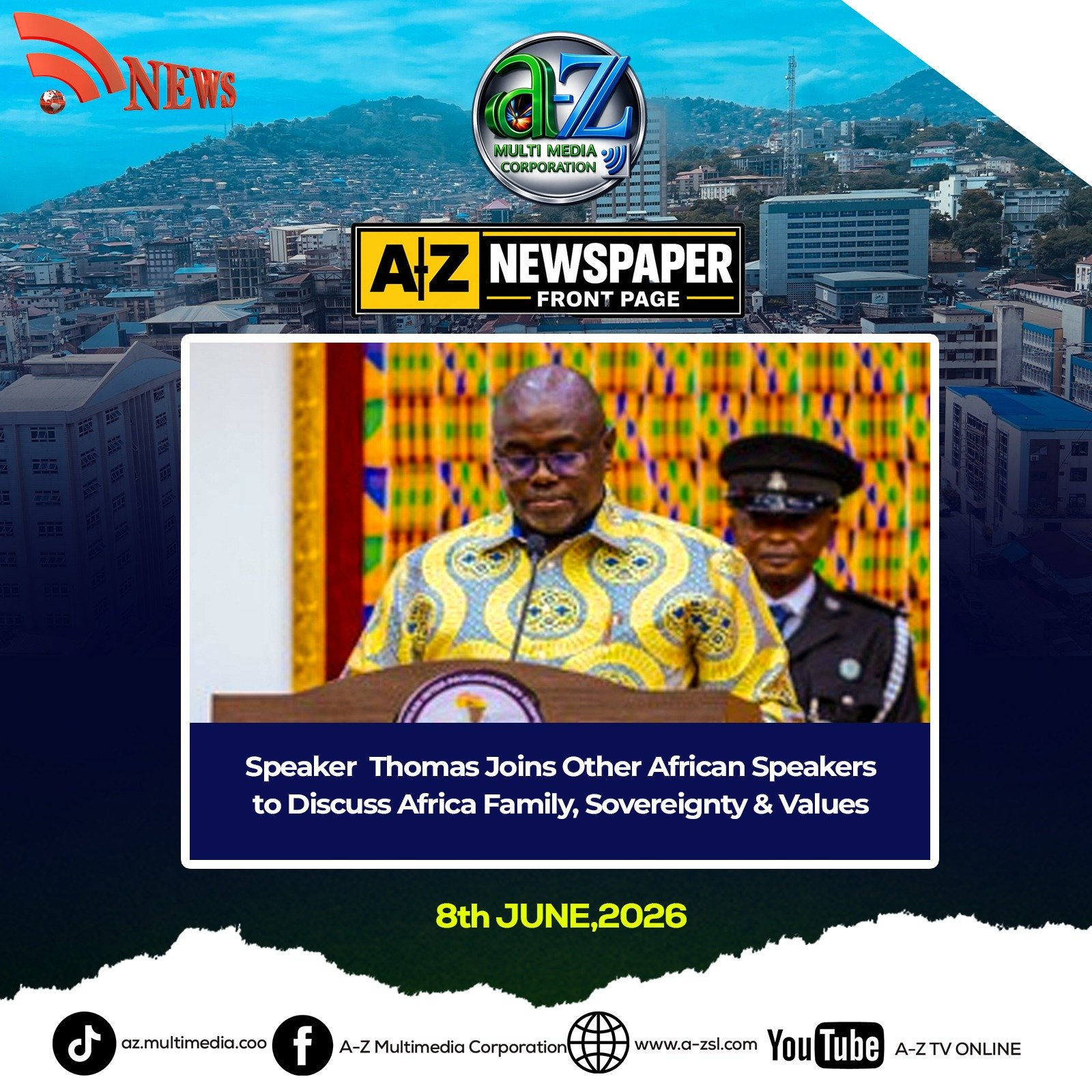
Honourable Speaker of Parliament, Segepoh Solomon Thomas, joined fellow Speakers and parliamentary leaders from across Africa from 3rd to 6th June 2026 in Accra, Ghana, to deliberate on issues relating to family, sovereignty, and African values.
The conference, themed “Consolidating Parliamentary Consensus: Advancing the African Charter on Family, Sovereignty and Values,” was hosted by the Parliament of Ghana in the Chamber of the Ghana Parliament. It was the Fourth African Inter-Parliamentary Conference on Family, Sovereignty and Values, following the first three conferences held in Entebbe, Uganda.
Speaker Thomas chaired a session titled “Values-Based Education and Youth Development: Safeguarding Future Generations.” In his remarks, he noted that more than 60 percent of Africa’s population is under the age of 25.
“This demographic reality presents both an unprecedented opportunity and a profound responsibility. The future will not be determined solely by the minerals beneath our soil, the size of our economies, or the sophistication of our technologies. It will be determined by the character, values, competencies, and civic consciousness of our people,” he stated.
Speaker Thomas emphasized that the critical question facing Africa is not whether young people should be educated, but what kind of citizens they are being educated to become.
He explained that education which transmits knowledge without values may produce skilled individuals, but it does not necessarily create responsible citizens, ethical leaders, or cohesive societies.
“It is widely acknowledged that Africa is the youngest continent in the world, with between 60 and 70 percent of its population comprising young people. The destiny of the continent therefore rests largely with this youthful population, and the outcome will be determined by the character, values, competencies, and civic consciousness of our young people,” he said.
He further noted that while globalization and modernity encourage innovation and critical thinking, they should not diminish Africa’s rich reservoir of indigenous values, including respect for elders and authority, integrity, honesty, peaceful coexistence, and service to the community.
“The fundamental African position is that while globalization and modernity encourage innovation and questioning, they should not erode Africa’s enduring values and cultural heritage,” Speaker Thomas added.
He also highlighted several challenges threatening traditional African values, particularly the rapid growth of the digital and information age, which has expanded access to information while also exposing young people to harmful and inappropriate content.
“We are gathered here because we occupy a strategic position in safeguarding future generations. Africa should not be forced to choose between modernity and conscience. Rather, we must embrace modernity while preserving our enduring African values. We must pass on our cherished values to future generations,” he concluded.
The next editions of the conference are scheduled to be held in Burkina Faso and Eswatini in May and September 2027, respectively.