By: Mohamed Sahr
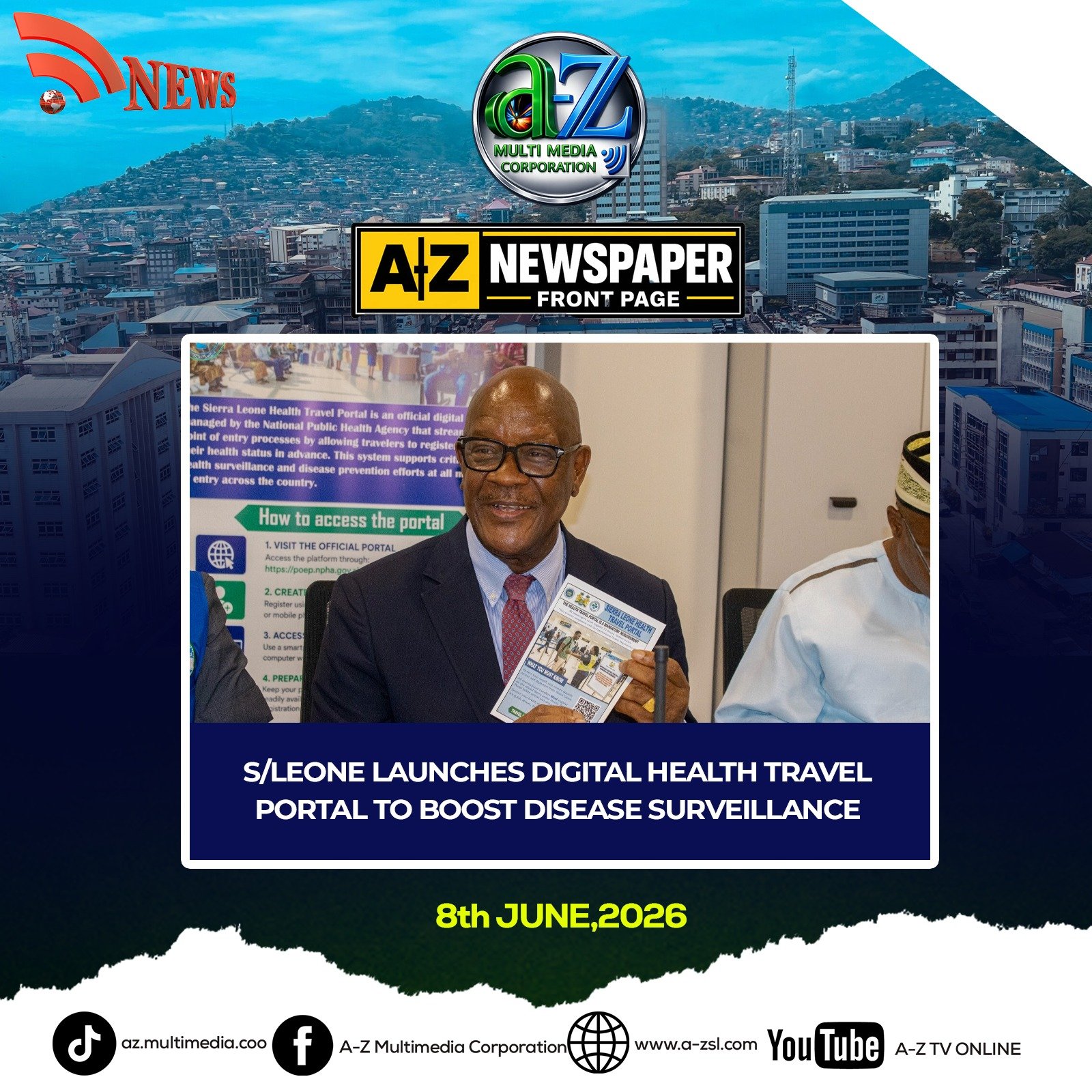
The National Public Health Agency (NPHA), Ministry of Health (MoH), and development partners, with support from Jhpiego, have launched the Sierra Leone Health Travel Portal to strengthen disease surveillance, protect travelers’ health, and ensure smooth arrival and departure procedures at the country’s border entry points, particularly at Freetown International Airport.
The launch, held on Friday, 5 June 2026 at Freetown International Airport in Lungi, marks a significant milestone in Sierra Leone’s public health emergency preparedness and response system. The portal is an official digital platform managed by the NPHA that streamlines entry-point procedures by allowing travelers to register and submit their health declarations before arrival. The system supports critical public health surveillance and disease prevention efforts at all major points of entry across the country.
The travel portal can be accessed at: https://poep.npha.gov.sl
Speaking at the launch, Professor Foday Sahr, Executive Director of the National Public Health Agency, described the Sierra Leone Health Travel Portal as a secure, simple, and digital pre-arrival health declaration platform developed by the Ministry of Health and the NPHA.
He explained that the portal replaces the slow and unreliable paper-based system with a single national digital platform. “The process is straightforward. Before travelling to Sierra Leone, passengers complete a short health declaration on the portal. This takes only a few minutes,” he said.
Professor Sahr emphasized that Sierra Leone remains one of the safest countries in Africa and currently has no confirmed or suspected cases of Ebola Bundibugyo Virus Disease. “We are acting early, not out of fear. We are acting because early action is what protects a nation,” he stated.
He further revealed that completion of the health declaration is becoming a requirement before boarding flights to Sierra Leone. According to him, the Ministry of Transport and Aviation, in collaboration with partner airlines, is working to ensure compliance.
“Airlines flying into Sierra Leone will verify that the declaration has been completed before passengers are allowed to board,” he said.
Professor Sahr noted that information submitted through the portal reaches the NPHA in real time, enabling pre-arrival risk assessments, faster airport processing, and rapid contact tracing when necessary. He added that the system strengthens coordination among health, aviation, immigration, and security agencies at all points of entry.
Reflecting on the country’s experience during the 2014-2016 Ebola outbreak, he said Sierra Leone has become one of the most experienced countries in outbreak response.
“Early information, early action, and public cooperation kept us safe before, and they will keep us safe again,” he remarked.
He also highlighted that the portal supports Sierra Leone’s obligations under the International Health Regulations (2005), which emphasize effective screening and surveillance at points of entry as key components of national health security.
To ensure inclusivity, Professor Sahr announced that assisted registration kiosks would be established at Freetown International Airport and other major entry points to support travelers with limited digital access. “No traveler will be left behind because of limited access to technology,” he assured.
He noted that while international travel drives trade, tourism, and investment, it also presents public health risks.
“The world is interconnected. Diseases travel with people, and international travel often provides the pathway through which outbreaks cross borders,” he said.
Professor Sahr pointed to recent global health threats, including Ebola outbreaks in the Democratic Republic of Congo and Uganda, as reasons for strengthening surveillance systems. He also cited concerns over mpox, Lassa fever, Marburg virus disease, and emerging respiratory pathogens with pandemic potential.
He commended the contributions of technical and financial partners, including the United States Government through Jhpiego and the RISE Project, the Africa Centres for Disease Control and Prevention (Africa CDC), the World Health Organization (WHO), and the wider United Nations family. He also praised the NPHA’s Information and Communications Technology team for developing the platform.
The Minister of Health, Dr. Austin Demby, reaffirmed the commitment of the Government of Sierra Leone, the Ministry of Health, and the NPHA to strengthening the country’s public health system.
“The National Public Health Agency, the Ministry of Health, and our partners have committed themselves to strengthening public health security through the launch of the Sierra Leone Health Travel Portal across all ports of entry,” Dr. Demby said.
“We will ensure that all travelers entering Sierra Leone are effectively screened and monitored.” Despite ongoing outbreaks in the Democratic Republic of Congo and Uganda, Dr. Demby stressed that Sierra Leone remains prepared to respond to any potential public health emergency.
Recalling the devastating Ebola outbreak of 2014, he noted that the country was unprepared at the time, resulting in more than 14,000 infections and approximately 4,000 deaths.
“The entire nation was affected,” he said, adding that the lessons learned from that crisis have significantly strengthened Sierra Leone’s preparedness and response capacity.
Also speaking at the event, Dr. George Ameh, WHO Country Representative, noted that only a few African countries have implemented similar systems.
He praised Sierra Leone’s initiative and reaffirmed WHO’s commitment to supporting the country’s public health preparedness and emergency response efforts.
Madam Baindu Agatha Kosia, Country Director of Jhpiego, said the portal enables travelers to securely submit health information before arrival or departure, ensuring authorities are prepared before travelers reach their destinations.
She explained that the digital platform replaces paper-based procedures with a faster and more efficient system that provides real-time data to support timely decision-making. “The system strengthens disease surveillance and preparedness while also improving the overall travel experience,” she said.
Madam Kosia commended the NPHA and the Ministry of Health for introducing an innovative solution that enhances public health service delivery.
Alp Becerik, Deputy General Manager of Freetown International Airport, commended Sierra Leone’s proactive approach to strengthening public health awareness, preparedness, and service delivery at major entry points.
Similarly, Francess Khadie Conteh, Representing the Director General of the Sierra Leone Civil Aviation Authority, stated that the effective management of the facility must align with international best practices. Specifically, compliance should be ensured with ICAO Annex 9 – Standards and Recommended Practices – under the Chicago Convention of 1944.
The launch of the Sierra Leone Health Travel Portal represents a major step toward enhancing national health security, modernizing border health screening systems, and ensuring that Sierra Leone remains prepared to detect and respond swiftly to emerging public health threats.