

By: Precious Miracle Kargbo Snr
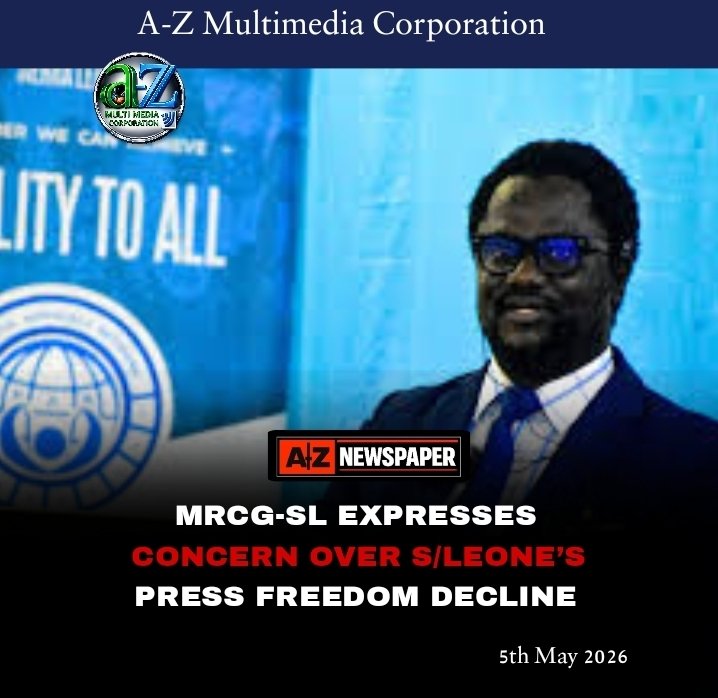
Sierra Leone has dropped 23 places to 79th out of 180 countries in the 2026 World Press Freedom Index published by Reporters Without Borders, raising concerns among media stakeholders on World Press Freedom Day.
The Media Reform Coordinating Group (MRCG), alongside the Sierra Leone Association of Journalists and other global press freedom bodies, marked the day on Sunday, 3 May 2026, under the theme: “Shaping a Future at Peace: Promoting Press Freedom for Human Rights, Development and Security.”
In a press release issued the same day, the MRCG expressed concern over the country’s sharp decline in both ranking and overall score. The fall to 79th position reverses gains made in 2024 and 2025, when Sierra Leone had improved to 56th place, signaling a rapid deterioration in the media environment.
According to the MRCG, Sierra Leone’s press freedom situation in 2026 can best be described as “precarious and deteriorating,” reflecting a mix of ongoing practical challenges and limited legal progress. The group noted that World Press Freedom Day, proclaimed by the United Nations General Assembly in December 1993, commemorates the Declaration of Windhoek.
Despite the decline, the report highlighted some positive aspects of Sierra Leone’s media landscape, including a pluralistic media environment and the continued absence of widespread journalist detentions or killings—features that distinguish the country from more repressive contexts.
However, the MRCG warned that deeper structural issues continue to undermine press freedom. These include the economic fragility of media institutions, poor working conditions for journalists, and vulnerability to political influence, all of which weaken editorial independence.
The group emphasized that while some legal reforms have been achieved, day-to-day operational challenges facing media houses are worsening. Financial instability limits the ability of outlets to sustain independent reporting, while inadequate working conditions directly affect journalists’ performance and security.
The MRCG cautioned that without addressing these structural concerns, the situation could deteriorate further. It stressed that political influence remains a persistent threat to editorial independence.
By commemorating World Press Freedom Day alongside SLAJ and international partners, the MRCG sought to highlight the urgent need to protect press freedom as a cornerstone of human rights, national development, and security.
While Sierra Leone continues to avoid the most severe abuses seen elsewhere, the significant drop in the 2026 index underscores a weakening media environment and the erosion of recent progress.