

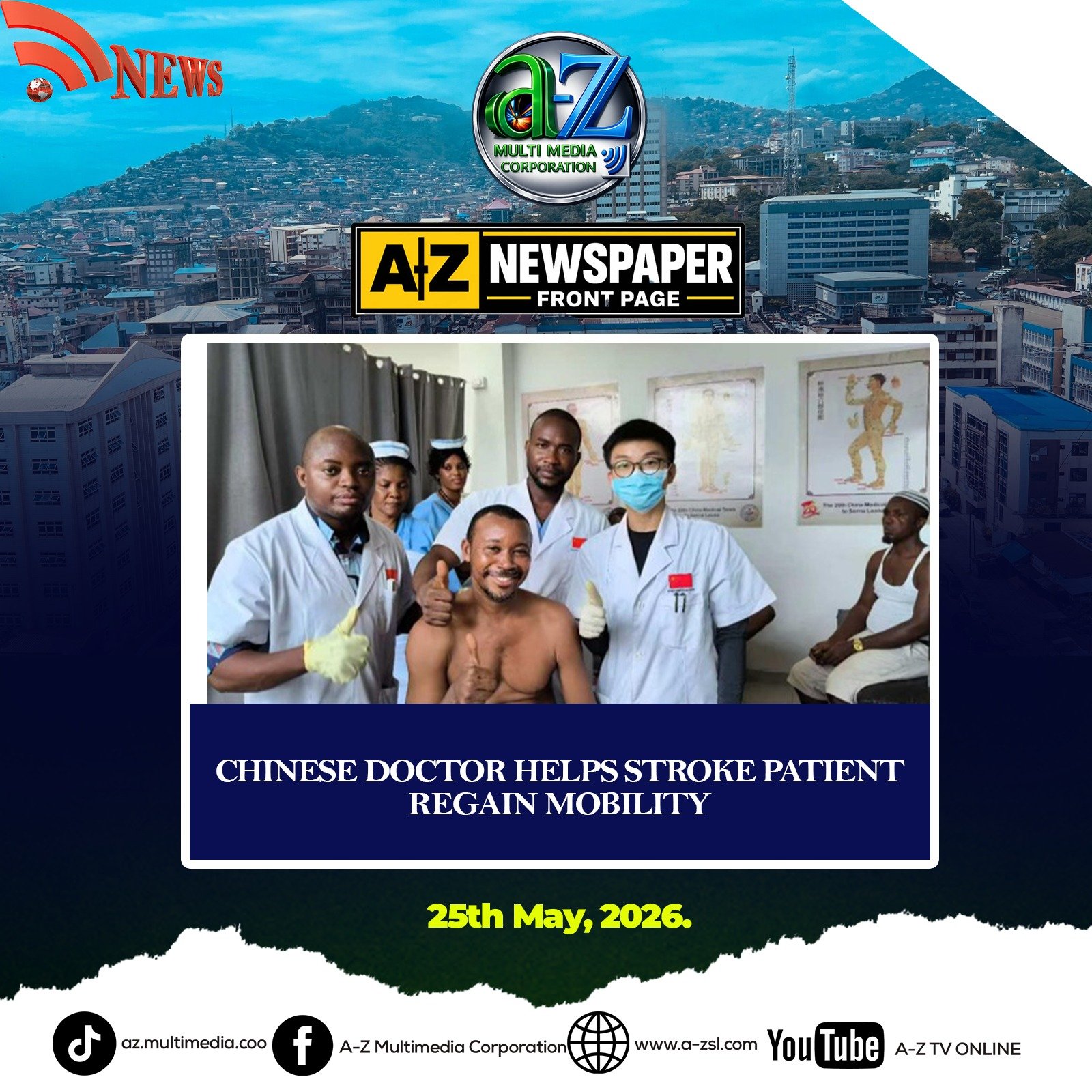
Edward, a 47-year-old resident of Sierra Leone, experienced a sudden brain hemorrhage that left him with complete paralysis on his left side. He was unable to stand, walk, or perform basic daily activities such as dressing and eating. Despite receiving treatment at a local hospital, his recovery remained limited, leaving his family deeply distressed.
Seeking further care, Edward arrived at the China-Sierra Leone Friendship Hospital in a wheelchair, where he was treated by Dr. Zhou Shengqiang, a member of the Chinese medical team.
After reviewing Edward’s CT scans and clinical condition, Dr. Zhou adopted an acupuncture-based rehabilitation approach. He used a technique known as “balancing acupuncture,” a method aimed at stimulating specific points on the body to support neurological and motor function recovery.
The treatment involved the careful insertion of fine silver acupuncture needles at selected points to help stimulate muscle activation and improve circulation in the affected limbs.
Following five acupuncture sessions over a period of less than 20 days, Edward showed significant improvement. He gradually regained strength in his left leg, progressed from assisted movement to standing independently, and eventually began walking on his own.
By the end of treatment, he was able to dress himself and walk without support. Expressing gratitude, Edward thanked the medical team and acknowledged the improvement in his condition.
Dr. Zhou and his team emphasized that acupuncture was used as part of a broader rehabilitative approach aimed at supporting neurological recovery after stroke.
The case highlights the role of integrative rehabilitation techniques in post-stroke recovery and reflects ongoing medical collaboration between Chinese healthcare professionals and Sierra Leonean patients at the China–Sierra Leone Friendship Hospital.