

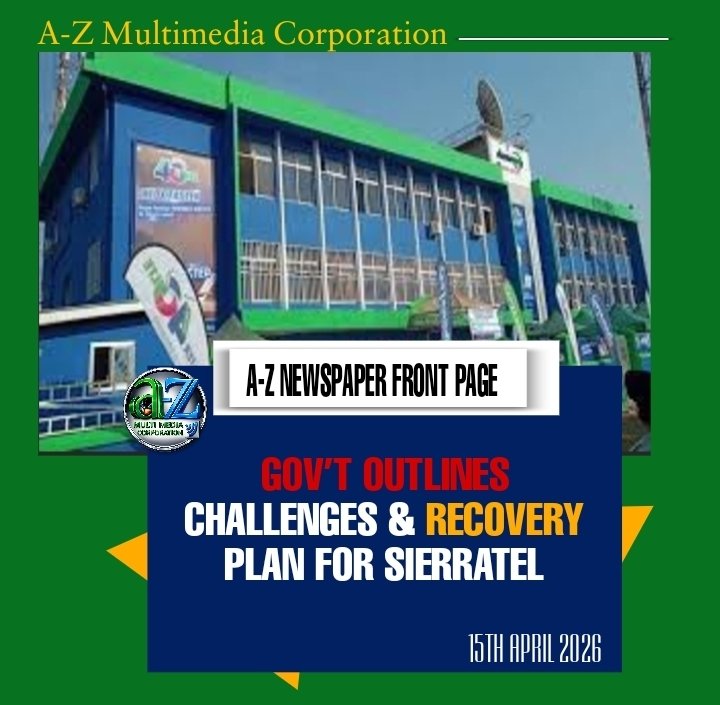
The Government of Sierra Leone has provided a detailed update on the challenges facing the state-owned telecommunications company, Sierratel, highlighting issues including legacy debt, obsolete infrastructure, and mounting staff liabilities.
Officials stated that several factors have contributed to the company’s current condition. Since assuming office in 2018, the government inherited Sierratel in what it described as an advanced state of deterioration. The company was burdened with significant debts owed to employees, suppliers, and international creditors.
These obligations include salary arrears, end-of-service benefits, leave allowances, union dues, and debts to suppliers and foreign financial institutions. Notably, Sierratel owes over US$35 million to two Export-Import (Ex-Im) banks, a debt that is currently being serviced by the government.
The update also highlighted the impact of obsolete infrastructure and changes in the telecommunications industry. Around 2014, Sierratel was upgraded mainly to CDMA technology, which initially improved its performance and market presence. However, the global shift from CDMA to GSM technology eventually rendered much of its infrastructure obsolete.
At the time, Sierratel experienced strong mobile and internet services. However, once CDMA technology was phased out globally, the company began to face serious operational challenges. As services declined, customers migrated to competing networks, further weakening its financial position.
The decline in operations also affected the company’s ability to meet financial obligations, including staff salaries. This has had a significant human impact, with delayed payments affecting workers’ livelihoods and, in some cases, causing hardship in meeting family and educational needs.
Staff-related liabilities now stand at approximately US$6.3 million, representing one of the company’s most pressing financial challenges. These obligations have accumulated over time as Sierratel struggled to meet its commitments.
The situation has been described as a legacy challenge requiring comprehensive and strategic intervention. While the government continues to service external debts, it remains focused on addressing key priority areas, including modernizing outdated infrastructure. Managing foreign debt obligations and settling staff liabilities and improving workers’ welfare.
The government reaffirmed its commitment to finding a sustainable solution that balances financial recovery with the protection of workers’ livelihoods.
Once regarded as a backbone of Sierra Leone’s telecommunications sector, Sierratel’s future is expected to depend on bold reforms and strategic investment to restore its relevance in an evolving digital landscape.