

By: Saidu Jalloh
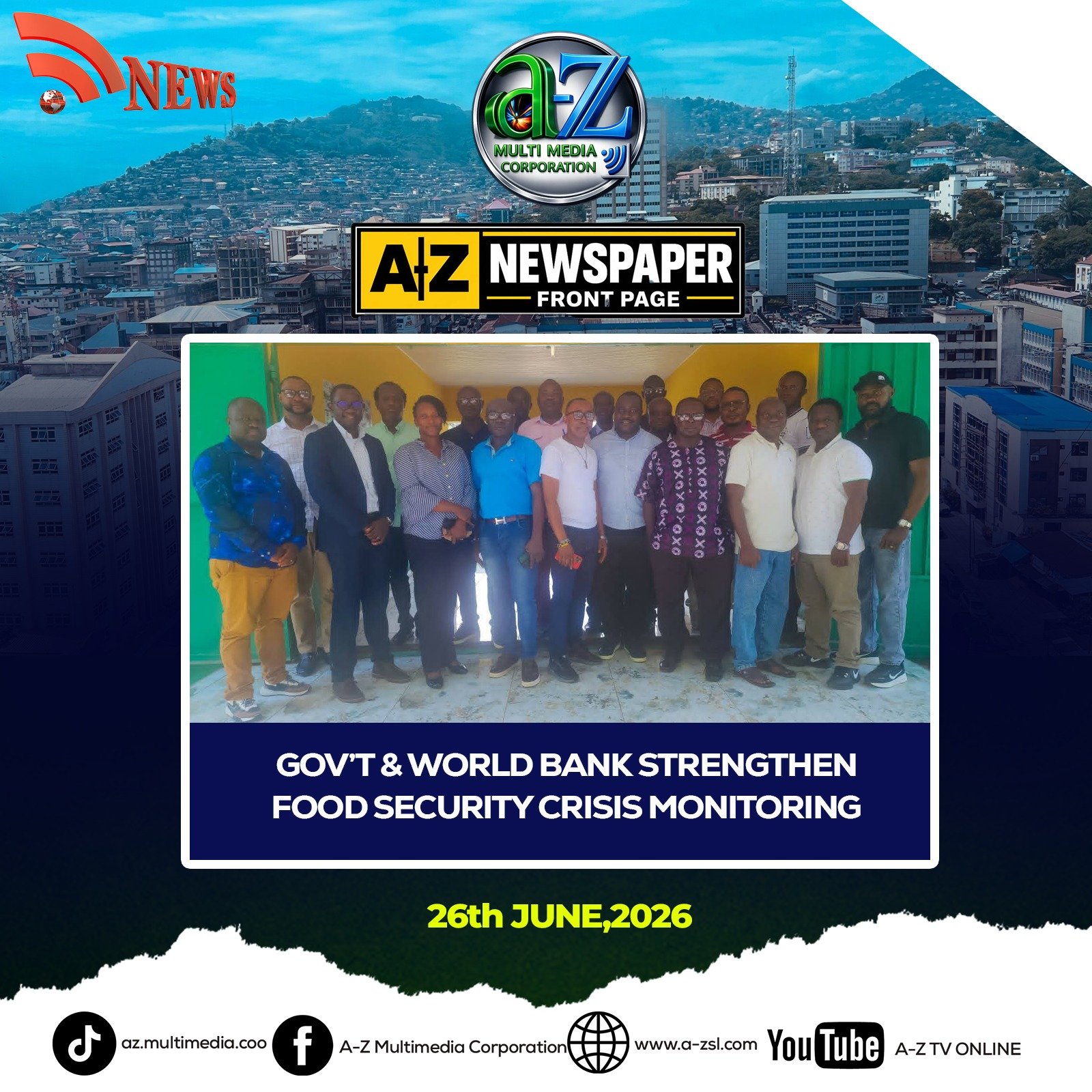
The Government of Sierra Leone, in partnership with the World Bank, has concluded a two-day Joint Monitoring Report (JMR) Workshop aimed at strengthening the country’s capacity to monitor, anticipate, and respond to food and nutrition security crises.
The workshop, organized by the Ministry of Agriculture and Food Security (MAFS) through the Food Systems Resilience Program (FSRP), brought together approximately 60 participants from key government institutions, development partners, and technical agencies. The event was held at the FSRP Office in Mile 91 from June 22 to 23.
Officials said the training was designed to enhance the ability of Ministries, Departments, and Agencies (MDAs) to generate, analyze, and share timely data on potential threats to food and nutrition security. The initiative is expected to support evidence-based decision-making and improve the government’s preparedness for emerging crises.
Speaking during the workshop, World Bank Group Consultant Julius Babatunde Adewopo explained that the training introduced the Joint Monitoring Report framework as an important tool for informed decision-making in Sierra Leone.
He noted that participants were equipped with the technical knowledge and practical skills required to develop Joint Monitoring Reports capable of providing early warnings on structural, environmental, health, and socio-economic risks that could affect food security.
According to Adewopo, access to reliable and timely information will enable the Government of Sierra Leone to mobilize resources more effectively, strengthen coordination with development partners, and implement proactive measures before crises escalate.
The workshop forms part of ongoing efforts to operationalize Sierra Leone’s Food Security and Nutrition Crisis Preparedness Plan, which supports the Government’s Feed Salone Agenda and seeks to build resilience throughout the country’s food system.
FSRP-SL Task Team Leader, Dr. Adetunji Oredipe, said the preparedness plan demonstrates the shared commitment of the Government and its development partners to addressing shocks that threaten agricultural production, livelihoods, and economic stability.
He emphasized the importance of coordinated monitoring and reporting mechanisms in helping the country anticipate, mitigate, and manage emerging risks to food and nutrition security.
Participants included representatives from the Ministry of Finance, the National Disaster Management Agency (NDMA), the Sierra Leone Meteorological Agency (SLMet), the Sierra Leone Agricultural Research Institute (SLARI), the World Food Programme (WFP), and several other institutions involved in food and nutrition security management.
FSRP Project Manager, Dr. Kepifri Lakoh, encouraged participants to apply the knowledge acquired during the training and to promptly report any developments that could trigger food and nutrition crises.
He stressed that early detection, timely reporting, and coordinated response mechanisms are critical to strengthening national resilience and reducing the impact of future shocks on vulnerable communities.
The Joint Monitoring Report framework is a collaborative tool used by governments, development partners, and international organizations to collect, analyze, and share information on potential and emerging crises affecting food and nutrition security. The framework supports timely interventions, effective resource allocation, and informed policy decisions aimed at protecting vulnerable populations and strengthening food system resilience.