

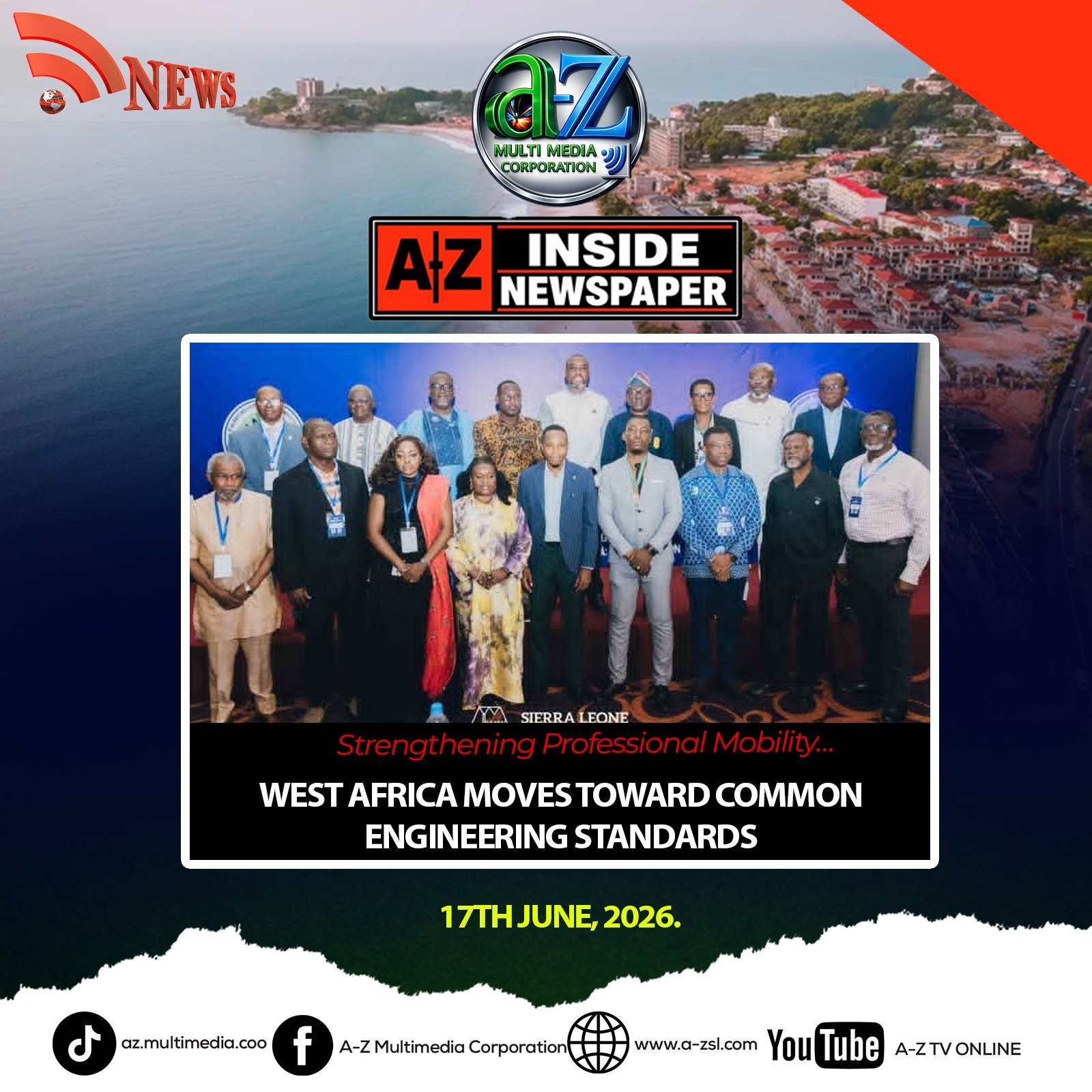
By: Aminata Sesay
Efforts to establish a unified engineering framework across West Africa have gained momentum, with the President of the Commonwealth Engineering Council, Engineer Truddy Morgan, calling for stronger regional cooperation to ensure that engineers can work seamlessly across borders.
Engineer Morgan said harmonizing engineering standards, professional qualifications, and accreditation systems across the sub-region is essential to unlocking opportunities for young engineers, improving infrastructure development, and strengthening investor confidence in West Africa’s technical workforce.
She made the call during the inaugural conference and Annual General Meeting of the West African Federation of Engineering Organizations (WAFEO), held in Freetown, where engineering leaders, regulators, academics, and industry experts gathered to discuss the future of the profession in the region.
According to Engineer Morgan, the absence of common standards has created barriers for qualified engineers seeking employment opportunities outside their home countries, despite possessing the necessary skills to contribute to regional development.
She explained that a harmonized system would allow engineering graduates from countries such as Sierra Leone, Ghana, Nigeria, The Gambia, and others to have their qualifications recognized across the region.
“Imagine a world where, when you graduate from university, there is a known standard that everyone understands you have achieved,” she said. “This would make it easier for employers and regulators to assess the competence of engineers regardless of where they were trained.”
The Commonwealth Engineering Council President stressed that regional integration in engineering would also help address Africa’s growing demand for technical expertise by enabling countries to share knowledge, innovation, and professional experience.
She noted that West African countries possess valuable engineering expertise that, if pooled together, could create stronger systems to support infrastructure development and economic transformation. “If we work together, we can utilize best practices from different countries and build common standards that strengthen competence across the entire sub-region,” she added.
Engineer Morgan further linked the harmonization agenda to economic development, arguing that confidence in the capacity of local engineers would encourage investment and create more opportunities for young professionals.
She explained that discussions at the WAFEO conference focused on key areas, including university accreditation, minimum professional requirements, recognition of qualifications, and the establishment of frameworks to guide the movement of engineers across borders.
However, she acknowledged that achieving full harmonisation would require sustained commitment, adequate resources, and collaboration among governments, regulatory institutions, universities, and professional bodies.
According to her, the process has been ongoing for several years and, while progress has been made, challenges such as limited funding, technical capacity constraints, and access to experts in international engineering standards remain.
She emphasized that engineering regulators must play a central role in the process, as they are responsible for setting and enforcing professional standards within their respective countries. “The role of regulators is critical because they establish the minimum standards in every country,” she said, adding that their involvement is essential to ensuring that regional agreements are effectively implemented.
Engineer Morgan said the goal is to create an engineering ecosystem that reflects West Africa’s development priorities while maintaining global standards of quality and professionalism.
The WAFEO conference concluded with renewed calls for greater cooperation among engineering institutions, as stakeholders seek to position the profession as a key driver of infrastructure development, innovation, and sustainable economic growth across the region.