

By: Fatmata Grace Okekearu, Bo City
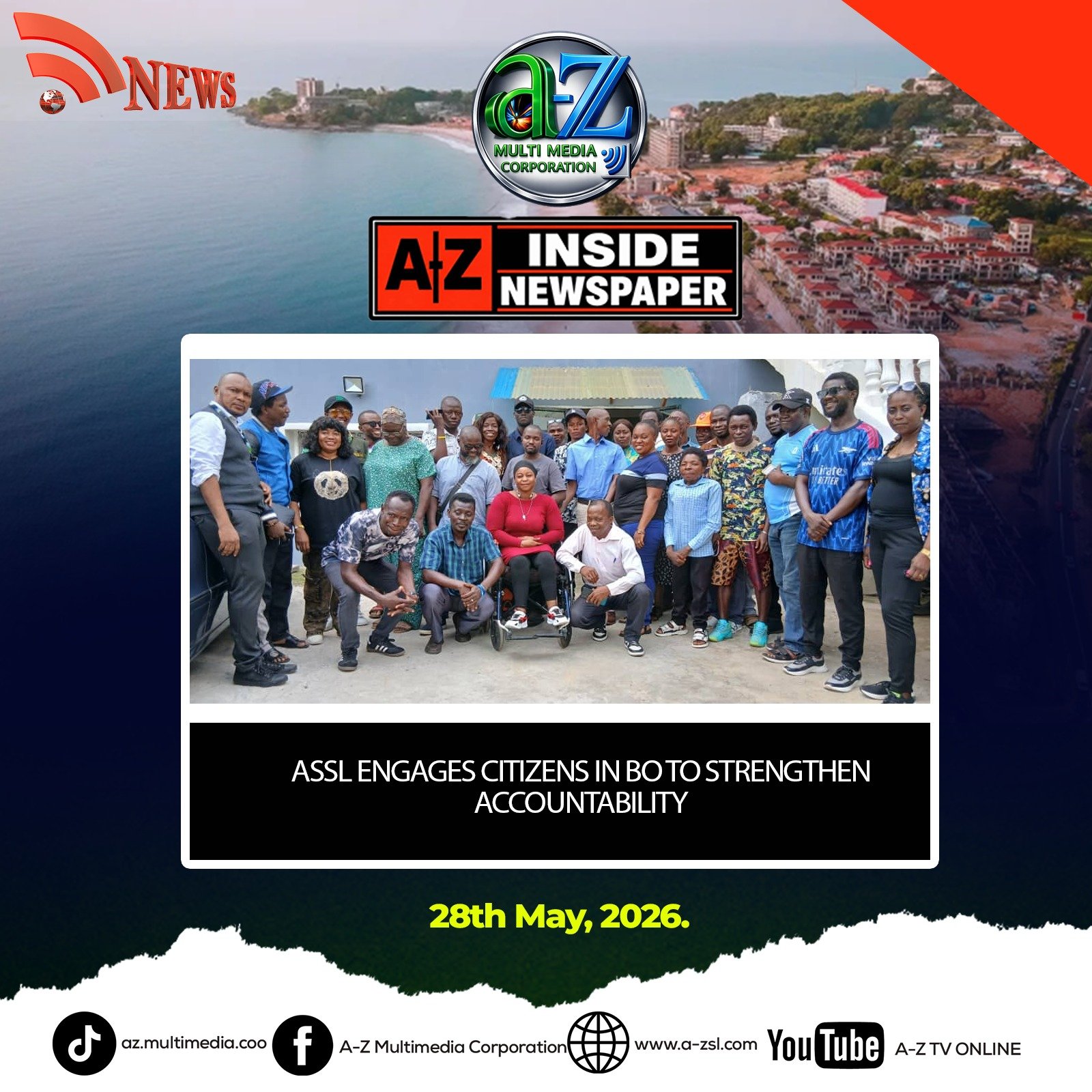
In a bid to strengthen transparency, accountability, and citizen participation in governance, Audit Service Sierra Leone held a citizens’ engagement session in Bo City aimed at gathering public perspectives on issues raised in previous audit reports and informing the ongoing audit process in the Southern Region.
The engagement brought together local authorities, civil society organizations, media practitioners, and community stakeholders to discuss concerns relating to financial management within local councils and Ministries, Departments, and Agencies (MDAs), with particular focus on issues highlighted in previous audit reports.
Speaking during the engagement, Edmond Abu Jr., who also serves as Chief Executive Officer of the Native Consortium and Research Centre, described the initiative as part of Audit Service Sierra Leone’s “people-centered” approach to auditing, which prioritizes service delivery issues directly affecting citizens at the community level.
He explained that the engagement provides an opportunity for citizens to actively participate in the audit process by identifying critical areas requiring greater scrutiny and accountability.
According to him, key priority areas highlighted during the engagement included the generation, utilization, and accountability of councils’ own-source revenue; the award and management of contracts within municipalities; and the effective delivery of essential social services such as healthcare, education, and water supply.
He further noted that concerns surrounding the timely supply of drugs to health facilities, school subsidies, agricultural inputs, staffing shortages, and recruitment processes were also identified as important areas requiring audit attention.
Making a statement during the session, Martin Sandy disclosed that the citizens’ engagement forms part of a broader strategy aimed at deepening public understanding of governance and creating opportunities for citizens to recognize their role in holding leaders accountable.
He emphasized that such engagements help align audit planning with the practical concerns of communities, ensuring that audits move beyond the traditional examination of financial records to assess whether public funds are translating into meaningful development outcomes and improved service delivery.
Martin Sandy further highlighted that Audit Service Sierra Leone has increasingly shifted its focus toward performance audits, which assess the economy, efficiency, effectiveness, equity, and environmental impact of government interventions and public expenditure.
He stressed that civil society organizations and ordinary citizens remain critical partners in the audit process, particularly in monitoring the implementation of audit recommendations and identifying issues requiring investigation.
According to him, the concerns and recommendations raised during the Bo engagement will help shape the institution’s 2026 audit work plan for local councils across the Southern Region.
He therefore encouraged citizens to continue playing an active watchdog role by acting as whistle-blowers and reporting gaps in service delivery to auditors during fieldwork exercises.
Martin Sandy also revealed that the engagement is being supported through Audit Service Sierra Leone’s ongoing collaboration with development partners aimed at strengthening public financial management systems and enhancing accountability mechanisms at both central and local government levels.
The engagement reaffirmed the institution’s commitment to promoting inclusive governance by ensuring that citizens are actively involved in monitoring public resource management and advancing accountability in service delivery.