By: Mohamed Sahr
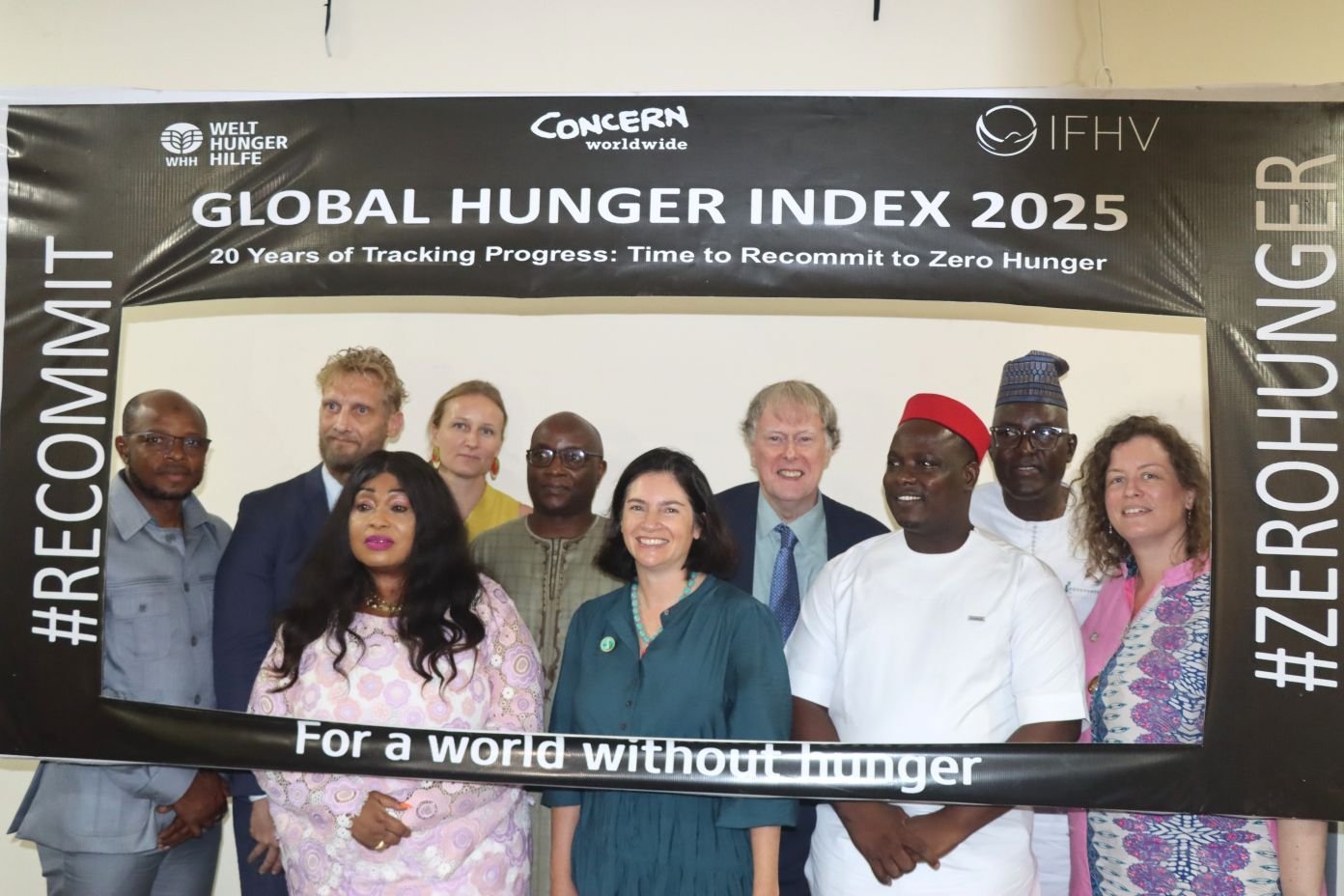
Sierra Leone has recorded a score of 28.5% in the 2025 Global Hunger Index (GHI), reflecting continued progress in the country’s efforts to achieve zero hunger by 2030. The report was officially launched on Tuesday, April 21, 2026, at New Brookfields Hotel in Freetown through a partnership between Welt Hunger Hilfe, Concern Worldwide, and IFHV.
The report, themed “20 Years of Tracking Progress: Time to Recommit to Zero Hunger,” highlights a range of solutions for ending global hunger, including strengthening governance and accountability, investing in climate resilience, and transforming food systems.
Delivering joint welcome statements, Emmanuel Octave Bananeze, Country Director of Welthungerhilfe, expressed appreciation for the Government of Sierra Leone’s cooperation and sustained efforts in combating hunger through the Feed Salone strategy. He noted that recent data reflects encouraging progress made under the initiative.
He emphasized that Welthungerhilfe remains committed to supporting the Government of Sierra Leone by providing reliable data and technical expertise to strengthen development planning, policy implementation, and monitoring systems.
Bananeze further reaffirmed the organization’s dedication to deepening collaboration with the government and supporting national initiatives aimed at improving food security, nutrition, and resilience among vulnerable communities.
Similarly, Davina Jeffery, Country Director for Concern Worldwide, highlighted the organization’s long-standing partnership with Sierra Leone. She commended the leadership of Julius Maada Bio, particularly his commitment to the Feed Salone agenda.
She noted that the initiative demonstrates strong political will in addressing hunger and food insecurity, especially through investments in agriculture, nutrition, and rural livelihoods.
Madam Jeffery reaffirmed that Concern Worldwide remains committed to supporting Sierra Leone’s development priorities and strengthening strategic partnerships with government institutions, development partners, and local communities.
She added that sustained collaboration and coordinated action will be critical in building resilient food systems, reducing vulnerability, and accelerating progress toward achieving zero hunger in the country.
Manty Tarawallie, Minister of State in the Office of the Vice President, stated that the Government of Sierra Leone has taken deliberate and measurable steps to change the trajectory of hunger and malnutrition in the country. She noted that the government has launched 11 Multi-Sectoral National Nutrition Commitments (2025-2030), which are being implemented through nutrition mainstreaming.
“Our focus is on addressing the underlying drivers of malnutrition dietary diversity, diet quality, food access and affordability, and the effectiveness of the wider food system,” she said.
She emphasized that these efforts are expected to improve key indicators over time. The government has introduced the country’s first-ever nutrition-responsive budget, increasing allocations from 2.56% to 8.06% of the national budget. It has also established a dedicated budget line for Ready-to-Use Therapeutic Food (RUTF) and is in discussions with two institutions to establish an RUTF factory in Sierra Leone.
Additionally, the government has rolled out Multiple Micronutrient Supplementation (MMS) nationwide. Through the home-grown school feeding programme, over 270,000 children in more than 1,100 schools are receiving nutritious meals, using over 2,000 metric tons of locally produced food.
According to Minister Tarawallie, these initiatives are improving nutrition while strengthening local agriculture and rural livelihoods. Under the “Feed Salone” agenda, the country has recorded tangible gains in food systems, with rice self-sufficiency increasing from 62% in 2022 to 72% in 2024. Rice imports have also declined, easing pressure on foreign exchange.
Despite global challenges, she expressed optimism about Sierra Leone’s progress, citing strong political leadership, a clear national agenda, increasing domestic investment, and a peaceful environment, an important factor given that conflict is a major driver of hunger worldwide.
The Minister highlighted gender and climate as critical factors in accelerating progress. Women make up approximately 70% of the agricultural workforce in Sierra Leone but face significant challenges, including limited access to credit, smaller land holdings, and a 24% productivity gap.
Closing this gap, she noted, would significantly strengthen food systems and improve nutrition outcomes. The government has taken steps to support this transformation through the Gender Equality and Women’s Empowerment Act (2022), land reforms under the Customary Land Act, expansion of Technical and Vocational Education and Training (TVET) across all districts, and support for women- and youth-led enterprises.
Johannes Behrens, First Secretary and Head of Cooperation at the Embassy of the Federal Republic of Germany, highlighted that the government’s “Feed Salone” initiative along with contributions from development partners and the private sector has enhanced agricultural productivity, improved food availability, and increased incomes through better employment opportunities. He noted that by mid-2025, about 13% of Sierra Leone’s population still suffered from severe food insecurity.
Behrens emphasized that the government is working to align with private sector actors and development partners to strengthen local food processing capacity. This, he said, would help extend product shelf life, diversify food availability beyond harvest seasons, create jobs, and add value within the agricultural sector.
“It is important not only to ensure that people are fed, but also that the food available contains all the nutrients necessary for healthy human development,” he said.
He commended the government’s commitment to food sufficiency under the “Feed Salone” and Human Capital Development initiatives, reaffirming Germany’s support in the fight against poverty, hunger, and inequality in Sierra Leone.
Joseph Ayamga Awimboora, Country Director for SEND Sierra Leone, stressed that the global hunger crisis demands honesty and courage, noting that behind every statistic is a human life.
He highlighted Sierra Leone’s progress in the Global Hunger Index, improving from 41.1% in 2008 to 32.4% in 2016, and now 28.5% in 2025. He described this achievement as a reflection of sustained effort, strong partnerships, and resilience.
However, he cautioned that a score of 28.5% still places Sierra Leone in the “serious hunger” category.
“Hunger is still not an exception it is a reality for too many people in Sierra Leone,” he said.
Awimboora urged the government to shift from short-term projects to building resilient, integrated food systems capable of withstanding shocks. He emphasized the need for measurable policies that are effectively implemented, monitored, and enforced.
He further called for increased investment in early warning systems, climate resilience, maternal and child nutrition, and local agriculture.
“Sierra Leone has shown that hunger can be reduced,” he said. “Now it must demonstrate the leadership and discipline needed to eliminate hunger entirely by 2030.”