

By: Saidu Jalloh
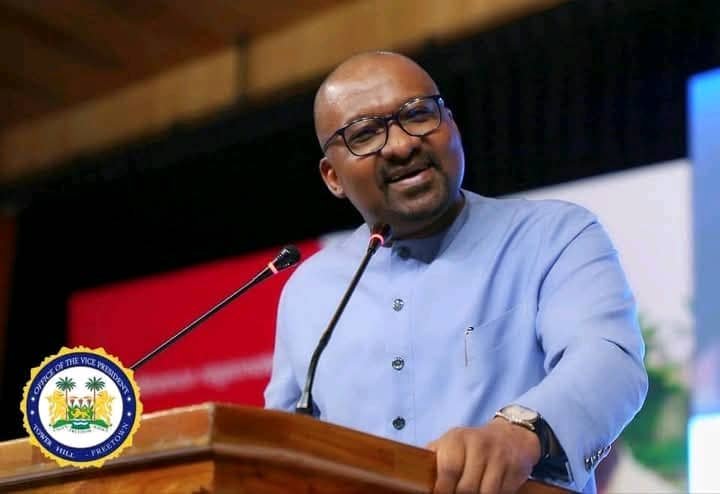
Vice President Dr. Mohamed Juldeh Jalloh has pledged immediate government action on the recommendations emerging from the third Climate Resilience and Energy Transition (CRET) Dialogue, calling the event a turning point in Sierra Leone’s energy reform agenda.
Speaking at the close of the two-day dialogue in Freetown, Dr. Jalloh stated that he would present the full set of recommendations to President Julius Maada Bio, assuring stakeholders that a robust monitoring framework would be established to ensure their implementation. He commended the organizers, development partners, and private sector participants for their contributions, particularly acknowledging Big Prep and the PPEP team for their consistent leadership in advancing the national energy agenda.
The Vice President emphasized that the third edition of the Dialogue strengthened his belief that Sierra Leone’s energy transformation was “imminent,” citing the country’s new, data-driven, and nationally endorsed energy plan. The plan aims to expand access through strategic infrastructure investments, improve utility performance, increase renewable energy generation, and attract large-scale private investment across the energy value chain.
Dr. Jalloh reiterated that reliable and affordable energy is central to Sierra Leone’s development framework and essential for achieving the goals of the government’s Medium-Term National Development Plan. He highlighted the Bio administration’s focus on human capital development since 2018, particularly through free quality education and major healthcare investments. These efforts have resulted in improved access for girls, increased female university enrollment, and better health outcomes, including reduced infant and maternal mortality rates.
He noted that these social gains have led to heightened public expectations for job creation and economic opportunities. The government’s second term will focus on energizing productive sectors, with agriculture as the top priority. Describing agriculture as both the backbone of the economy and a launchpad for manufacturing and exports, the Vice President stressed the importance of boosting domestic food production to reduce reliance on imports.
Linking economic transformation to the government’s “Big Five” game-changers, Dr. Jalloh reaffirmed the administration’s commitment to creating 500,000 jobs for young people while aligning national policies with global carbon reduction goals.
He identified limited access to reliable, affordable, and low-carbon energy as one of the most significant barriers to Sierra Leone’s growth potential. Overcoming this challenge, he said, would require modernizing infrastructure, reducing commercial losses, improving financial sustainability, and scaling up renewable investments.
Dr. Jalloh reported that national energy access has increased from 16% in 2018 to 36% today, describing this as a major step toward sustainable growth and resilience. He stressed that energy access must remain inclusive, serving both households and businesses especially in rural and hard-to-reach areas so that progress in education and health can translate into real social equity.
Drawing on his academic background in state-building, the Vice President warned that overcentralization and state-dominated energy systems have historically hindered progress across Africa. He argued that governments must reduce their involvement in power generation and distribution, empowering the private sector to drive innovation and efficiency.
He welcomed the Dialogue’s focus on private sector participation, describing it as a cornerstone of Sierra Leone’s energy transition strategy. Dr. Jalloh emphasized that attracting private investment requires transparent governance, accountability, and respect for the rule of law, all of which help foster investor confidence.
The Vice President also expressed his appreciation to development partners, multilateral institutions, and private investors for their ongoing support, reaffirming that Sierra Leone’s energy transformation will depend on collaboration, policy consistency, and shared commitment. He confirmed that the recommendations from the 2025 Dialogue would be formally presented to President Bio and integrated into the country’s broader energy and climate resilience framework.