

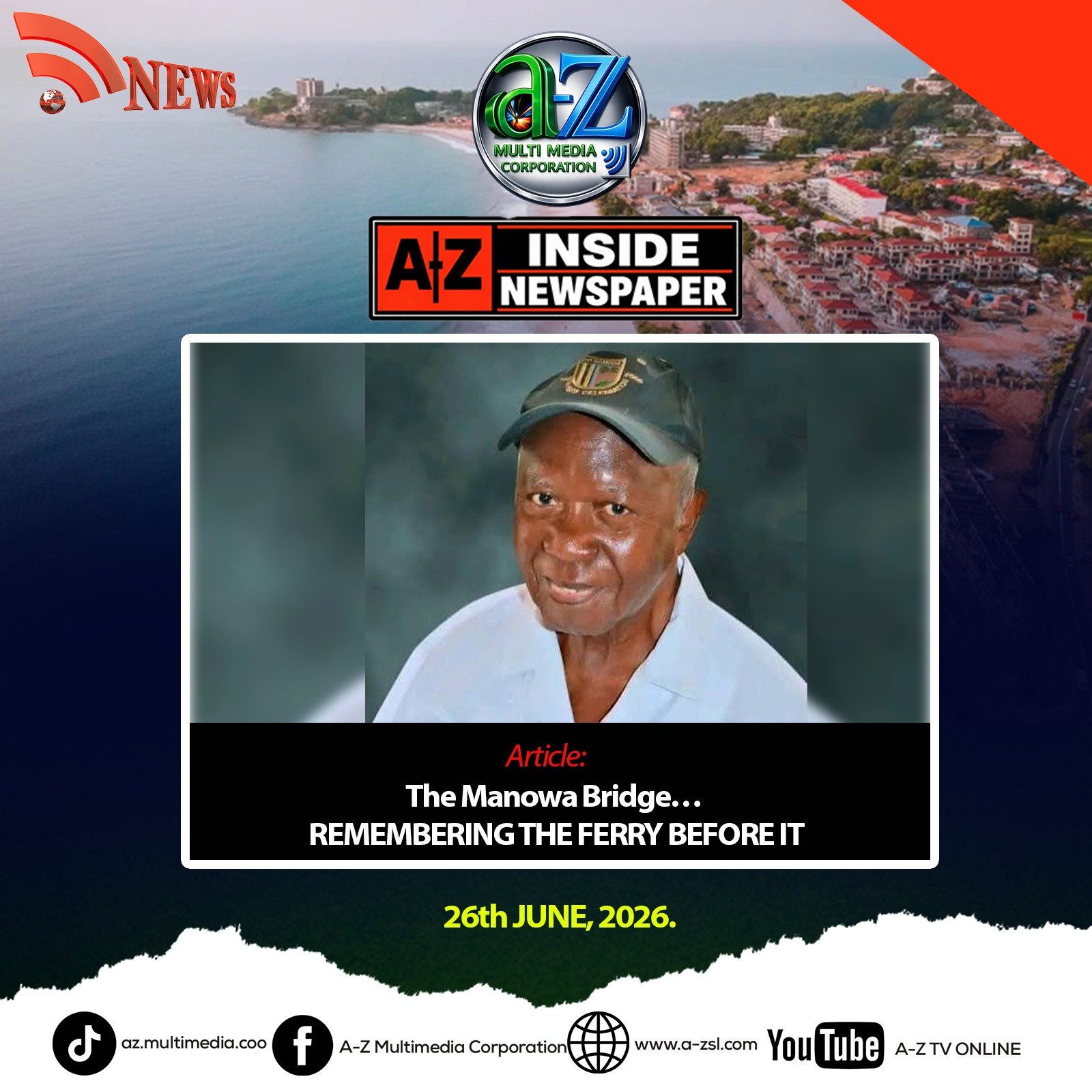
By: Dr. Sama Banya (Puawui)
At 96 years old, Dr. Sama Banya, popularly known as Puawui, reflects on a dramatic chapter in Sierra Leone’s political history and recalls the events surrounding the old Manowa Ferry before the construction of the Manowa Bridge.
The year was 1968 around this time of the year, perhaps July or August.
The High Court had upheld election petition cases filed by the All People’s Congress (APC) against many successful Sierra Leone People’s Party (SLPP) parliamentary candidates. As a result, by-elections were ordered in several constituencies across the country.
Many of us in the SLPP believed the by-elections would proceed as normal political contests. We prepared accordingly. However, events soon unfolded differently.
According to our observations at the time, the by-elections were heavily influenced by organized political activities that allowed APC supporters and vigilante groups to move from one affected constituency to another, beginning in Kono District.
Reports emerged of intimidation, threats, and violence in several constituencies. Many SLPP candidates and supporters fled into the bush or went hiding as fear spread throughout towns and villages in the Southeast. The atmosphere resembled that of a country on the brink of conflict.
The apparent objective of these tactics was to discourage voters in SLPP strongholds from participating in the elections out of fear for their safety.
One incident that was widely discussed occurred in Jaiama Nimikoro, Kono District. The late Paramount Chief Mansa Matturi and his wife, Manjama, were reportedly standing in line to vote when their names were called. According to accounts from the time, two APC supporters responded to their names, pushed the couple aside, and cast votes in their place.
News of such incidents quickly spread throughout the Southeast.
At the time, I was serving as the Medical Officer-in-Charge of the Kenema Government Hospital. I witnessed much of the tension and unrest firsthand.
After a brief meeting with SLPP leaders in Kenema, I travelled to Kailahun District. At each chiefdom headquarters, I shared reports of what had occurred in Kono and discussed the collective concerns of party supporters regarding the conduct of the elections.
Having already established a presence in Kono and Kenema districts, APC vigilante groups were reportedly preparing to enter Kailahun District through the Manowa Ferry crossing.
It was almost dawn when I returned to Kenema.
By sunrise, word had spread that the APC groups attempting to cross the ferry had been unable to do so. Reports circulated that some vehicles failed to make the crossing and that several individuals were unaccounted for. Stories of what happened that night varied, and over the years the incident became the subject of local legend and political folklore.
What was clear, however, was that many residents of Kailahun District were determined to resist what they viewed as political intimidation and bullying.
When news of the unrest reached Freetown, Prime Minister Siaka Stevens reportedly reacted swiftly. A State of Emergency was declared, and uniformed soldiers were deployed to the streets of Freetown and several provincial towns.
In the aftermath, many prominent SLPP leaders and supporters were arrested, including Acting SLPP Leader Salia Jusu-Sheriff and myself. We were detained at Mafanta Prison, near Magburaka in Tonkolili District, a facility that had gained notoriety among opposition supporters during that period.
Several Paramount Chiefs and political figures were also arrested as part of the government’s response.
The State of Emergency remained in force until March 1969, when political tensions gradually subsided and normalcy began to return.
Today, the Manowa Ferry is gone, replaced by the Manowa Bridge. Yet the story of that turbulent night remains deeply embedded in the history and folklore of Kailahun District.
For many residents, it serves as a reminder of a period of intense political struggle and of the determination of local communities to defend themselves against what they perceived as political oppression.
Whether viewed as history, legend, or a combination of both, the story of the Manowa Ferry continues to occupy a unique place in the collective memory of the people of Kailahun District.