

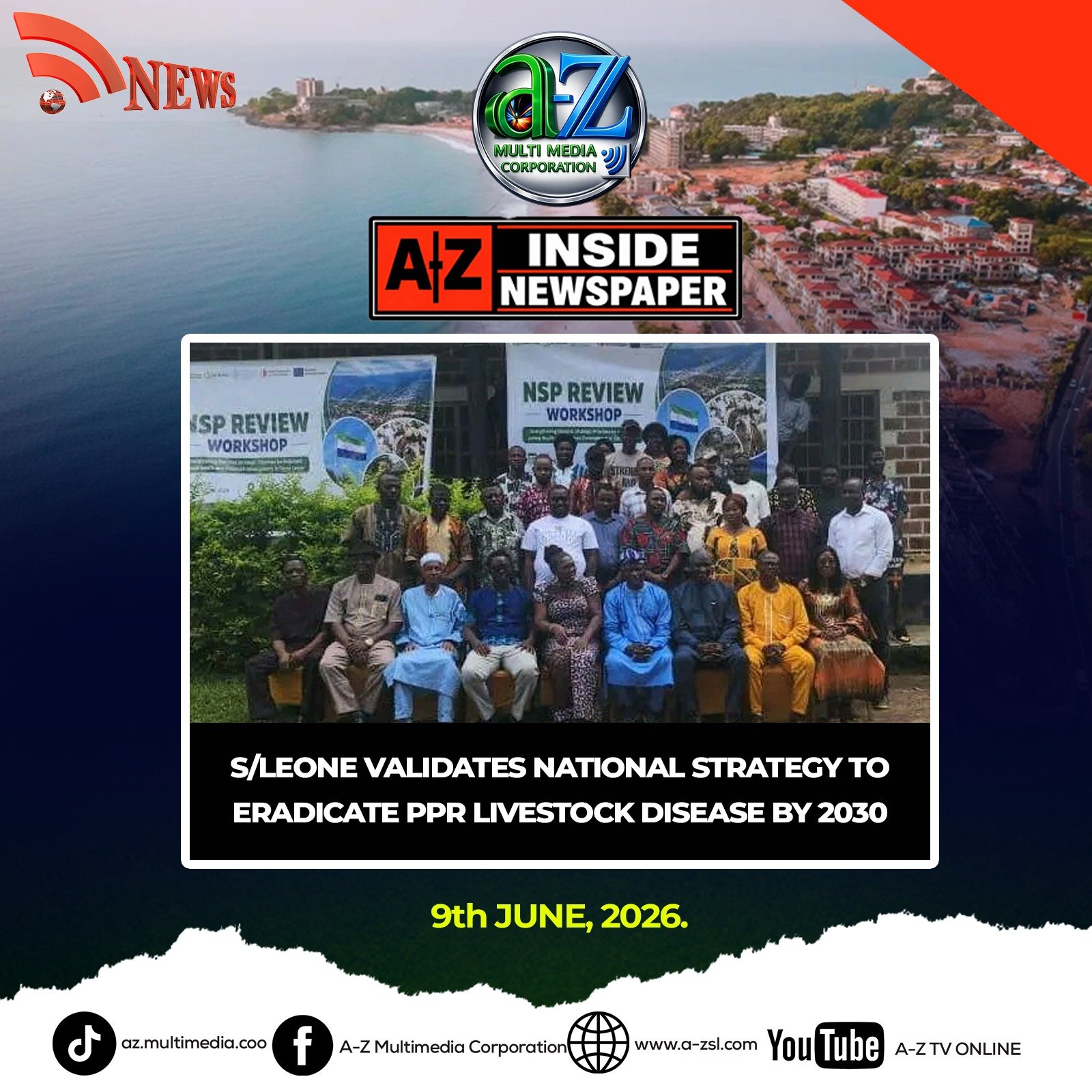
By: Saidu Jalloh
The Livestock and Veterinary Services Division of the Ministry of Agriculture and Food Security (MAFS), in collaboration with the African Union Inter-African Bureau for Animal Resources, has concluded a two-day workshop to review and validate Sierra Leone’s National Strategic Plan for the eradication of Peste des Petits Ruminants, a highly contagious viral disease that primarily affects goats and sheep.
The workshop, held in Kenema from June 3 to 4, brought together government officials, livestock experts, researchers, farmers’ representatives, local authorities, and development partners to strengthen the country’s roadmap toward eliminating the disease by 2030.
Addressing participants, Deputy Minister of Agriculture II, Sahr Hemore, highlighted the economic importance of the livestock sector, particularly for rural women who depend on goats and sheep as sources of income and household security.
Hemore revealed that the government is making significant investments in livestock development under the Feed Salone initiative. He cited a US$107.5 million livestock development project aimed at increasing production, improving animal health, and strengthening veterinary services across the country.
He further disclosed that six veterinary doctors and 22 para-veterinarians have been trained, while 15 percent of the 700 recently recruited agricultural personnel have been deployed to support the livestock sector. He added that vehicles and motorbikes procured through the Pandemic Fund, alongside resources from the Food Systems Resilience Program, will enhance disease surveillance and livestock development efforts nationwide.
According to Hemore, these interventions are expected to accelerate the eradication of PPR and other livestock diseases while contributing to poverty reduction, improved nutrition, and enhanced food security.
Speaking on behalf of AU-IBAR, West Africa Regional Coordinator, Perdita Lopes, commended Sierra Leone’s commitment to the global campaign against PPR and reaffirmed the organization’s support for implementing the national strategy.
Lopes explained that the initiative originated from commitments made by African leaders during a continental meeting in Nairobi, where member states pledged to work collectively toward eliminating the disease and agreed to contribute to the cost of the eradication campaign.
She warned that PPR remains a major threat to rural livelihoods because of its high mortality rate among small ruminants. “Sometimes only two out of every ten animals survive after being infected with PPR,” Lopes said, emphasizing the devastating economic impact on farmers, particularly women who rely on livestock to support education, healthcare, and other household needs.
She called on governments and development partners to sustain their commitment to achieving the global target of eradicating the disease by 2030.
Meanwhile, Director of Livestock and Veterinary Services, Saidu Bamayange, announced that President Julius Maada Bio has accepted an appointment as a Champion for the Eradication of PPR in Africa.
Bamayange said the appointment places Sierra Leone in a strategic position to mobilize resources, strengthen regional cooperation, and enhance advocacy efforts aimed at eliminating the disease across the continent.
He described the validated strategic plan as a critical framework that will guide resource mobilization, stakeholder coordination, and the implementation of interventions necessary to achieve the 2030 eradication target.
Participants reviewed and refined key components of the strategy during the workshop and expressed confidence that coordinated action, sustained investment, and strong stakeholder commitment will enable Sierra Leone to make a meaningful contribution to the global campaign to eradicate PPR by 2030.