

By: Precious Miracle Kargbo Snr
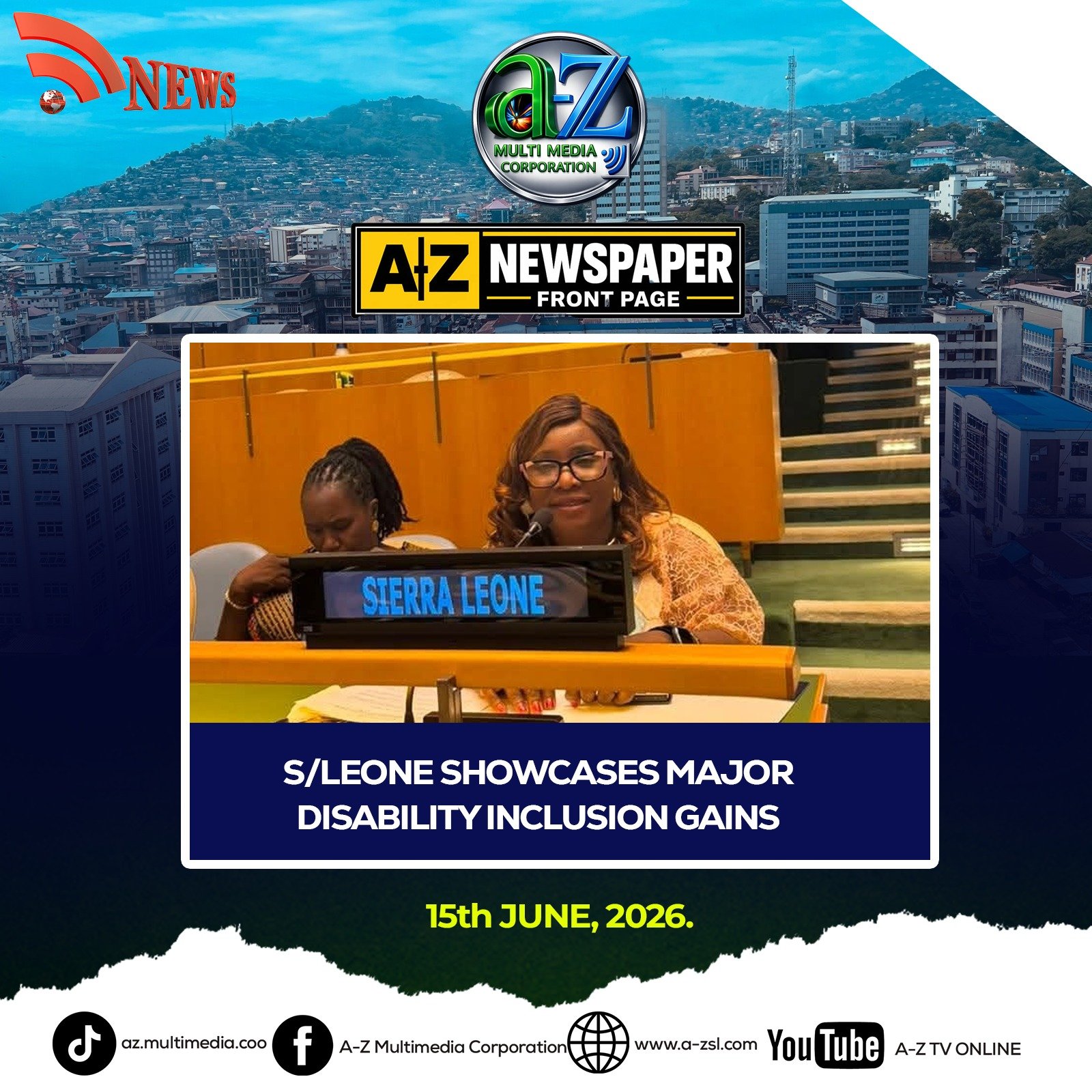
Sierra Leone’s Minister of Social Welfare, Madam Melrose Karminty, has highlighted significant progress in advancing disability inclusion, including the construction of a specially designed village that will provide housing for 60 households headed by persons with disabilities.
The Minister made the announcement while presenting Sierra Leone’s official report at the United Nations Conference of States Parties to the Convention on the Rights of Persons with Disabilities (COSP2026) on Thursday.
Mrs. Karminty informed delegates that two vocational skills training centres for persons with disabilities have been refurbished and fully equipped with support from the UN India Fund. The centres are expected to expand access to vocational education and enhance livelihood opportunities for a group that continues to face disproportionate levels of poverty and unemployment.
In her presentation, the Minister reaffirmed the importance of the Persons with Disability Act of 2011, describing it as the foundation of disability rights protection in Sierra Leone. She noted that the Act prohibits discrimination and promotes equal opportunities in education, employment, healthcare, transportation, political participation, sports, and community life. The legislation also established the National Commission for Persons with Disabilities, which coordinates and advocates for disability rights across the country.
Mrs. Karminty expressed gratitude to the UN Partnership on the Rights of Persons with Disabilities Fund, stating that its support has strengthened institutional capacity, improved stakeholder coordination, and enhanced the meaningful participation of persons with disabilities in governance and public policy processes.
Addressing economic challenges faced by persons with disabilities, the Minister reported that the Government has reinforced disability-inclusive social protection systems. She highlighted ongoing cash transfer programmes supported by the World Bank, which continue to assist vulnerable households, including those headed by or caring for persons with disabilities.
On regional cooperation, Mrs. Karminty announced that Sierra Leone is collaborating closely with ECOWAS to develop a Disability Accountability Framework. The initiative aims to harmonize disability rights monitoring across West Africa by improving data collection, strengthening accountability mechanisms, promoting evidence-based policymaking, and facilitating the exchange of best practices among member states.
To address the challenge of limited and unreliable disability data, the Minister revealed that Sierra Leone is working with the London School of Hygiene & Tropical Medicine to develop a Disability Management Information System (DMIS). Once operational, the centralized platform will collect, manage, and analyze disability-related data across sectors, ensuring that persons with disabilities are accurately represented in national statistics and development planning.
While acknowledging the country’s achievements, Mrs. Karminty noted that several challenges remain, including accessibility barriers, limited employment opportunities, inadequate resources for disability-inclusive programmes, and the need for sustained public awareness and attitudinal change
She called on the international community, development partners, regional organizations, and fellow States Parties to strengthen collaboration and increase investment in disability-inclusive development initiatives.
Concluding her presentation, the Minister reaffirmed Sierra Leone’s commitment to the Convention on the Rights of Persons with Disabilities (CRPD) and the principle of “Nothing About Us Without Us.” She pledged the Government’s continued dedication to building an inclusive society where every person with a disability can live with dignity, participate fully in all aspects of life, and contribute meaningfully to national development.