

By: Mohamed J. Bangura
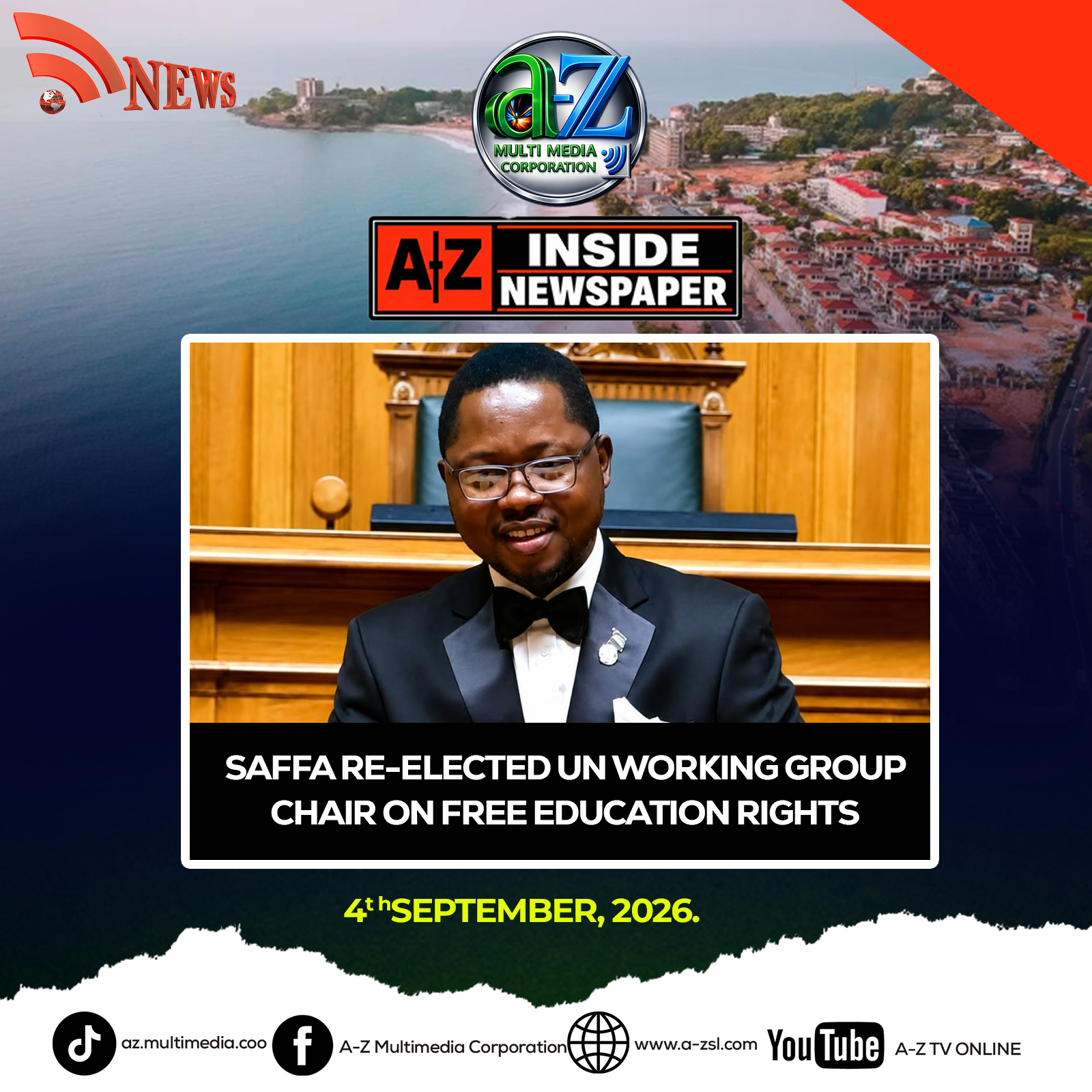
Sierra Leone has secured another prominent role in international efforts to strengthen children’s right to education following the unanimous re-election by acclamation of Ambassador and Deputy Permanent Representative to the United Nations and other international organizations in Geneva, H.E. Samuel U.B. Saffa, Esq., as Chair of a key UN intergovernmental working group.
Member States on Wednesday endorsed Ambassador Saffa to continue chairing the Open-Ended Intergovernmental Working Group mandated to develop a new Optional Protocol to the Convention on the Rights of the Child (CRC), focusing on the right to free public preschool and secondary education.
The re-election took place during the second session of the Working Group at the Palais des Nations in Geneva, where representatives of Member States are deliberating on the proposed international legal instrument.
Ambassador Saffa’s continued leadership places Sierra Leone at the centre of an important global discussion on education, particularly efforts to ensure children have access to free, quality and inclusive public education from preschool through secondary school.
Introducing Ambassador Saffa for the chairmanship, Ambassador Ivan Emilio de Jesús Ogando Lora, Permanent Representative of the Dominican Republic and Coordinator of the Core Group, commended the Sierra Leonean diplomat for his “profound wealth of legal and administrative experience.”
Ambassador Ogando Lora also highlighted Saffa’s longstanding engagement in matters relating to children’s education and rights, noting that his experience positions him to effectively guide the Working Group through what is expected to be a complex process of international negotiations.
He further praised Ambassador Saffa’s leadership style, particularly his commitment to transparency, inclusiveness and efficiency. His endorsement by Member States culminated in his unanimous re-election by acclamation.
The second session of the Working Group is expected to advance discussions towards the preparation of the first draft of the proposed Optional Protocol. If adopted, the instrument could strengthen international commitments and legal protections concerning children’s access to free public education.
The discussions come amid growing international efforts to remove financial and other barriers that prevent children from accessing education.
For Sierra Leone, Ambassador Saffa’s re-election also provides an opportunity to highlight the country’s experience with its flagship Free Quality School Education (FQSE) programme, introduced as a major government initiative to expand access to education.
A notable moment during the proceedings came when Ambassador Saffa’s daughter, Cathuel Saffa, delivered Sierra Leone’s national statement before the Working Group.
In her statement, Cathuel acknowledged the leadership of President Julius Maada Bio and highlighted the Free Quality School Education programme as an important national initiative. She placed the programme within the broader international debate on strengthening children’s right to education.
Her participation further underscored Sierra Leone’s active engagement in the UN process, with the country contributing through both diplomatic leadership and its national experience in expanding educational opportunities.
Ambassador Saffa’s re-election represents a significant diplomatic achievement for Sierra Leone and reflects the confidence Member States have placed in his ability to steer discussions on an issue with far-reaching implications for children, families and education systems worldwide.
As the Working Group advances towards the preparation of the first draft of the proposed Optional Protocol, Ambassador Saffa is expected to play a central role in facilitating dialogue among Member States and guiding negotiations towards a framework that strengthens the international protection of children’s right to education.
The proposed protocol could ultimately represent an important step towards reinforcing education as a fundamental right and encouraging governments to make stronger commitments to accessible, affordable, inclusive and quality public education.