

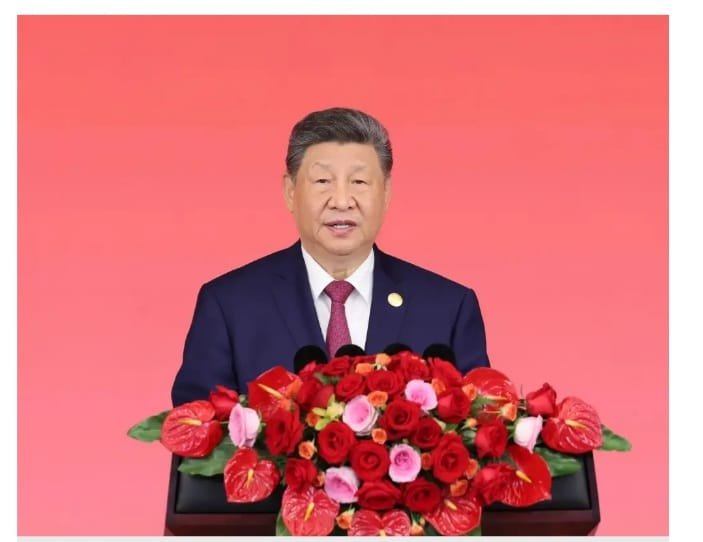
China is creating new opportunities for economic growth, technological innovation and regional cooperation across the Asia-Pacific, with President Xi Jinping calling for greater openness, stronger partnerships and shared prosperity among member economies.
Speaking at the 2026 Asia-Pacific Economic Cooperation (APEC) summit in Shenzhen, Xi urged regional economies to address common development challenges through openness, generate new growth momentum through innovation and pursue shared prosperity through cooperation.
He emphasised that countries must choose cooperation over confrontation, openness over isolation and innovation over outdated approaches to development.
The Guangdong-Hong Kong-Macao Greater Bay Area was highlighted as an example of how regional integration can drive innovation and industrial development. The area brings together businesses, research institutions and manufacturing industries across Shenzhen, Hong Kong and Guangzhou.
Its growing influence was reflected in the World Intellectual Property Organization’s (WIPO) 2026 rankings, which placed the Shenzhen-Hong Kong-Guangzhou cluster at the top of the world’s innovation clusters for the second consecutive year.
The Asia-Pacific remains a major driver of the global economy. The 21 APEC member economies account for approximately 40 per cent of the world’s population, nearly 50 per cent of international trade and more than 60 per cent of global Gross Domestic Product (GDP).
However, the region faces emerging economic challenges, including energy market disruptions linked to the Middle East conflict, rapid technological changes driven by artificial intelligence (AI) and shifting global trade patterns.
Xi called for stronger regional partnerships in science, technology and innovation, alongside deeper cooperation in the digital economy, artificial intelligence and the transition towards green and low-carbon development.
He said these efforts would help transform the region’s technological strengths into sustainable economic growth.
China’s commitment to expanding economic opportunities was also demonstrated at the ninth China International Import Expo (CIIE), where intended one-year deals reached a record US$85.45 billion, representing a 2.3 per cent increase from the previous edition.
Addressing business leaders, Xi described China’s large and expanding consumer market as a source of opportunities for international businesses, particularly in sectors such as new energy vehicles, smart homes, the silver economy and tourism.
He further highlighted China’s 15th Five-Year Plan (2026–2030), saying it would not only guide the country’s economic and social development but also create opportunities for the wider Asia-Pacific region and the global economy.
According to the figures cited, China’s economy grew by 4.6 per cent year-on-year in the first three quarters of 2026, while its trade with other APEC economies increased by 23.9 per cent to 24.07 trillion yuan (approximately US$3.6 trillion).
Xi also reaffirmed China’s commitment to multilateralism and the rules-based global trading system, noting that the country would continue to honour its World Trade Organization (WTO) commitments and oppose unilateralism and protectionism.
He stressed that regardless of changes in the international environment, China would remain committed to mutually beneficial cooperation and shared development with countries across the world.