By: Precious Miracle Kargbo Snr
Sierra Leone has officially launched the construction of the Julius Maada Bio Industrial Fishing Port, a major infrastructure project aimed at transforming the country’s blue economy and strengthening its fisheries sector along the Atlantic coastline.
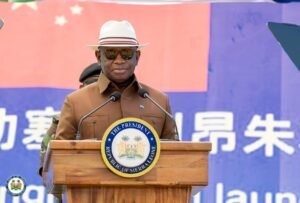
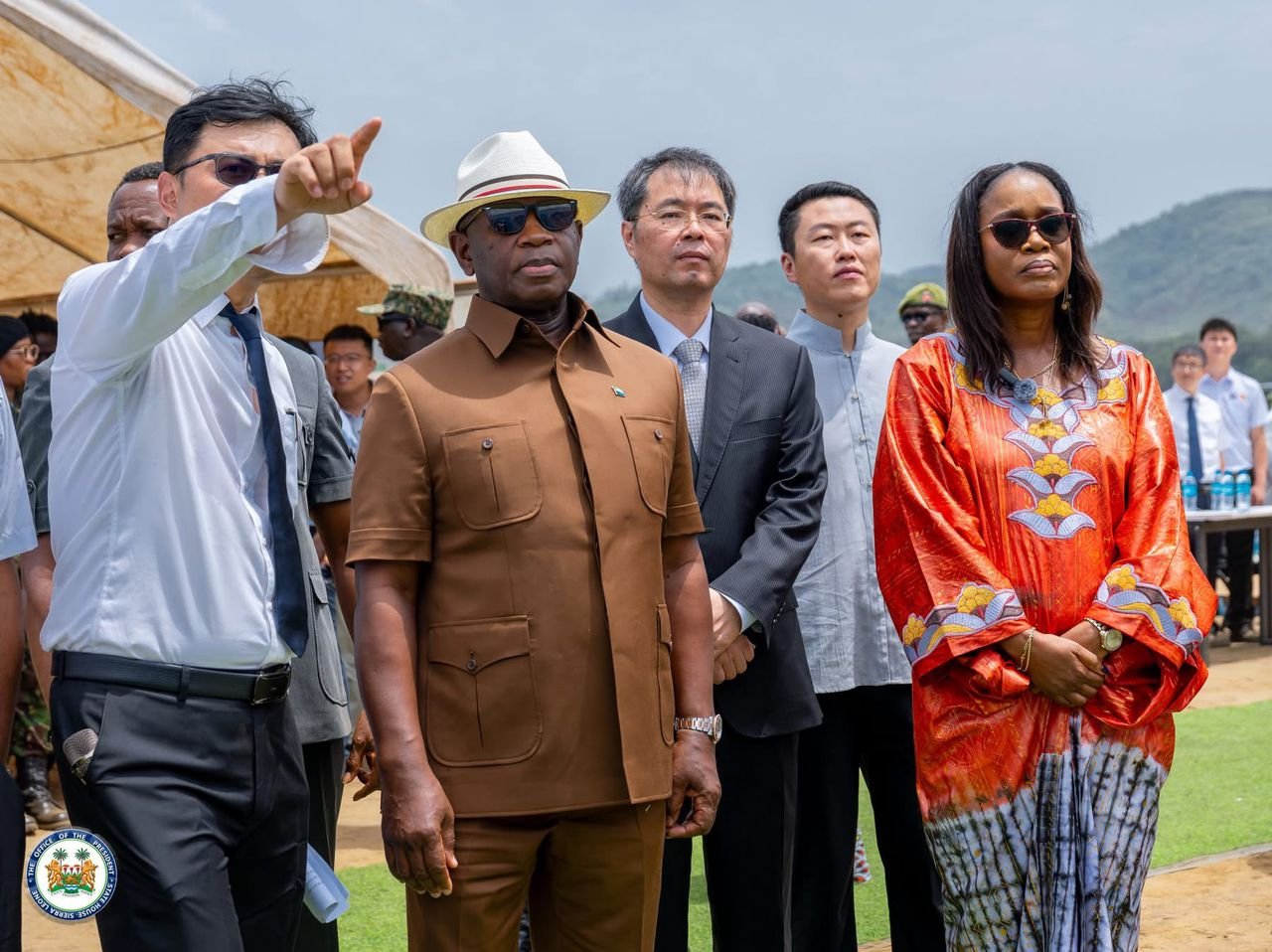
President Julius Maada Bio broke ground for the project at Black Johnson on April 23, 2026, describing it as a landmark investment in the nation’s marine industry. The development is supported by the People’s Republic of China and is expected to deliver an annual fish handling capacity of 450,000 metric tons once operational.
The port will feature a 500-meter breakwater, a 160-meter approach causeway, a berth for 3,000-gross-ton ocean-going fishing vessels, and a 70-meter stepped berth for smaller boats. Plans also include dredging a 300,000-square-meter harbour basin to accommodate both industrial and artisanal fishing vessels of up to 3,000 tons.
Supporting infrastructure, covering approximately 1,216 square meters, will include administrative offices, a fish trading market, water and electricity systems, and sewage treatment facilities. Once completed, the port will provide integrated services such as fish landing, processing, storage, freezing, and logistics support for fishing fleets.
Officials say the project is designed to modernize Sierra Leone’s fishing industry by transitioning it toward large-scale, standardized, and industrial operations. It is expected to create jobs across the entire value chain from vessel maintenance and fish processing to cold storage and distribution while improving livelihoods in coastal communities.
President Bio expressed gratitude to Xi Jinping for China’s support, noting that the project reflects strong bilateral ties between the two nations. “This port is not only an economic asset but also a symbol of China-Sierra Leone friendship and cooperation,” he said during the ceremony.
The initiative aligns with Sierra Leone’s broader blue economy strategy, which aims to harness marine resources sustainably to drive economic growth, improve food security, and create employment. By upgrading port infrastructure and offshore fishing support systems, the government seeks to increase productivity and reduce post-harvest losses that have long affected the sector.
The port is also expected to boost trade and investment by providing a formal hub for fish exports and domestic distribution. Improved facilities will enable local fishermen to access better markets and higher incomes, while attracting private sector investment in processing and logistics.
Beyond its economic benefits, the project highlights deepening cooperation between Sierra Leone and China in infrastructure development and livelihood support. Officials say it demonstrates how targeted investments can deliver tangible results, strengthen economic ties, and promote mutually beneficial partnerships.
Construction will now move into the implementation phase, with authorities emphasizing timely delivery and strict adherence to quality standards. Once completed, the Julius Maada Bio Industrial Fishing Port is expected to become a central pillar of Sierra Leone’s marine economy, supporting commercial fishing activities and the livelihoods of thousands of coastal residents.