

By: Precious Miracle Kargbo Snr
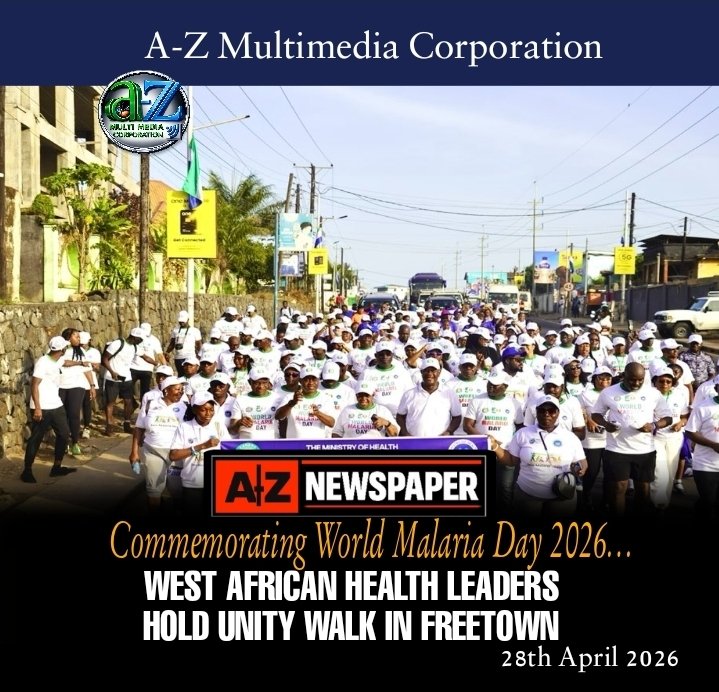
Regional health leaders gathered in Freetown this week for a symbolic unity walk to commemorate World Malaria Day 2026, reinforcing renewed efforts to eliminate malaria across West Africa.
The event was led by Sierra Leone’s Minister of Health and Sanitation, Austin Demby, who told participants: “We are on a journey to eliminate malaria.” The programme brought together health ministers from the Economic Community of West African States, the Director General of the West African Health Organisation, Dr. Melchior Aïssi, as well as public health experts and development partners.
The walk served as a public demonstration of regional solidarity and political commitment to ending malaria, which remains one of the leading causes of illness and death in several ECOWAS member states. Organisers said the initiative aimed to raise awareness, mobilise communities, and strengthen cooperation among countries facing similar health challenges.
Participants emphasized the importance of coordinated action in prevention, diagnosis, and treatment, alongside sustained investment in surveillance systems and community-level interventions. They noted that malaria elimination requires not only national efforts but also strong cross-border collaboration, data sharing, and harmonised policy implementation.
World Malaria Day 2026, observed globally, highlights the need to accelerate progress and leverage innovation to reach vulnerable populations. Health leaders stressed that regional platforms such as ECOWAS and WAHO play a critical role in aligning resources and technical expertise toward elimination targets.
The strong presence of health ministers and senior officials in Freetown reflected growing momentum for a unified West African response. Experts highlighted progress in bed net distribution, case management, and vaccine introduction, while cautioning that sustained funding and strong community engagement remain essential to prevent setbacks.
Minister Demby described the walk as more than a symbolic gesture, calling it a collective commitment to intensify efforts until malaria is no longer a public health threat in the region. The event concluded with a call for governments, partners, and citizens to maintain urgency and strengthen collaboration to finally end the disease.