

By: Aminata Sesay
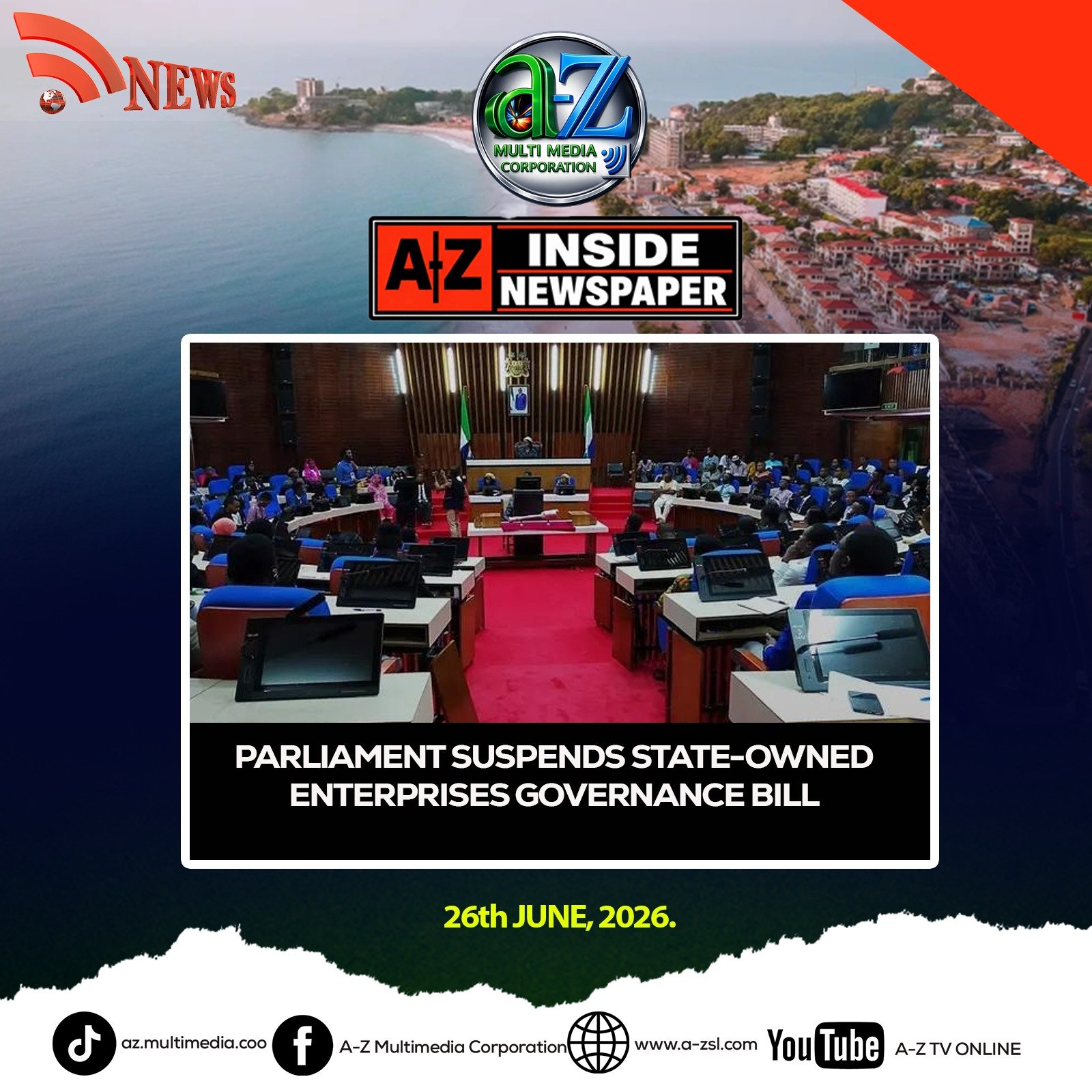
The Parliament of Sierra Leone has suspended further consideration of the State-Owned Enterprises and Governance Bill, 2025, following concerns raised by Members of Parliament over potential overlaps with existing financial management laws and questions regarding the effectiveness of the proposed governance framework.
The decision was taken on Tuesday during the Third Reading and Committee Stage of the Bill after the Deputy Speaker of Parliament, Honourable Ibrahim Tawa Conteh, moved a motion calling for broader consultations before the legislation proceeds.
Honourable Conteh argued that the proposed law raises fundamental questions about the role of the Ministry of Finance, noting that the Ministry already exercises extensive oversight responsibilities over State-Owned Enterprises (SOEs) under the Public Financial Management Act (PFMA), 2016.
He pointed out that the PFMA empowers the Ministry of Finance to receive reports, issue directives, and monitor the operations of public enterprises. Therefore, he said, any assessment of the performance or failure of SOEs must also examine how those existing oversight responsibilities have been carried out. “If state-owned enterprises have failed, that failure is attributable to the failure of the Ministry of Finance to perform its duties as prescribed by law,” Honourable Conteh told Parliament.
The Deputy Speaker also questioned the rationale behind replacing the National Commission for Privatisation (NCP) with a new SOE governance structure while the Ministry of Finance continues to retain significant authority over state-owned enterprises.
He further expressed concern over the Ministry’s continued direct oversight of institutions such as the Sierra Leone Commercial Bank and Rokel Commercial Bank, while proposing a separate governance arrangement for other state-owned enterprises.
Supporting these concerns, the Chairman of the Legislative Committee, Honourable Abdul Sulliaman Marray Conteh, stated that the committee had already identified several provisions of the Bill requiring further scrutiny, particularly Clause 2, which addresses the scope and definition of state-owned enterprises.
He explained that lawmakers needed additional time to determine whether the definitions contained in the Bill adequately reflected the intended objectives of the proposed legislation.
Responding to the debate, the Deputy Minister of Finance acknowledged the Ministry’s responsibility for overseeing state-owned enterprises and admitted that some SOEs have faced operational and governance challenges under the current framework.
She informed Parliament that the Ministry is currently reviewing the Public Financial Management Act to clarify ownership responsibilities and strengthen oversight mechanisms for state enterprises. “We do take responsibility for state-owned enterprises. As we speak, we are in the process of reviewing the PFM Act to ensure that these rules and responsibilities are clearly defined,” she said.
The Deputy Minister assured lawmakers that the proposed State-Owned Enterprises and Governance Bill is intended to improve accountability, strengthen institutional coordination, and address existing gaps in the governance and management of state enterprises.
However, Honourable Ibrahim Tawa Conteh maintained that the issues raised warranted more thorough consideration, describing the matter as a significant legislative concern with far-reaching implications for Sierra Leone’s public financial governance system.
Following a voice vote, many Members of Parliament supported the motion to stand down the Bill, paving the way for further consultations with lawmakers, legal experts, and other relevant stakeholders before it is brought back for consideration.
The suspension means that the State-Owned Enterprises and Governance Bill, 2025, will remain pending until Parliament is satisfied that the proposed framework clearly defines institutional responsibilities, strengthens accountability, and avoids conflicts with existing laws and regulatory provisions.