

By: Aminata Sesay
The Parliamentary Oversight Committee on Trade and Industry has called for greater transparency in petroleum pricing, stronger consumer protection measures, and enhanced competition within Sierra Leone’s downstream petroleum sector. The Committee urged the National Petroleum Regulatory Authority (NPRA) and Oil Marketing Companies (OMCs) to improve public understanding of how fuel pump prices are determined.
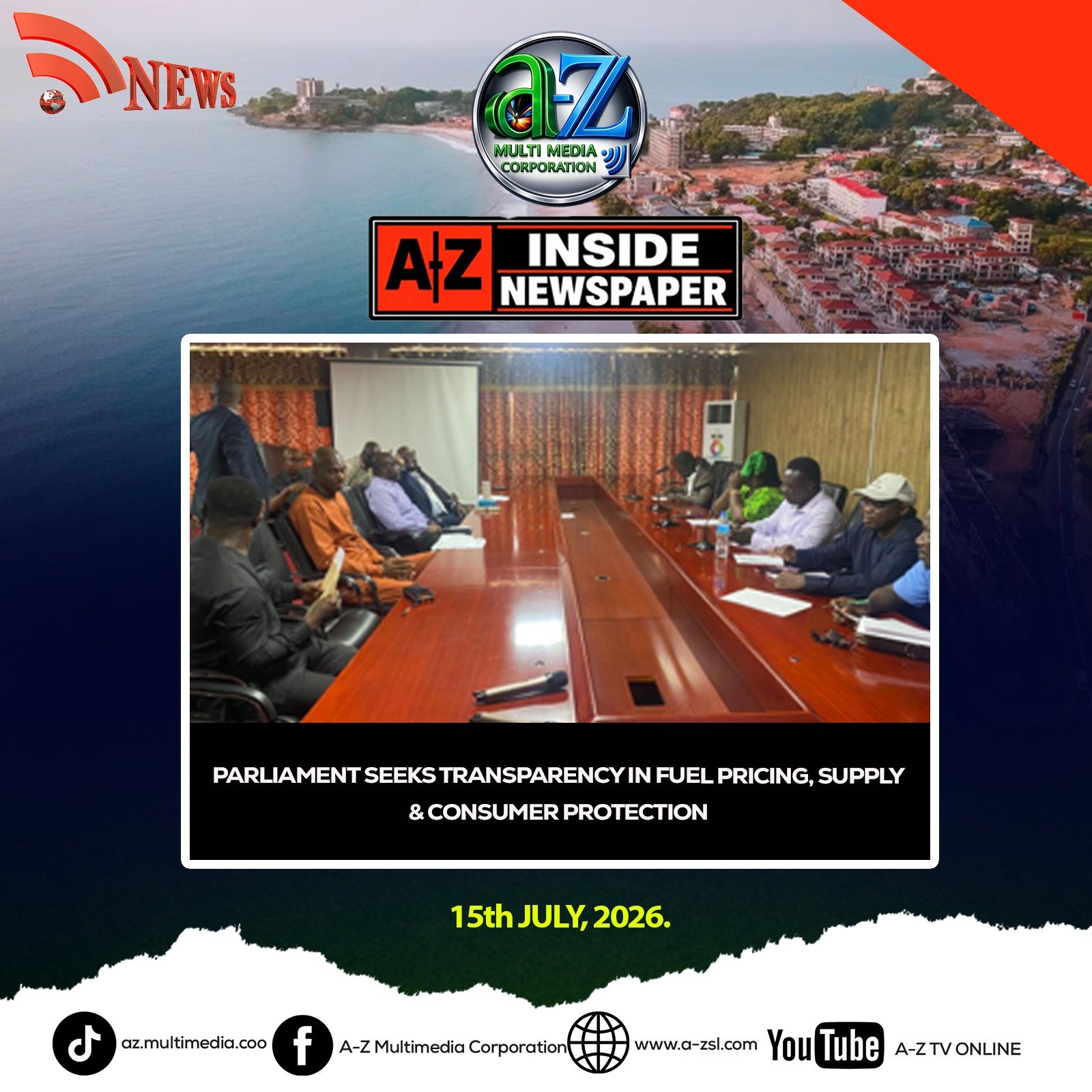
The concerns were raised during an oversight engagement chaired by Hon. Veronica Kadie Sesay, which brought together officials of the NPRA, representatives of Oil Marketing Companies, and other key stakeholders to review petroleum pricing, fuel supply, regulatory compliance, and market competition.
Opening the meeting, Hon. Veronica Kadie Sesay acknowledged the challenges posed by the recent Middle East crisis, noting that disruptions in global petroleum markets had affected the supply of refined petroleum products to Sierra Leone.
She commended the Government for introducing fuel subsidies during the crisis, describing the intervention as timely and effective in shielding consumers from the full impact of soaring international fuel prices.
While acknowledging that the petroleum pricing formula has reduced repeated appeals for government subsidies, the Chairperson questioned why public dissatisfaction over fuel prices continues despite the existence of the pricing mechanism.
She stressed the need for sustained public education to address misconceptions about the relationship between international crude oil prices, refined petroleum product prices, and local pump prices.
During the hearing, Members of Parliament sought clarification on the regulatory framework governing fuel pricing, particularly the rationale for maintaining a regulated floor price instead of allowing greater price competition among Oil Marketing Companies.
Lawmakers argued that increased competition could potentially lower fuel prices for consumers while maintaining fairness and stability within the industry.
The Committee also questioned why filling stations selling fuel below the regulated floor price are in violation of industry regulations and requested a detailed explanation from the regulator.
Consumer protection featured prominently during the discussions, with Members seeking assurances that all petroleum products imported into Sierra Leone meets approved quality standards.
They further urged the NPRA to strengthen quality control measures to ensure motorists receive safe, reliable, and high-quality fuel, regardless of the supplier.
The Committee also examined the country’s fuel security, questioning whether adequate strategic petroleum reserves have been established to safeguard Sierra Leone against future international supply disruptions.
Members suggested that maintaining fuel reserves capable of sustaining the country for several months would help cushion the impact of external shocks on domestic fuel prices.
Another issue raised was the apparent delay in reducing pump prices whenever international fuel prices decline.
Members observed that local fuel prices tend to rise quickly when global prices increase but are often slower to decrease when international market conditions improve.
The Committee also expressed concern over reports that some filling stations temporarily suspend operations ahead of anticipated fuel price increases, describing the practice as one that creates artificial shortages and unnecessary hardship for consumers.
Responding to the concerns, Director General of the National Petroleum Regulatory Authority, Brima Baluwa Koroma, explained that petroleum pricing is based on internationally recognized market conditions for refined petroleum products rather than crude oil prices alone.
He said the recent Middle East conflict significantly disrupted global supplies of refined petroleum products, prompting the Government to introduce fuel subsidies to ease the financial burden on consumers.
According to Mr. Koroma, Oil Marketing Companies incurred substantial losses during the crisis by maintaining fuel supplies despite escalating international prices, while government intervention prevented even higher increases at the pump.
He further explained that the NPRA applies the pricing formula established under the NPRA Act to determine the maximum pump price.
Mr. Koroma noted that local fuel prices are influenced by several factors, including international refined petroleum product prices, exchange rates, taxes, transportation costs, insurance, port charges, and distribution margins.
He added that although crude oil prices may decline, refined petroleum products are traded independently on international markets and remain affected by supply disruptions, logistics costs, and global demand.
Representatives of the Oil Marketing Companies defended the current pricing system, stating that all operators procure fuel under similar international market conditions and are subject to the same statutory taxes and regulatory charges.
They argued that selling fuel significantly below the regulated floor price could undermine business sustainability, distort competition, and discourage investment in the petroleum sector.
The NPRA further assured Parliament that Sierra Leone’s fuel supply remains stable despite recent international disruptions, adding that the country currently maintains stronger fuel stock levels than in previous years.
Concluding the engagement, Hon. Veronica Kadie Sesay urged the NPRA and Oil Marketing Companies to intensify public awareness campaigns on petroleum pricing through radio, television, print, and digital media.
She said a better public understanding of the pricing formula would help reduce misinformation, strengthen public confidence in the country’s petroleum regulatory system, and foster greater trust in the sector.
The Committee reaffirmed its commitment to sustained oversight of the petroleum sector to promote transparency, fair competition, consumer protection, and a stable and sustainable fuel supply for Sierra Leone.