

By: Aminata Sesay
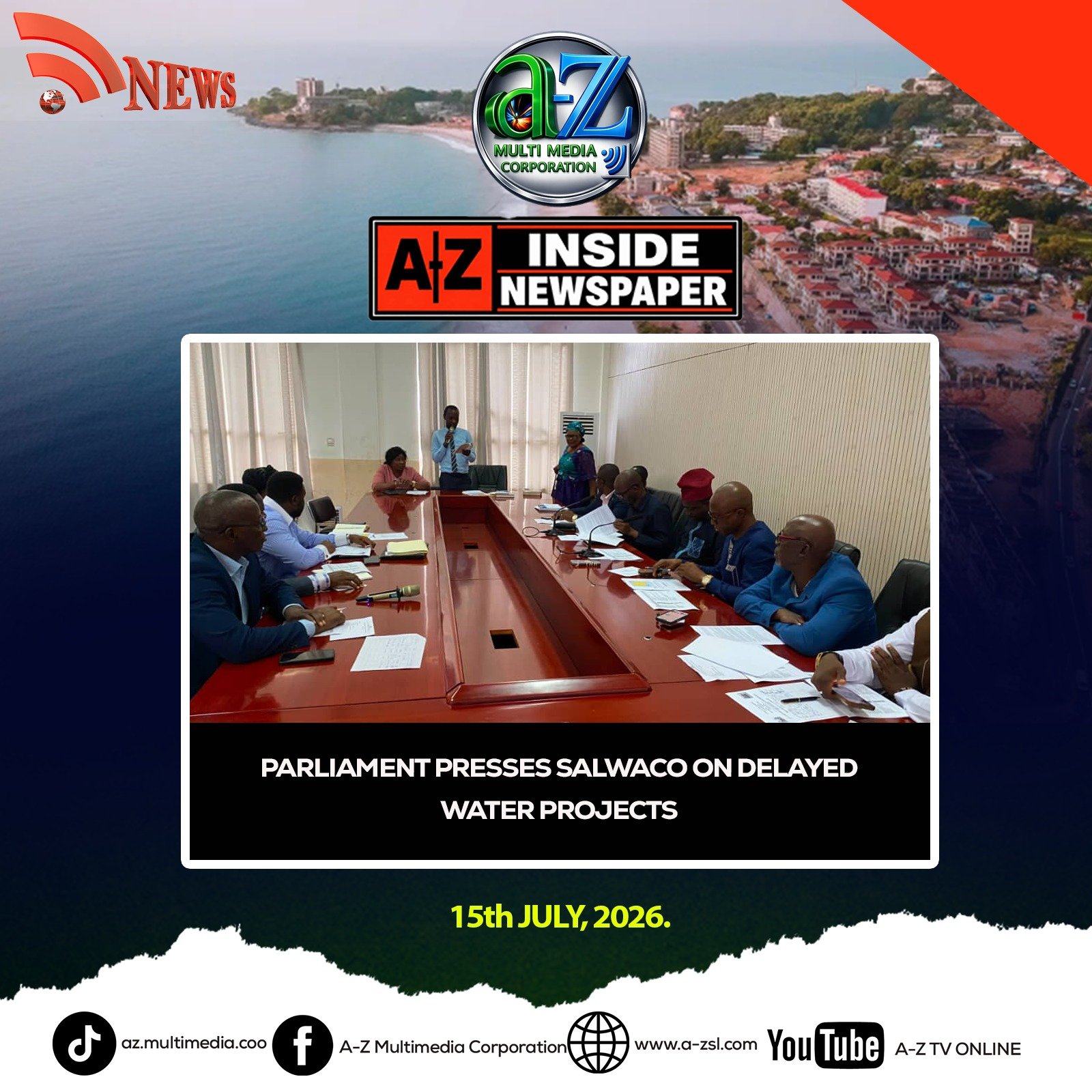
The Parliamentary Oversight Committee on Water Resources has expressed concern over delays in the implementation of water supply projects across Sierra Leone, urging the Sierra Leone Water Company (SALWACO) to expedite ongoing works and improve access to safe, reliable, and sustainable water services.
The concerns were raised during a committee hearing on Tuesday, 14 July 2026, when SALWACO’s management appeared before Parliament to present updates on the company’s operations, review progress on ongoing projects, and address challenges affecting water service delivery nationwide.
Welcoming SALWACO’s newly appointed Managing Director, Engineer Tity Jalloh-Jabbi, the Committee Chairman said Parliament had intentionally allowed her time to settle into office before inviting her to engage with lawmakers.
He noted that expanding access to sustainable water services remains one of Sierra Leone’s key development priorities. The Chairman also informed the Managing Director that the Committee had conducted several oversight visits to SALWACO project sites in Blama, Lungi, Kambia, and other locations across the country to assess project implementation.
The Committee expressed concern over abandoned infrastructure, delays in project completion, fuel shortages affecting operations, and recurring interruptions in water supply in several communities. While assuring SALWACO of Parliament’s continued support through effective oversight and legislative intervention, the Chairman encouraged the company to provide regular progress reports on all ongoing projects.
Presenting SALWACO’s operational report, Engineer Jalloh-Jabbi disclosed that she assumed office in November 2025 and immediately undertook a comprehensive assessment of the company’s technical, financial, and operational challenges.
She informed the Committee that SALWACO has developed a Five-Year Strategic Plan (2026–2030), aimed at strengthening water supply systems, improving sanitation services, enhancing operational efficiency, and achieving long-term financial sustainability.
According to the Managing Director, the company has also introduced a modern revenue management and smart billing system to improve revenue collection. However, she explained that rising operational costs, particularly fuel prices and the energy required for pumping and treating water, continue to place significant pressure on the company’s finances.
On project implementation, Engineer Jalloh-Jabbi stated that the Government’s priority is to complete ongoing projects before initiating new ones. She assured lawmakers that major water projects in Blama, Makeni, Kambia, Kabala, and Bonthe are expected to be completed and commissioned before the end of 2026, while other projects will continue into 2027 and 2028, subject to the availability of funding.
During the hearing, Members of Parliament questioned the delays affecting projects in Kabala, Mabonto, Kono, Koinadugu, Kambia, and several other districts. They sought explanations regarding contractor performance, project timelines, and the utilization of funds allocated for water infrastructure development.
Lawmakers also raised concerns about ageing and corroded pipelines, noting that deteriorating infrastructure contributes to significant water losses and increased operational costs. They called for stronger maintenance systems and the gradual replacement of obsolete pipelines to improve efficiency.
Several Members further advocated for greater private sector participation through Public-Private Partnerships (PPPs), arguing that such collaborations could enhance efficiency, reduce operating costs, and strengthen revenue generation within the water sector.
The Committee requested key project documents, including contracts, payment certificates, and progress reports, to verify information presented during the hearing. Engineer Jalloh-Jabbi assured Members that the requested documents would be submitted to the Committee.
Providing updates on specific projects, the Managing Director confirmed that the Kambia Water Supply Project has received a new generator to improve service delivery and incorporates renewable solar energy components to enhance sustainability.
She also announced that a new water supply project for Karene District is expected to commence following the official handover of the project site to contractors.
Regarding the long-delayed Kono Water Supply Project, Engineer Jalloh-Jabbi explained that implementation is currently dependent on securing external financing after earlier funding discussions with the Government of Hungary were disrupted by a change of government.
Concluding the engagement, the Committee Chairman commended SALWACO’s commitment to completing ongoing projects but urged the company to ensure timely implementation, efficient project management, and prudent use of public resources.
He announced that the Committee would continue conducting field oversight visits to monitor project progress and verify service delivery in beneficiary communities. He further warned that contractors who consistently fail to deliver government-funded projects on schedule should face appropriate sanctions, including possible blacklisting from future public procurement opportunities.
The Committee reaffirmed Parliament’s commitment to supporting initiatives aimed at expanding access to safe, affordable, and sustainable water services for all Sierra Leoneans while strengthening accountability in the management of public infrastructure projects.