

By: Aminata Sesay
The Native Consortium and Research Centre (NCRC) has called for a comprehensive investigation into the procurement, financing, management and operation of the Waka Fine Bus service, raising concerns over the condition of the buses, declining revenue, fleet management and accountability for funds generated.
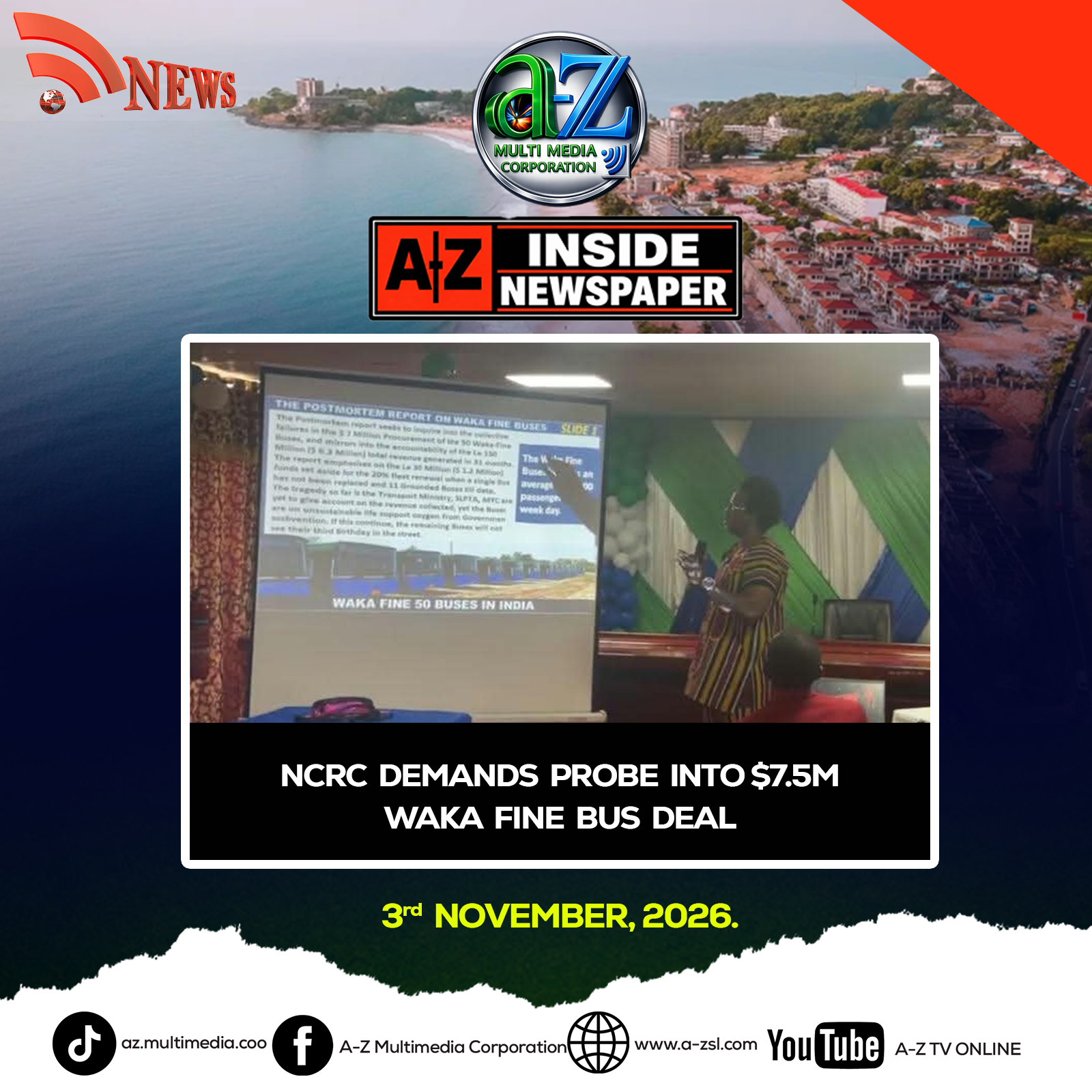
The call was made on Monday, 2 November 2026, during the mini-launch of the Consortium’s postmortem report on the Waka Fine Bus project, held at Committee Room One of the Parliament of Sierra Leone.
Presenting the report, Edmond Abu, Executive Director of NCRC, questioned the procurement of 50 buses at a reported cost of US$7.5 million, amounting to approximately US$150,000 per bus. He expressed concern that several of the vehicles had reportedly developed mechanical faults, including power steering problems, despite being procured as new buses.
Abu said the findings raised questions about whether the buses were genuinely new or refurbished, pointing to variations in mileage, mechanical defects and maintenance records. He also questioned whether adequate due diligence and pre-shipment inspections had been conducted before the buses were shipped from India.
According to the presentation, the Consortium based its findings on interviews with relevant stakeholders, including engineers and mechanics, as well as an examination of procurement documents, maintenance records and other available evidence.
The report further questioned the suitability of the buses for urban transport, arguing that vehicles reportedly designed primarily for intercity operations were deployed on city routes. Abu noted that their seating configuration, which accommodates approximately 40 seated passengers and 30 standing passengers, raised concerns about their suitability for certain urban transport services.
On fleet management, the Consortium reported that 11 buses had been grounded due to various mechanical problems, with no replacement buses recorded. It argued that the growing number of unserviceable vehicles had affected the delivery and reliability of the service.
The financial performance of the project also came under scrutiny. NCRC claimed that approximately US$6.3 million had been generated from operations between February 2024 and September 2026, while questioning the amount allocated towards maintenance and fleet renewal.
The report cited a 179 per cent decline in revenue performance and questioned why grounded buses had not been replaced despite the reported revenue generated by the service.
Among the factors identified as potentially contributing to the decline were weaknesses in the digital ticketing system, alleged ticket bypassing by drivers and conductors, inadequate revenue protection mechanisms, the absence of automatic passenger-counting systems and the failure of some buses to complete their scheduled trips.
The Consortium also questioned the revenue-sharing arrangement with the ticketing service provider, particularly the percentage of revenue allocated as commission. It recommended a review of the arrangement to ensure that sufficient funds were retained for fleet maintenance, replacement and expansion.
Beyond the operational concerns, NCRC called for accountability from the Ministry of Transport and Aviation, the Sierra Leone Public Transport Authority, Metro Transport Company, the ticketing service provider and the World Bank.
It urged Parliament, particularly the relevant oversight committees, to institute an investigation into the procurement and financial arrangements of the project. The proposed investigation, it said, should examine payments made to suppliers, the status of the outstanding 10 per cent payment, warranty obligations and the pre-shipment inspection process.
The Consortium also disclosed plans to submit a formal complaint to the World Bank, seeking clarification on the due diligence, procurement oversight and monitoring processes surrounding the project.
It maintained that the government should not continue committing public funds to subsidizing the service without first establishing accountability for the challenges identified in the report.
However, Abu stressed that the concerns were not directed solely at the transport authority or bus operator but extended to all institutions and stakeholders involved in the procurement, financing, management and operation of the project.
To address the challenges, NCRC recommended stronger financial oversight, improved revenue monitoring, the installation of CCTV cameras and automatic passenger-counting systems, and reforms to the digital ticketing arrangements.
It also proposed extending digital ticketing to other public transport services, including school buses, while reviewing the commission paid to the ticketing service provider.
The Consortium said the report was intended to promote transparency, accountability and improvements in public transport delivery, emphasizing that the ultimate objective should be to ensure the sustainability of the Waka Fine Bus project and provide reliable transportation for the travelling public.