

By: Saidu Jalloh
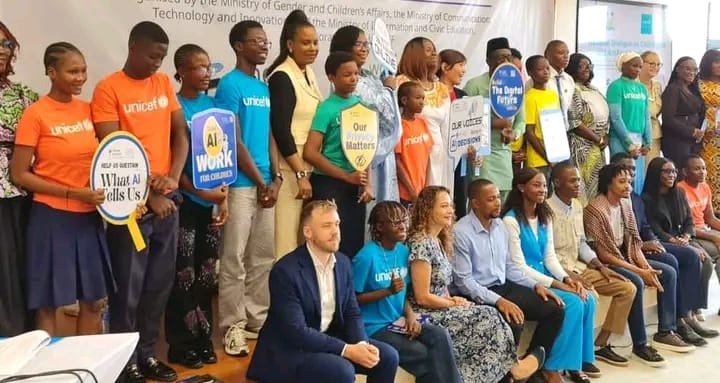
The Government of Sierra Leone, in partnership with the United Nations Children’s Fund (UNICEF), has officially launched the Child Rights Act 2025 and convened a National Dialogue on Child Rights and Artificial Intelligence (AI), placing children’s voices, digital safety and equal access to technology at the centre of discussions on the country’s digital future.
The event was held yesterday at the Ministry of Foreign Affairs in Freetown as part of activities marking World Children’s Day and UNICEF’s 80th anniversary celebrations.
The Child Rights Act 2025 was officially launched by the Minister of Planning and Economic Development, Dr Kanyech Bailey, while the national dialogue provided a platform for children to participate meaningfully in discussions on how artificial intelligence can expand opportunities while safeguarding their rights, privacy and well-being.
UNICEF Chief of Communication and Advocacy, Suzanne Wooster, said the engagement was informed by consultations with children across Sierra Leone, during which they shared their experiences, expectations and concerns about artificial intelligence.
UNICEF Country Representative, Mariko Kagoshima, emphasised that children must not be left behind in the country’s digital transformation. She noted that artificial intelligence could improve access to information, including by translating complex laws and policies into languages children can understand, such as Krio.
However, she warned that children without digital devices, reliable internet connectivity and the necessary skills risk being excluded from emerging opportunities in the digital space.
In her remarks on protecting children in the digital age, the Minister of Gender and Children’s Affairs, Dr Isata Mahoi, cautioned that technological advancement was creating new forms of vulnerability, including cyberbullying, online exploitation, identity theft, exposure to harmful content and digital harassment.
Dr Mahoi called for a coordinated, whole-of-government approach involving relevant ministries, parents, caregivers, law enforcement agencies and development partners. She also underscored the need to protect children’s personal data, strengthen online safety measures and promote responsible innovation.
Meanwhile, the Minister of Information and Civic Education, Chernor Bah, drawing on his experience as a former child rights advocate and President of the Children’s Forum Network, stressed that children must be actively involved in shaping policies that affect their future.
“Do not allow artificial intelligence to replace your own intelligence, your curiosity, your creativity and your capacity to think differently,” he urged the children.
A key highlight of the dialogue was a presentation by child representatives from Koinadugu and Moyamba Districts, who shared their experiences with artificial intelligence and highlighted its potential to support learning, creativity and communication.
They also called for stronger privacy protections, equal access to digital technology and meaningful participation in decisions concerning the use of artificial intelligence.
Delivering the keynote address, Dr Bailey acknowledged the growing influence of children in national policymaking, noting that their contributions had helped shape priorities in the Medium-Term National Development Plan, including the passage of the Child Rights Act 2025.
The programme also featured a high-level public-private partnership dialogue on shaping Sierra Leone’s AI future, moderated by former Children’s Forum Network President, Mariam Samai. The session was complemented by a UNICEF video presentation showcasing children’s perspectives on artificial intelligence from different parts of the world.
The event concluded with an interactive session titled “Children at the Crossroads: Pick a Corner, Make a Commitment”, during which the Ministers of Gender and Children’s Affairs, Information and Civic Education, and Planning and Economic Development, alongside a representative from the Ministry of Communications, Technology and Innovation, responded to children’s demands on digital inclusion, online safety, responsible AI and meaningful child participation in policymaking.