

By: Morlai Sesay
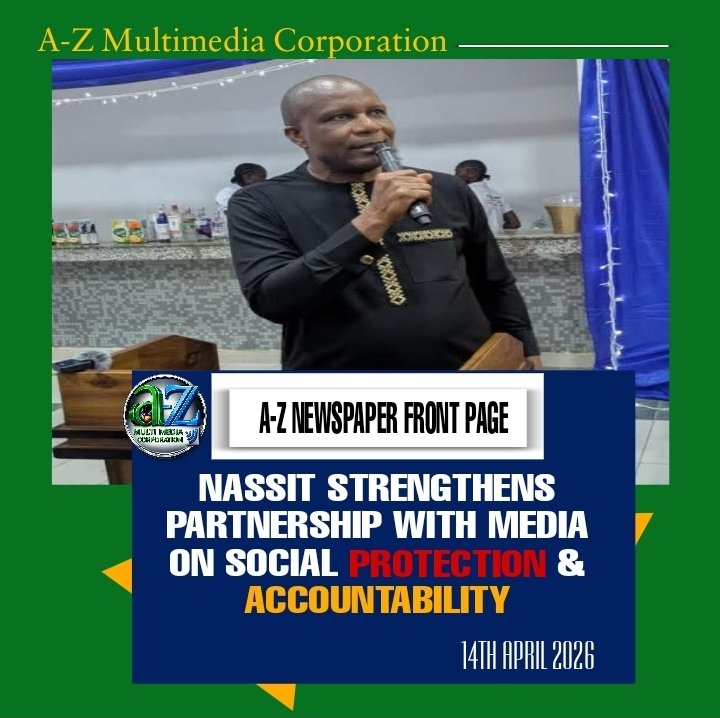
The National Social Security and Insurance Trust (NASSIT) press cocktail, held on Thursday, April 9, 2026, at the Freetown International Conference Centre, Aberdeen, Freetown, served as a key moment in the ongoing national dialogue on media sustainability, social protection, and institutional accountability in Sierra Leone.
What began as a formal engagement quickly developed into a frank exchange of ideas, concerns, and expectations among journalists, policymakers, and administrators.
At the centre of the discussion was a strong message from the President of the Sierra Leone Association of Journalists (SLAJ), Alhaji Manika Kamara, who challenged both NASSIT and the media to rethink their relationship. He acknowledged the importance of such engagements but stressed that annual meetings alone are not sufficient to build a strong, independent, and effective media sector.
He stated that the media must be treated as a strategic development partner, not merely a channel for publicity.
His remarks drew attention to the fragile state of journalism in Sierra Leone, where many practitioners work under difficult financial conditions with limited institutional support. He argued that without deliberate and sustained investment, the media will struggle to effectively fulfil its constitutional role of informing the public and holding power to account.
He therefore called on NASSIT to introduce structured support systems, including funding opportunities for investigative journalism, particularly on issues related to social protection and public finance.
He also proposed targeted training programmes to strengthen journalists’ understanding of complex financial and social security systems, noting that improved knowledge would lead to more accurate and impactful reporting. In addition, he emphasized the need for public education campaigns, stating that an informed citizenry is essential for the success of any social security scheme.
Addressing media owners, he raised concerns about widespread non-compliance with NASSIT contributions within the sector. He warned that many veteran journalists are retiring without benefits due to years of neglected contributions. He urged media institutions to prioritise staff welfare and called for stronger enforcement of labour standards, including a minimum wage for journalists.
Responding, the Director General of NASSIT, Mohamed Fuaad Daboh, described the engagement as more than a ceremonial gathering, but rather an opportunity for honest and transformative dialogue. He called for a shift from transactional relationships to meaningful partnerships between NASSIT and the media.
He criticised the traditional model of engagement limited to advertisements and event coverage, describing it as outdated and insufficient. Instead, he advocated for a more integrated approach in which the media plays an active role in shaping narratives, interpreting data, and engaging the public on national issues.
He further emphasised that the media’s role goes beyond reporting events to providing context and supporting informed decision-making. He reaffirmed his commitment to transparency and noted that NASSIT is undertaking reforms aimed at expanding coverage and improving benefits, which require strong media collaboration to succeed.
The Minister of Employment, Labour and Social Security, Mohamed Rahman Swaray, also contributed to the discussion, expressing concern over low participation in the social security scheme, particularly among media institutions. He described this as a serious risk to workers’ long-term welfare and called for urgent corrective measures.
He stressed that social protection is essential, especially in an economy where many workers face uncertainty. He urged journalists and media owners to lead by example by ensuring full compliance with NASSIT regulations. He also reaffirmed government’s commitment to strengthening enforcement while continuing stakeholder engagement.
As the event progressed, participants agreed that the challenges facing the media and the social security system are closely linked. A weak media undermines accountability, while weak social protection systems increase worker vulnerability. Addressing one without the other, they noted, would be ineffective.
The discussions also highlighted the need for innovation in the media sector, particularly in adapting to digital platforms. Participants called for investment in technology and skills development to ensure media sustainability and relevance in a rapidly changing environment.
The NASSIT press cocktail concluded with a shared commitment to strengthen collaboration between institutions and the media. It underscored the importance of transparency, accountability, and partnership in national development, with stakeholders expected to translate the discussions into concrete action.