

By: Mamajah Jalloh
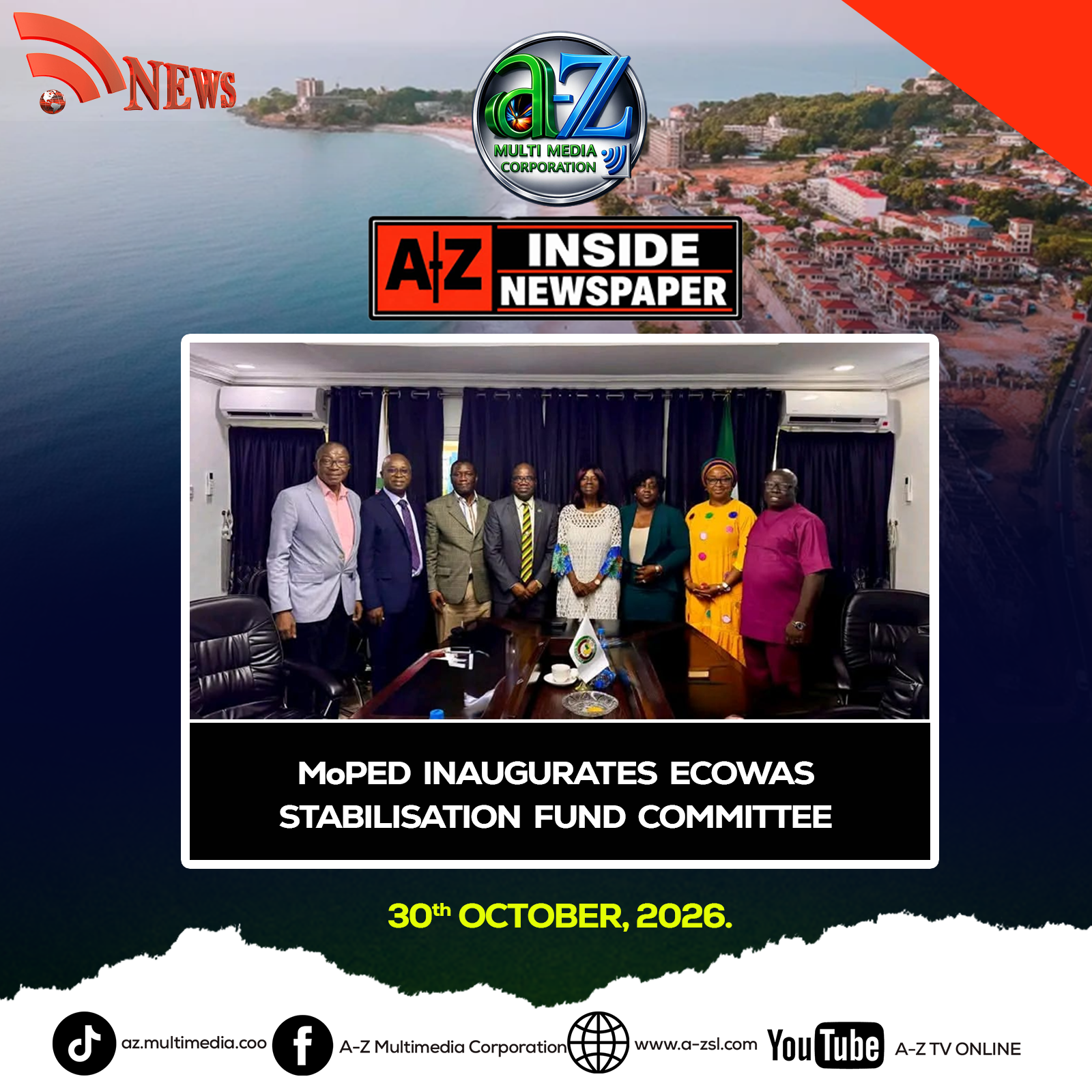
The Ministry of Planning and Economic Development (MoPED) has taken a significant step towards strengthening national coordination for the implementation of the ECOWAS Fund for Regional Stabilization and Development (FRSD) Project in Sierra Leone, following the inaugural meeting of the National Advisory Committee (NAC) on Thursday, 29 October 2026.
The meeting, held in a hybrid format at the Office of the ECOWAS Resident Representative in Freetown, brought together the Minister of Planning and Economic Development, Hon. Kenyeh Barlay, members of the newly established committee, government representatives, programme consultants and other stakeholders to discuss the Fund’s objectives, governance structure and implementation arrangements.
Key discussions focused on reviewing and adopting the Committee’s Terms of Reference, formally inaugurating the NAC and agreeing on the commencement of a Joint Technical Mission to identify and assess potential interventions for Sierra Leone.
Sierra Leone is the fifth country to participate in the FRSD programme, following its initial implementation in Burkina Faso, Mali and Niger. The country’s inclusion provides an opportunity to benefit from lessons learned in other participating countries while ensuring that proposed interventions reflect Sierra Leone’s development priorities and local circumstances.
The establishment of the NAC is expected to strengthen national ownership, improve institutional coordination and ensure that proposed projects align with the country’s development agenda. Members were encouraged to discharge their responsibilities with objectivity, integrity, fairness and a commitment to the public interest.
The Committee is expected to provide strategic guidance, facilitate coordination among relevant institutions, review project concepts and work plans, and help identify issues requiring further technical assessment. Discussions also emphasised the need for transparent and participatory procedures to ensure that proposed interventions are relevant, feasible, sustainable and responsive to community needs.
Members were further urged to draw on the expertise of relevant government institutions and other stakeholders to ensure that proposed projects complement existing government programmes, address clearly identified development gaps and avoid duplicating ongoing initiatives.
Among the members introduced at the meeting were Alphonse Omalley, National Coordinator for Civil Society; Mrs. Francess Nyuma of the National Early Warning and Response Mechanism Centre (NEWRMC); Charles Kobai, Executive Director of Forward Sierra Leone; and Christian Kamara, Chairman of the Board of the Sierra Leone Association of Non-Governmental Organisations (SLANGO).
Other participants included a representative of the Ministry of Technical and Higher Education, Marlon Ory, a lawyer and Director of Policy, as well as programme consultants and other stakeholders.
Presentations outlined the FRSD programme’s objectives, financing arrangements, governance framework and implementation procedures. The Fund is an ECOWAS initiative supported by the German Federal Ministry for Economic Cooperation and Development (BMZ), designed to promote stabilization and development in fragile regions through investment, capacity-building and locally responsive interventions.
The programme seeks to address underlying social and economic vulnerabilities by improving living conditions, expanding economic opportunities, strengthening access to essential services and building resilient communities. Particular attention is given to young people, women and other vulnerable groups.
Its intervention areas include private-sector development and employment creation through entrepreneurship, skills development and income-generating activities; improved access to essential services such as health, education, water and sanitation, and energy; the promotion of social cohesion and good governance through accountability, civic engagement and participatory local governance; and capacity-building for relevant regional, national and local institutions.
However, these areas represent potential intervention frameworks and do not constitute a final list of projects approved for Sierra Leone. The selection of specific sectors, locations, activities and implementing organisations will depend on needs assessments and the application of agreed selection criteria.
Programme consultants Veerle Van Waesberghe and Steffen Horn contributed to the technical discussions. Van Waesberghe presented an overview of the programme and its governance arrangements, while Horn outlined the Fund’s operational framework and implementation considerations.
Their presentations examined the distinction between the Fund’s Financial Cooperation (FC) and Technical Cooperation (TC) windows. Financial Cooperation, supported through KfW Development Bank, focuses on investment-oriented interventions, while Technical Cooperation, implemented by the Deutsche Gesellschaft für Internationale Zusammenarbeit (GIZ), provides technical assistance and capacity development.
Abdoulaye Kaigama NOUDJIA also presented the direct-investment sub-window and explained its place within the programme’s financing arrangements. Participants discussed the importance of matching proposed interventions to the appropriate financing mechanisms and support structures.
Lessons from the Fund’s implementation in other countries were also considered, particularly the need to concentrate resources on a manageable number of priority interventions and locations rather than spreading support across too many sectors and geographical areas. Such an approach is intended to strengthen oversight, reduce logistical challenges and improve the prospects of achieving measurable results.
Governance and accountability featured prominently, with participants reviewing the institutional structures responsible for managing and implementing the Fund. At programme level, these include a Steering Board responsible for strategic direction and high-level coordination, a Technical Board that considers technical matters and intervention strategies, and a Fund Management Unit responsible for operational coordination and day-to-day management.
Within Sierra Leone, the NAC is expected to serve as a national platform for consultation, coordination and strategic guidance. Its responsibilities include helping to align proposed interventions with national development priorities, reviewing project concepts and work plans, facilitating institutional collaboration and identifying matters requiring further technical attention.
The proposed Memorandum of Understanding between the Government of Sierra Leone and programme partners is also expected to clarify institutional roles and responsibilities and provide a framework for coordinated implementation.
During the interactive session, committee members and other stakeholders sought clarification on programme procedures, financing arrangements, institutional responsibilities and the project-selection process. Government representatives provided responses to the issues raised.
Agriculture, vocational education and training, healthcare, social infrastructure, water and sanitation, and energy emerged as potential areas for consideration. Cross-cutting priorities, including youth participation, gender equality, social inclusion and climate resilience, were also highlighted in discussions on community stabilization and development.
Nevertheless, no final decisions on project locations, implementing partners, specific interventions or funding allocations were announced at the meeting.
The next major step is the Joint Technical Mission, expected to commence on 16 November 2026. The mission will support consultations with potential implementing organizations and relevant stakeholders, assess needs in potential intervention areas and advance the development and appraisal of project concepts.
A follow-up meeting is scheduled for 10 November 2026 to review the needs-assessment process, consider potential geographical and sectoral priorities, and examine the draft schedule for the technical mission.
Subsequent stages are expected to involve reviewing and refining project concepts, preparing detailed proposals and work plans, and validating implementation arrangements. The timing and approval of these stages will depend on the findings of the technical assessments and the applicable decision-making procedures.
The inaugural meeting marks an important milestone in establishing the national coordination framework for the implementation of the ECOWAS Fund for Regional Stabilization and Development in Sierra Leone.
Through the NAC, government institutions and other stakeholders are expected to contribute to a coordinated, transparent and evidence-based process for identifying interventions that address local needs and support national development priorities.
As preparations advance towards the Joint Technical Mission, the focus will remain on identifying feasible and sustainable interventions, strengthening institutional collaboration and ensuring that the Fund contributes to improved living conditions, inclusive economic opportunities, stronger community resilience and lasting social cohesion.