

By: Mohamed J. Bangura
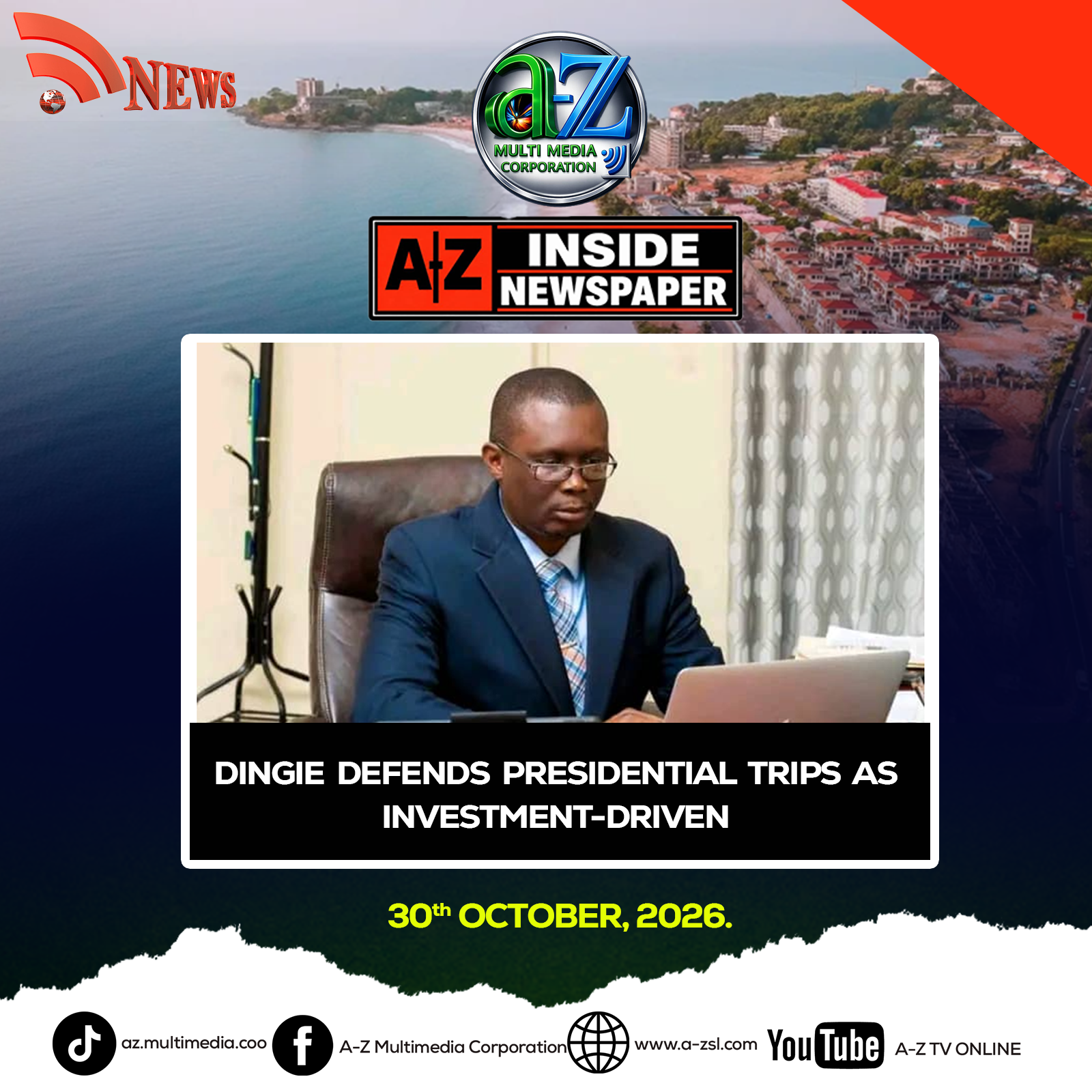
Financial Secretary at the Ministry of Finance, Matthew Dingie, has defended presidential overseas trips, saying they are intended to attract investors, unlock economic opportunities and advance Sierra Leone’s national development.
Dingie made the statement on Wednesday during an appearance on AYV’s State of the Nation, where he explained that the government evaluates presidential travel from a financial perspective, focusing on the potential economic returns and investment opportunities such engagements could generate.
“From a finance perspective, whenever the President travels, we look at the benefits that come with those trips. He goes there to unlock opportunities and position our country to attract investors,” the Financial Secretary said.
He explained that presidential engagements abroad are part of the government’s broader strategy to promote Sierra Leone as an investment destination, strengthen international economic relations and establish partnerships capable of supporting national development.
According to Dingie, such visits provide opportunities for the President to engage potential investors, explore business partnerships and showcase the country’s investment potential to the international community.
His remarks reflect the government’s position that presidential overseas trips should be assessed not only by their immediate financial costs but also by the potential economic benefits they could deliver.
However, the extent to which such trips contribute to national development depends on whether the engagements result in concrete investments, viable projects, employment opportunities and measurable improvements in citizens’ living standards.
Beyond presidential travel, Dingie also addressed the government’s responsibility to meet citizens’ basic needs, emphasizing the role of public policies and development programmes in improving access to essential goods and services.
He noted that although the government does not directly manufacture everyday consumer products, it has a responsibility to create an enabling environment through policies and projects that address people’s needs.
“Government does not directly manufacture these items, but we are implementing policies and projects that address the three essentials of life: food, shelter, and clothing,” he stated.
Food, shelter and clothing remain fundamental to household welfare, particularly as Sierra Leone continues to pursue economic growth and improved living standards.
Dingie’s comments underscore the government’s emphasis on investment promotion as a component of its development agenda. Private investment can support business expansion, create jobs and stimulate economic activity across various sectors.
Nevertheless, the ultimate measure of success will be whether the opportunities pursued through international engagements translate into tangible benefits for ordinary Sierra Leoneans, including increased employment, improved household incomes and better access to essential goods and services.