

By: Precious Miracle Kargbo
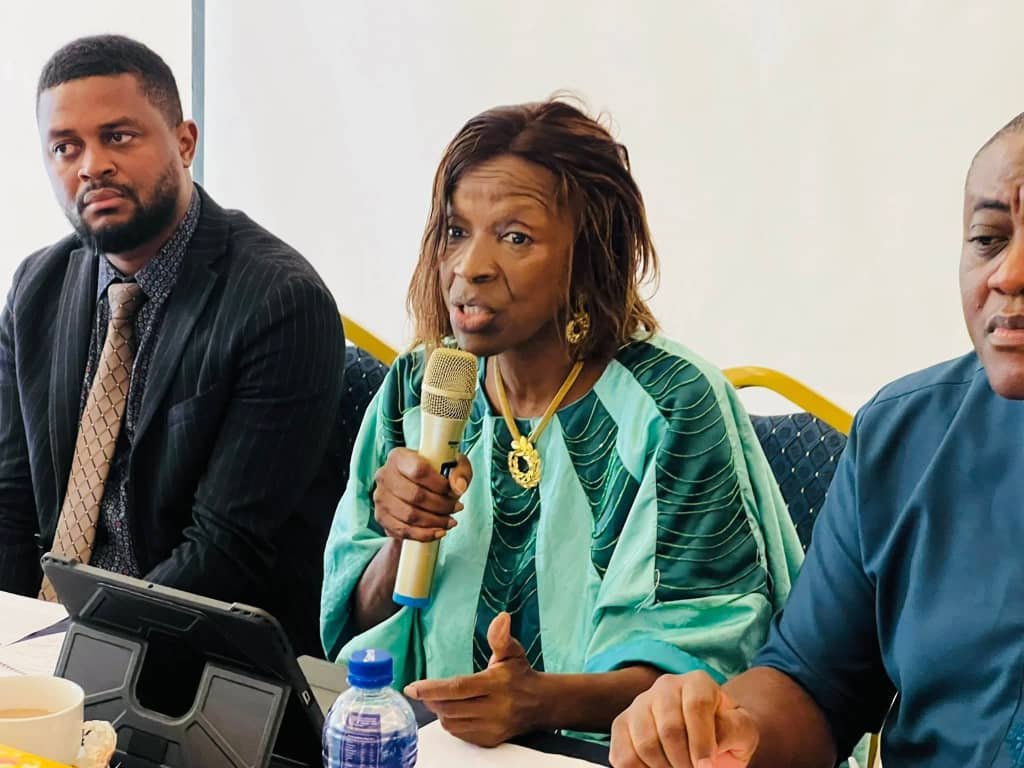
The Minister of Planning and Economic Development, Honourable Kenyeh Barlay, has emphasized the urgent need to strengthen Sierra Leone’s Public Investment Programme (PIP). This call was made during a one-day technical workshop on Capital Baseline Costing and the Forward-Looking PIP*, held at the Country Lodge Hotel in Freetown.
The workshop brought together technical experts and representatives from various Ministries, Departments, and Agencies (MDAs) to refine the country’s capital investment strategy. It was jointly organized by the Ministry of Planning and Economic Development (MoPED) and the Ministry of Finance, with support from the World Bank.
Aimed at rationalizing Sierra Leone’s capital investment portfolio, the event also focused on aligning project planning with the upcoming FY2026 national budget. In her keynote address, Minister Barlay stressed the importance of the workshop as the country approaches the midpoint of its Medium-Term National Development Plan (2024–2030).
“When we first developed this plan, seven years felt like a long time. Yet here we are, approaching the mid-point,” she remarked, applauding Sierra Leone’s progress in developing a comprehensive and costed national plan.
Minister Barlay also highlighted the need to shift from planning to implementation, describing the workshop as “crucial for our journey ahead.”
She thanked the World Bank for its continued support in enhancing capital expenditure (CAPEX) analysis and for the near-completion of the Public Investment Management Information System (PIMIS). She also outlined two critical policy directives incude no new programme or project will be included in the FY2026 budget without secured funding and no project will proceed without a completed project profile and full integration into the investment planning process.
“These bold reforms will restore credibility to our national budget and strengthen Sierra Leone’s macroeconomic footing,” she affirmed.
Ambrose James, Development Secretary at MoPED, reiterated the Ministry’s commitment to accountability in public investment, calling for stronger collaboration among stakeholders. He noted that the tight fiscal space requires a reset of the PIP framework to enhance transparency and long-term sustainability.
Dr. Mohamed Adama Jalloh, a Public Sector Specialist from the World Bank, stressed the need for credible and realistic fiscal planning:
“Our budget today is not credible or predictable, and our PIP is not realistic,” he stated, identifying the energy and water sectors as particularly high-risk areas requiring better data and more informed decision-making.
Dr. Ilara Mahdi, Deputy Director of Budget at the Ministry of Finance, reaffirmed her ministry’s support for MoPED’s reforms. She emphasized the importance of baseline costing for forecasting project costs and ensuring fiscal sustainability.
The workshop concluded with participants completing baseline costing templates—a key step in preparing for the FY2026 national budget and aligning with the Medium-Term Expenditure Framework (MTEF).
Alpha K. Bangura, Director of Public Investment Management at MoPED, reassured stakeholders of MoPED’s continued leadership in improving project selection and optimizing financing strategies.
Through these collective efforts, Sierra Leone aims to build a more credible, transparent, and effective public investment framework, which is essential for achieving sustainable development in the years ahead.