

By: Mohamed J. Bangura
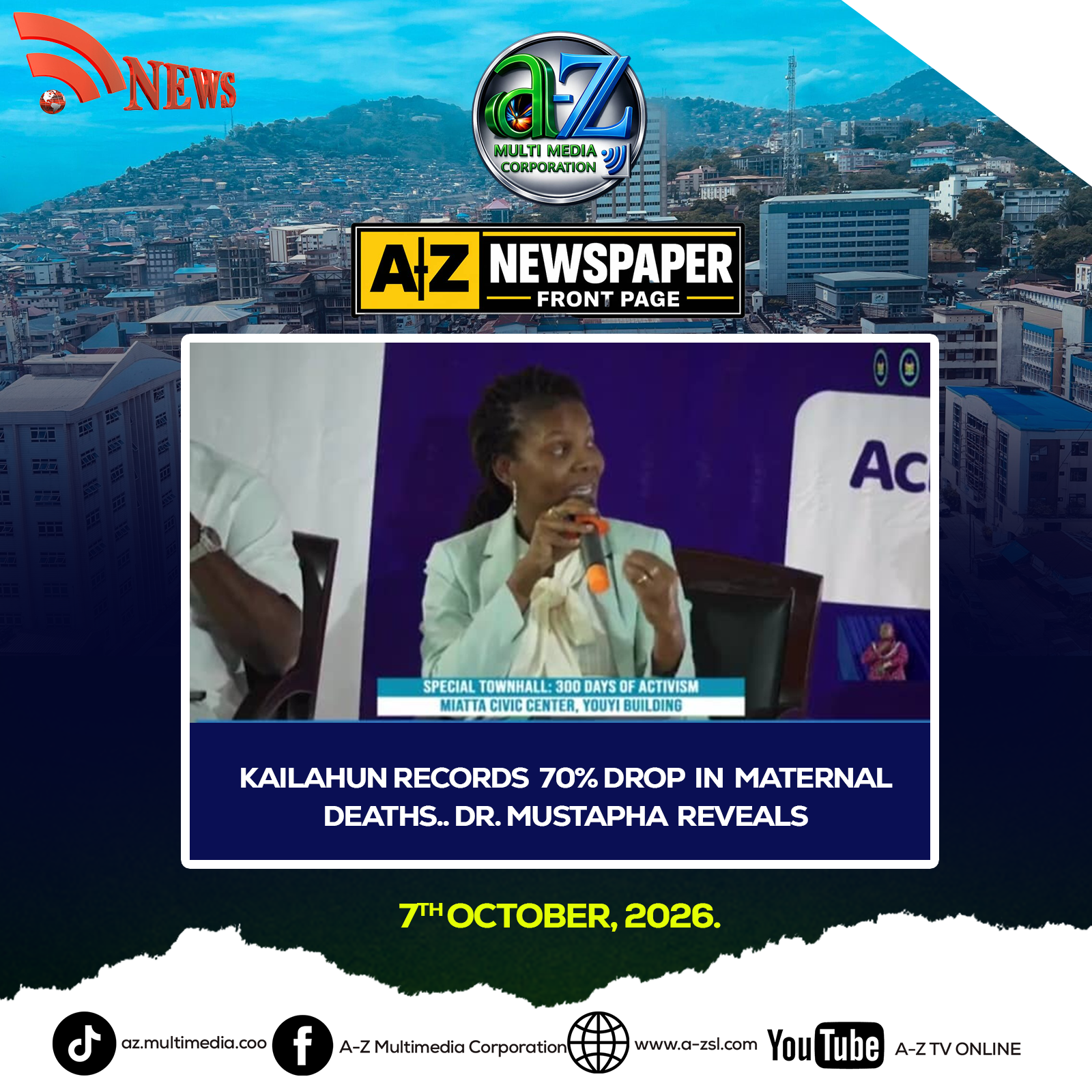
Kailahun District has recorded an estimated 70 percent reduction in maternal deaths, making it one of the districts showing the strongest progress in Sierra Leone’s efforts to eliminate preventable maternal and child deaths.
The development was disclosed by Deputy Minister of Health II, Jalikatu Mustapha, during a special town hall meeting organised by the Ministry of Information and Civic Education as part of the Government’s 300 Days of Activism for the Triple Zero campaign.
The campaign seeks to achieve three key objectives: zero preventable maternal deaths, zero preventable child deaths and ensuring that every child has access to essential healthcare.
According to Deputy Minister Mustapha, 14 of Sierra Leone’s 16 districts have recorded reductions in maternal deaths, with Kailahun registering the highest decline of about 70 percent. Tonkolili and Western Rural recorded reductions of between 40 and 50 percent, while Kambia and Kenema recorded declines of about 20 percent.
She said the progress represents a major step forward in the country’s long-term efforts to reduce maternal mortality, noting that Sierra Leone previously took about 10 years to achieve a 70 percent reduction in maternal deaths.
Mustapha attributed the latest progress to stronger leadership, increased accountability, greater investment, district-level interventions and a new approach to reviewing every maternal death.
She explained that maternal and child mortality reviews were previously handled largely at the technical level by health professionals and District Medical Officers. Under the new approach, the process has been elevated to the senior leadership of the Ministry of Health.
Every Friday, senior health officials meet to review maternal deaths recorded during the week. The meetings bring together the Minister of Health, Chief Medical Officer, Permanent Secretary, directors and other senior officials to examine each case, identify gaps and determine measures to prevent similar deaths.
Mustapha said the purpose of the reviews is not merely to record the number of women, who die, but to understand the causes of death and hold the health system accountable for addressing identified gaps.
She cited hypertension during pregnancy as one of the issues identified through the reviews.
According to her, some pregnant women with high blood pressure were previously treated at Peripheral Health Units as ordinary hypertension cases and referred to higher-level facilities too late.
Following the reviews, health authorities strengthened the referral process, requiring health workers to immediately contact ambulance services when they identify elevated blood pressure in a pregnant woman, regardless of whether she initially appears seriously ill.
She said the approach is intended to prevent the loss of critical time before pregnant women reach tertiary health facilities.
Mustapha also cited a case involving a woman who suffered severe bleeding at a health facility where the available blood supply was insufficient.
Although the woman could not be saved, she said the incident was treated as a learning opportunity, leading the Ministry to strengthen efforts to ensure the availability of emergency blood supplies and support regular blood donation drives.
“Every maternal death is a loss to the country,” Mustapha said, explaining that authorities examine the roles played by health workers, families, communities and the health system in each case.
She stressed that accountability also extends to health workers accused of negligence or misconduct.
“We have zero tolerance for misconduct and negligence by health workers,” she said, explaining that the Ministry has developed a framework categorizing misconduct as minor, moderate or major.
According to her, major misconduct resulting in the death of a patient can attract immediate termination, subject to applicable disciplinary procedures.
She said the Ministry is also engaging relevant authorities to strengthen the disciplinary framework within the wider civil service system.
At the same time, Mustapha said the Ministry is using both incentives and disciplinary measures to improve the performance of health workers.
The incentive measures include training, improved working conditions, provision of essential supplies, transportation support, advocacy for better remuneration and additional recruitment.
She also called on communities and journalists to expose cases in which health workers demand payment from patients for services that are supposed to be provided free of charge.
Mustapha urged citizens to report such incidents with evidence to enable the Ministry to investigate and take appropriate action.
Despite the progress, she acknowledged that significant challenges remain, particularly in Western Area and Bo, which have not recorded the same level of improvement as other districts.
She also identified the continued reliance on traditional birth attendants in some communities as a challenge requiring stronger community engagement and public education.
The Deputy Minister said the ultimate objective of the 300 Days of Activism campaign is not simply to produce impressive statistics, but to transform Sierra Leone’s health system.
She said the measures being introduced will benefit not only pregnant women and children but the wider population, as stronger emergency systems, improved blood supplies, ambulance services, oxygen availability, accountability and respectful care will strengthen healthcare delivery overall.
While zero maternal and child deaths remain the “gold standard”, Mustapha said the progress recorded so far should be regarded as a major achievement.
She said the campaign has demonstrated that significant improvements can be achieved within a relatively short period when national leadership, health workers, communities and partners work together.
The Government’s ultimate goal remains clear: no woman should die from a preventable cause while giving birth, and no child should die from a preventable condition in Sierra Leone.