

By: Saidu Jalloh
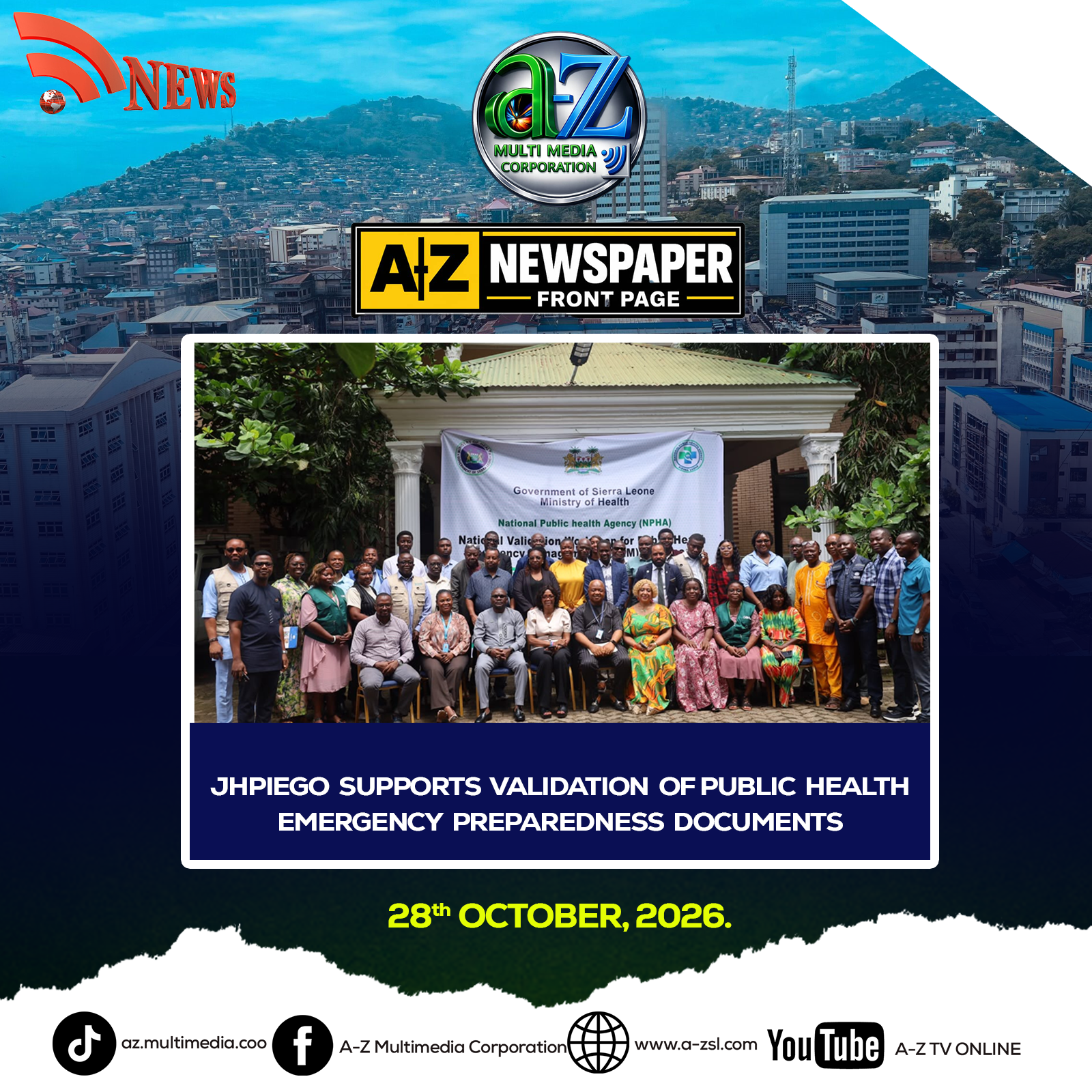
Jhpiego, with funding from the U.S. Centers for Disease Control and Prevention (CDC), is supporting the National Public Health Agency (NPHA) to validate key Public Health Emergency Management (PHEM) documents aimed at strengthening Sierra Leone’s preparedness and response to disease outbreaks and other public health emergencies.
The four-day workshop, spearheaded by the National Public Health Agency, brought together government institutions, UN agencies, and development partners to review and finalize the documents that will guide emergency preparedness and response efforts across the country.
Representing the U.S. CDC, Sandy underscored the need for national ownership, accountability, and clearly defined responsibilities to strengthen Sierra Leone’s emergency preparedness system.
He noted that countries must be able to detect public health threats early and respond quickly to contain outbreaks before they spread.
Speaking on behalf of Jhpiego, Dr. Ibrahim Seriki highlighted the importance of a collaborative One Health approach in developing policies and plans for emergency response.
“The responsibility of preparing for public health emergencies cannot rest with a single institution. It requires the collective expertise and commitment of all stakeholders,” he said.
Dr. Seriki noted that lessons from previous emergency preparedness activities had informed the draft documents and urged participants to remain engaged throughout the validation process.
He added that the documents should serve as practical tools that strengthen coordination, clarify responsibilities, and guide action during future public health emergencies.
Through its support to the workshop, Jhpiego continues to work with the Government of Sierra Leone and partners to strengthen health systems and improve the country’s ability to prepare for, detect, and respond to public health threats.