

By: Saidu Jalloh
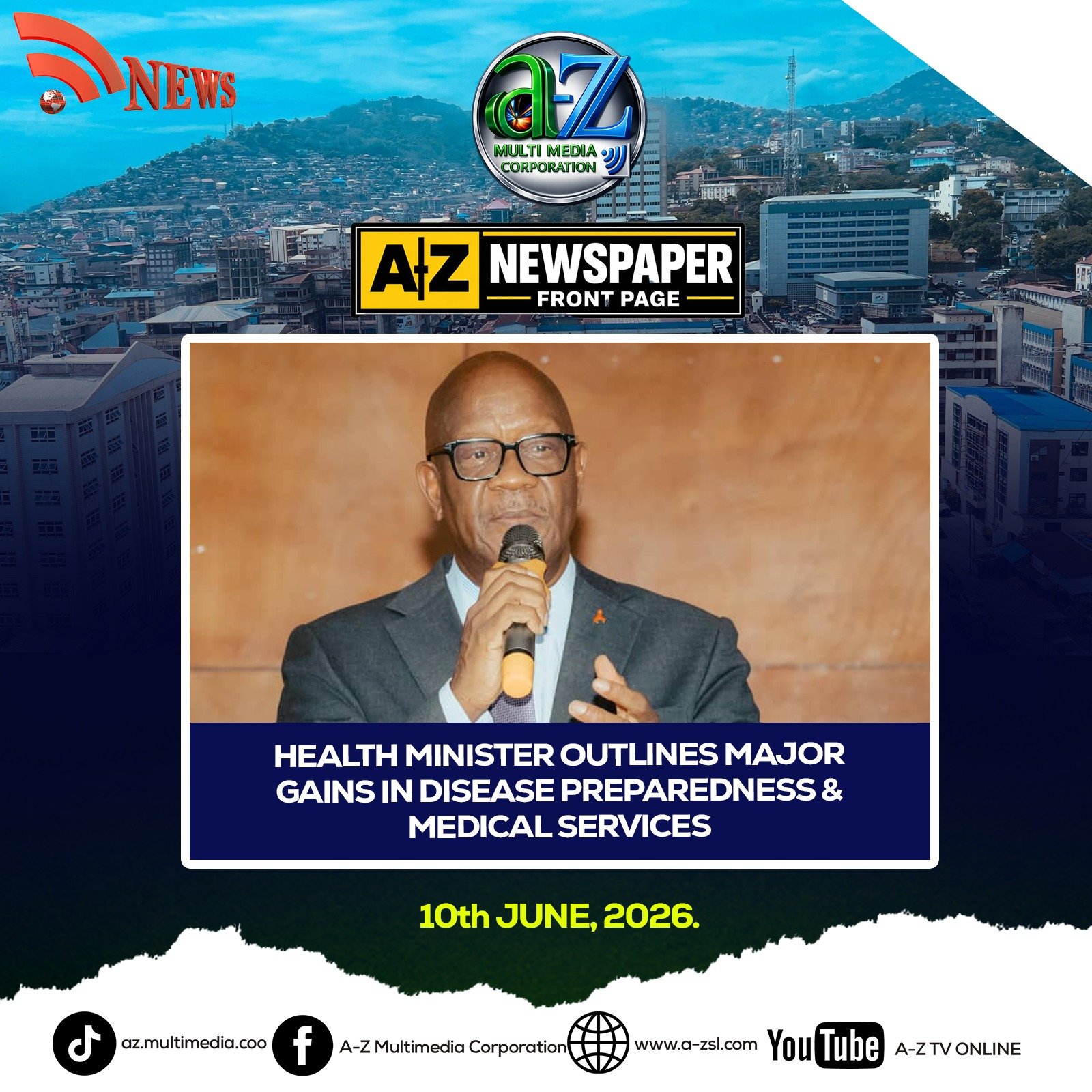
Sierra Leone has significantly strengthened its public health system, improved disease surveillance, expanded access to medical services, and recorded notable progress in child vaccination and maternal health, according to Health Minister Dr. Austin Demby, who spoke at the Government Weekly Press Conference organized by the Ministry of Information and Civic Education (MoICE).
Addressing journalists and members of the public, Dr. Demby said the country remains free of Ebola cases and is now better prepared to respond to disease outbreaks, drawing lessons from the devastating 2014-2015 Ebola epidemic.
The Health Minister credited President Julius Maada Bio’s administration for establishing the National Public Health Agency (NPHA), which he described as a critical institution for safeguarding public health, preventing disease outbreaks, and strengthening national preparedness.
Dr. Demby revealed that following reports of Ebola outbreaks in the Democratic Republic of Congo, the government swiftly intensified surveillance measures at key entry points, particularly at the country’s main international airport. He explained that travelers entering Sierra Leone are required to provide travel histories, while health authorities have enhanced screening systems, strengthened hand hygiene measures, and improved laboratory capacity to quickly detect and respond to potential threats.
He further disclosed that six laboratories are now fully operational and equipped for disease testing, while public awareness campaigns have been intensified to educate citizens on disease prevention and personal protection measures.
Highlighting broader healthcare reforms, Dr. Demby stated that improving citizens’ access to quality healthcare remains one of the government’s top priorities. He noted that the Ministry has adopted a life-cycle approach to healthcare delivery, providing services from pregnancy through old age.
The Minister emphasized the importance of school health programmes, explaining that healthy children are more likely to attend school regularly and perform better academically.
In a major boost to diagnostic services, Dr. Demby announced that the government has procured CT scan machines that are now operational in Freetown and Kenema. He said this investment has reduced the need for patients to travel abroad, particularly to Ghana, for specialized medical imaging services.
He also reported that ultrasound machines have been deployed to support maternal healthcare, enabling pregnant women to monitor the development and well-being of their unborn babies.
On human resource development, Dr. Demby disclosed that the number of medical professionals in training has increased significantly. While Sierra Leone previously trained only about 30 doctors annually, he said the figure has now risen to 250.
The Minister further announced the construction of a new medical training facility in Jui, which will accommodate approximately 1,000 students. He added that the government is also investing about US$4.5 million in facilities designed to support postgraduate medical education and specialized training.
Speaking on accountability within the health sector, Dr. Demby stressed that healthcare performance is now being measured by tangible improvements in service delivery rather than the number of meetings or workshops conducted.
He also highlighted progress under the government’s accelerated health intervention programme, reporting significant gains in childhood immunization. He noted that health authorities identified about 9,000 children who had never received routine vaccinations and successfully vaccinated around 5,000 of them within the first 100 days of the initiative.
Dr. Demby pointed to encouraging improvements in key health indicators, noting that infant mortality has declined by 12 percent while maternal deaths have fallen by 31 percent.
He concluded that ongoing investments in healthcare infrastructure, workforce development, disease prevention, and vaccination programmes are beginning to produce measurable results, placing Sierra Leone’s health sector on a stronger path toward universal healthcare coverage and improved public health outcomes.