

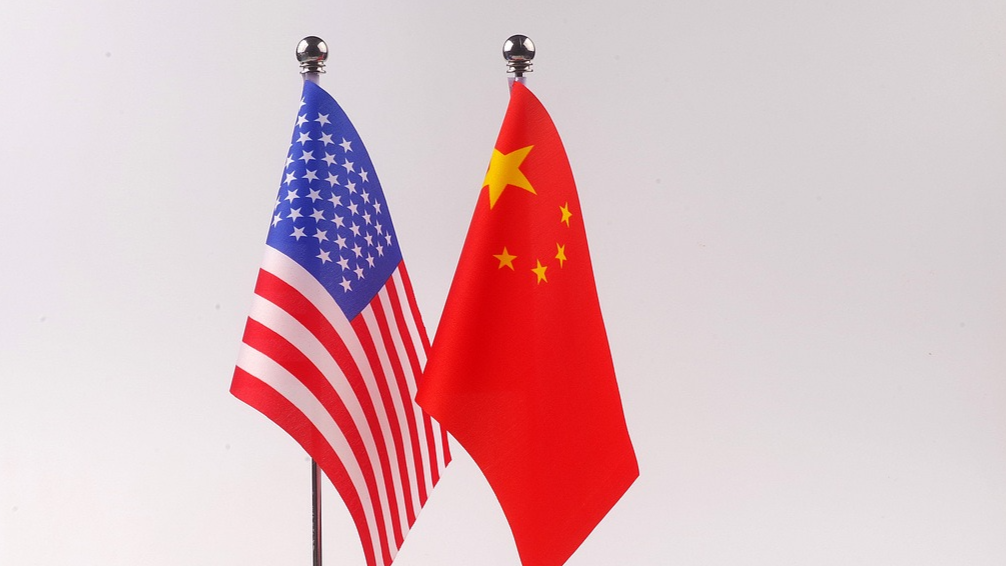
China and the United States are seeking to build what Chinese analysts describe as “constructive strategic stability” ahead of Chinese President Xi Jinping’s expected visit to the United States.
The concept emphasizes managing competition while maintaining communication and practical cooperation, with the aim of preventing bilateral rivalry from developing into wider bloc confrontation. “Constructive” suggests that competition does not have to be a zero-sum game and that cooperation in areas of mutual interest can help manage differences.
However, analysts identify three major obstacles to achieving greater stability in China-US relations.
First, the United States continues to regard China as a major strategic competitor, reflecting persistent differences in the two countries’ strategic perceptions.
Second, issues including the Taiwan question remain major sources of tension. From China’s perspective, certain US actions in these areas have challenged what Beijing considers its core interests and conflicted with commitments made by successive US administrations under the one-China principle and the three China-US joint communiqués.
Third, domestic political considerations, including electoral politics, can periodically influence the way China-related issues are handled in the United States.
According to analysts, maintaining regular communication at different levels is essential to preventing disagreements from escalating.
Hu Bo said that military-to-military relations have continued to stabilize since the San Francisco meeting, while economic and trade dialogue mechanisms have also produced notable results since the Busan meeting.
He stressed the importance of preventing actions by third parties from affecting China-US relations.
Wang Honggang said the most effective approach from the Chinese perspective is to institutionalize and normalize communication through multiple channels under the guidance of head-of-state diplomacy.
Such communication should include official diplomatic channels as well as unofficial and track-two exchanges. The objective is to gradually develop strategic understandings, rules governing behavior and effective mechanisms for managing crises.
Wang described head-of-state diplomacy as the most important element because it provides overall strategic direction for bilateral relations. He said the two leaders have attached importance to China-US ties and identified constructive strategic stability as a broad direction for their efforts.
Although the two sides may have different understandings of the concept, Wang said their positions are gradually moving closer in some respects.
He added that preventing local disputes from damaging the broader relationship ultimately depends on whether working-level officials on both sides can implement understandings reached by the two leaders.
Zhang Tengjun identified three layers in the current China-US communication mechanism.
At the top level is head-of-state diplomacy, which provides strategic guidance and direction for the relationship.
The middle level consists of regular and institutionalized channels for strategic communication and dialogue on diplomacy, security, economic and trade affairs and other areas. These channels allow the two sides to address sensitive differences and keep competition within manageable limits.
At the operational level are crisis-management arrangements, including military-to-military communication mechanisms and emerging arrangements such as government-to-government dialogue on artificial intelligence.
Zhang said that to prevent local disputes from disrupting the broader relationship, both sides need to maintain mutual respect, observe each other’s bottom lines and avoid actions that could escalate tensions.
He added that differences should be placed in their proper context within the overall relationship, while mutually beneficial cooperation and people-to-people exchanges could strengthen the foundation and resilience of China-US ties.