By: Audrey Raymonda John
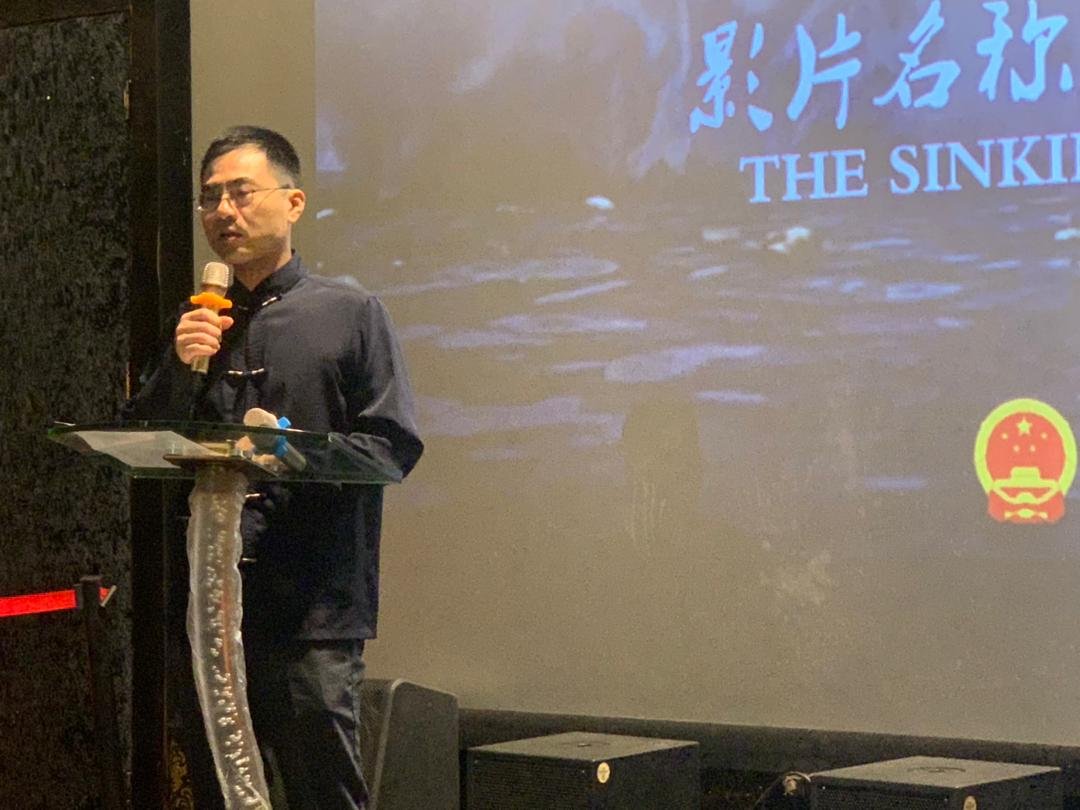
In a solemn and reflective event held at the Golden Beach Hotel in Lumley, the Chinese Embassy in Sierra Leone, led by Ambassador Wang Qing, hosted a film reception to commemorate the 80th anniversary of the victory in the Chinese People’s War of Resistance Against Japanese Aggression and the World Anti-Fascist War.
The event featured the screening of the powerful historical documentary The Sinking of the Lisbon Maru, which recounts a little-known yet deeply moving episode from *World War II*. Ambassador Wang extended a warm welcome to all attendees and reflected on the significance of the occasion.
Ambassador Wang explained that the Lisbon Maru tragedy occurred in 1942 near Dongji Island, off the coast of Zhejiang Province, China. The Japanese military had repurposed the passenger-cargo ship Lisbon Maru to transport over 1,800 British prisoners of war from Hong Kong to Japan. En route, the ship was torpedoed by a U.S. submarine, unaware it carried POWs.
Instead of rescuing the prisoners, Japanese forces locked them in the ship’s holds, leaving them to die. In a remarkable act of courage and compassion, local Chinese fishermen from Dongji Island risked their lives to rescue the trapped men, ultimately saving 384 British prisoners of war.
“This act of bravery during brutal wartime conditions remains a profoundly moving chapter in history,” said Ambassador Wang.
Ambassador Wang noted that the Second World War was one of the greatest catastrophes in human history, inflicting immense suffering across continents. On the Eastern Front, the Chinese people fought a 14-year war of resistance, sacrificing over 35 million lives in their effort to defeat Japanese militarist aggression.
He highlighted that on September 3, China held a commemorative event in Beijing under the theme: “Remember History, Honor the Martyrs, Cherish Peace, and Usher in a Brighter Future.” The purpose, he said, is to preserve historical truth, honor those who sacrificed their lives, and strengthen global unity in promoting peace and development.
“This film reminds us that courage and solidarity can light humanity’s path forward,” the Ambassador said. “In that life-and-death struggle between justice and evil, peace-loving peoples united to form a global front against fascism.”
In a powerful moment, Ambassador Wang acknowledged the historic contribution of Sierra Leonean soldiers who fought in the China-Burma-India Theater during World War II.
“China and Britain formed a joint expeditionary force to fight Japanese aggressors in Myanmar. To my knowledge, hundreds of Sierra Leonean soldiers fought bravely alongside the Chinese, and the ‘Myohaung Officers’ Mess’ at Wilberforce Barracks was named to honor their role in that campaign,” he said.
He emphasized that the victory over fascism belongs to all peace-loving peoples across the world, including Sierra Leone. Ambassador Wang concluded with a reminder that while peace is precious, it is hard-won and must be preserved through global cooperation. He warned of rising challenges such as hegemonism, Cold War mentality, and protectionism, which threaten global peace and development.
He reiterated China’s call for respect for the UN Charter, strengthening of multilateral cooperation, a shared vision of global governance based on consultation, joint contribution, and shared benefits
“We must work together to build a community with a shared future for mankind,” he concluded.
Directed by Fang Li, the documentary offers a poignant retelling of the Lisbon Maru tragedy. It features interviews with survivors such as Dennis Morley, Williams Beningfield, Lin Agen, Brian Finch, Tony Banham, and family members of British POWs. The film highlights not only the horrors of war but also the humanity and courage of the Chinese fishermen who saved lives against all odds.
The event served not only as a tribute to those who suffered and sacrificed during World War II but also as a call to remember history, defend peace, and honor the bonds of friendship formed through shared struggle.