

By: Aminata Sesay
Minister of Planning and Economic Development, Madam Kenyeh Barlay, has called on Sierra Leone to move beyond reviewing governance challenges and take concrete action to implement recommendations emerging from the country’s African Peer Review Mechanism (APRM) process.
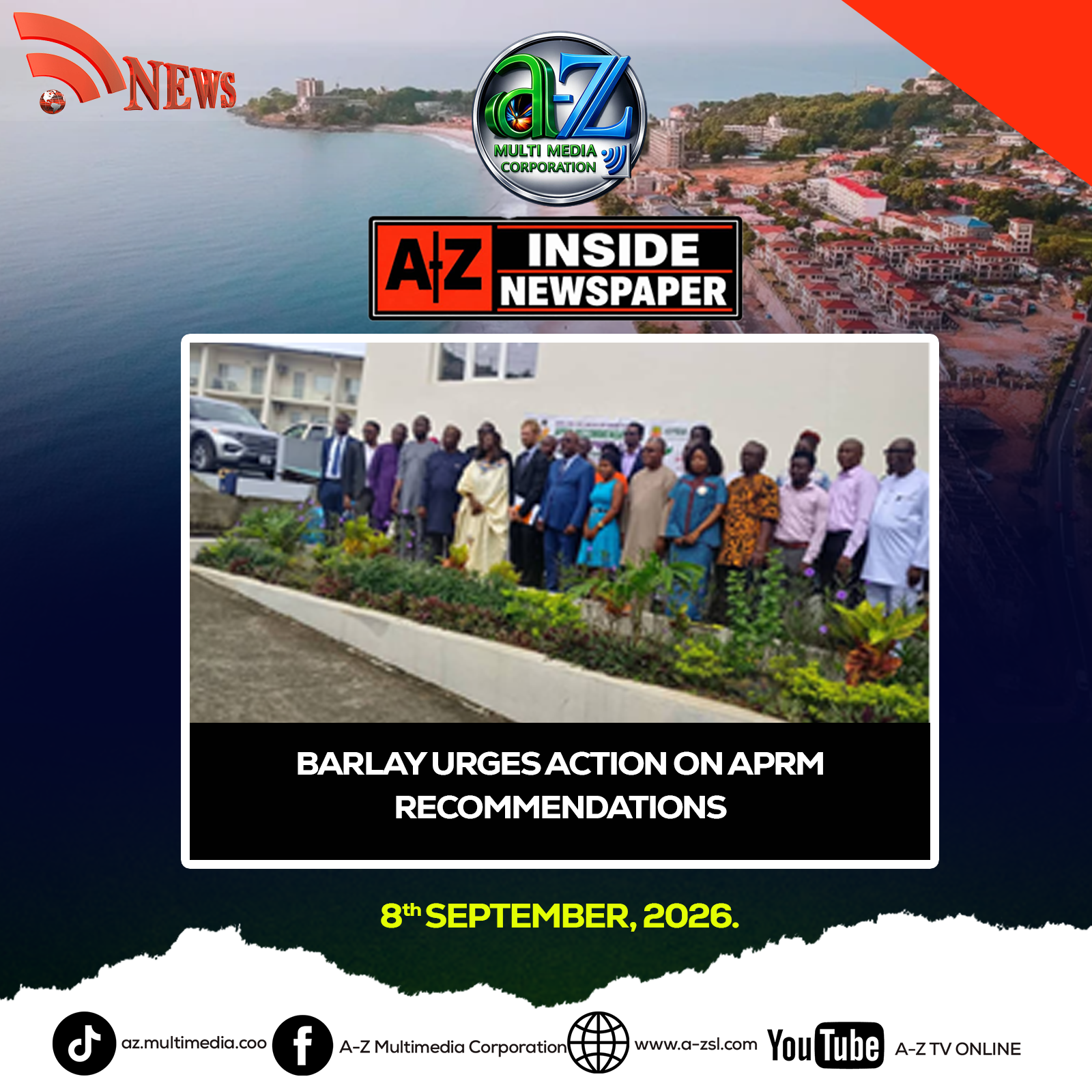
Madam Barlay made the call during a national engagement on the development of Sierra Leone’s National Programme of Action (NPoA) under the Second-Generation APRM Country Review.
She stressed that the value of the review would ultimately be determined by the actions taken to address the issues identified.
According to the Minister, the development of the NPoA should not be reduced to the production of another policy document. Instead, she said, it must serve as a practical roadmap for implementing reforms and achieving measurable improvements in governance and national development.
“The process is not simply about reviewing or developing a document. It is about translating our national reflection into national action,” Madam Barlay said.
She described the APRM as an important African-owned mechanism for promoting good governance, accountability, peer learning and sustainable development. She noted that Sierra Leone’s participation in the second-generation review demonstrates the country’s willingness to critically assess its institutions and governance systems.
While acknowledging the importance of completing the country review, Madam Barlay said the process would have limited impact without effective implementation of its recommendations.
“The review process is only part of the journey. The real test begins with implementation,” she emphasized.
The Minister called on stakeholders to ensure that the National Programme of Action is nationally owned, properly prioritized and measurable, while remaining aligned with Sierra Leone’s Medium-Term National Development Plan, the African Union’s Agenda 2063 and the Sustainable Development Goals.
She said the programme should clearly identify the actions required, responsible institutions, resources needed, implementation timelines and mechanisms for measuring progress.
Madam Barlay also cautioned against viewing the APRM solely through the lens of the National Programme of Action, stressing that the mechanism has a broader role in strengthening governance and institutional development.
“The APRM is much bigger than the National Programme of Action,” she stated.
She called for continued investment in national APRM structures, including strengthening the capacity of the APRM National Secretariat and National Governing Council. She also urged sustained public sensitization and stakeholder engagement to ensure that citizens and institutions remain actively involved in the reform process.
The Minister further highlighted the importance of credible monitoring and reporting systems to track commitments assess progress and identify areas requiring further intervention.
She encouraged Sierra Leone to deepen peer learning and exchanges with other African countries, noting that experiences from across the continent could provide useful lessons for strengthening institutions and improving development outcomes.
Madam Barlay maintained that APRM recommendations should not remain separate from national planning processes but should inform policy development, institutional reforms and broader national development priorities.
The engagement brought together representatives from ministries, departments and agencies, local councils, universities, civil society organizations, the private sector, academia, development partners and the media, as well as women’s and youth organizations.
Madam Barlay said the success of the APRM process would require sustained commitment from all stakeholders beyond the engagement. She called on government institutions, civil society, the private sector, academia and local authorities to work collectively to ensure that agreed reforms produce tangible improvements in governance and public service delivery.
She therefore urged participants to approach the development of the National Programme of Action with a strong sense of national ownership and responsibility, emphasizing that Sierra Leone’s APRM journey must ultimately move from assessment and recommendations to implementation and measurable results.