

By: Audrey Raymonda John
The Amazonian Initiative Movement Sierra Leone (AIM-SL) has brought together community stakeholders from across Port Loko District to strengthen collective efforts to end Female Genital Mutilation (FGM) and other harmful traditional practices affecting women and girls.
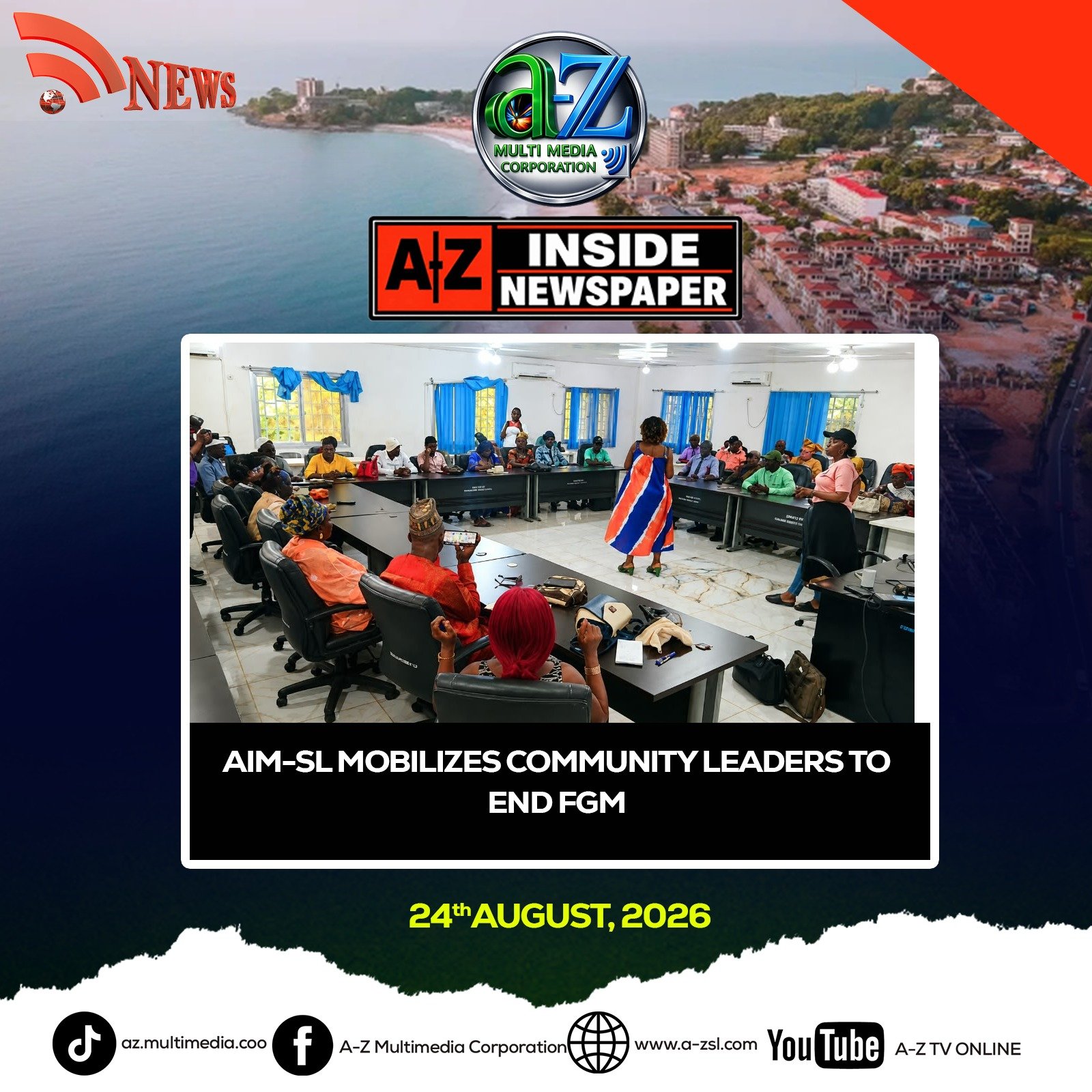
The engagement, held on Wednesday, August 19, 2026, was supported by the Forum Against Harmful Practices (FAHP) and Irish Aid. It brought together chiefdom speakers, section chiefs, Soweis, traditional leaders, FGM survivors, “Born Perfect” women and girls, women in governance, and other community representatives.
The engagement focused on the need for community ownership in the fight against FGM, with participants urged to become active agents of change within their respective communities.
Addressing participants, renowned human rights defender and Chairperson of the Forum Against Harmful Practices, Madam Rugiatu Neneh Turay-Koroma, said traditional and community leaders have a critical role to play in changing social norms that continue to sustain FGM.
She noted that chiefs, Soweis, parents, religious leaders, women’s groups, and other influential community actors can either reinforce harmful practices or help communities move towards safer cultural alternatives.
Turay-Koroma said misinformation, social pressure, and limited access to accurate information continue to expose women and girls to practices that can have serious physical and psychological consequences.
She urged community leaders to create an environment where families can make decisions that protect girls without fear of stigma, exclusion, or social pressure.
She also expressed concern over what she described as a culture of silence surrounding complications associated with FGM, alleging that serious complications and deaths linked to initiation are sometimes kept within communities instead of being properly reported or investigated.
According to Turay-Koroma, protecting culture should never mean concealing harm, stressing that communities must be able to openly discuss the consequences of FGM if meaningful change is to be achieved.
She also challenged what she described as the political exploitation of Bondo and FGM, arguing that girls from vulnerable families should not be used as instruments for political mobilization.
“Innocent women and girls are being used as shields for politicians. Politicians pay money for the initiation of children from poor families while their own daughters remain abroad,” she alleged.
Turay-Koroma called on politicians across the political divide to prioritize the health, safety, dignity, and rights of women and girls over political considerations.
A key message from the engagement was that ending FGM does not necessarily mean abandoning the cultural and educational aspects of Bondo.
Turay-Koroma highlighted AIM-SL’s efforts to promote alternatives that preserve mentorship, traditional education, community belonging, songs, ceremonies, and the celebration of womanhood while eliminating the practice of cutting.
“There is so much that is valuable about Bondo society. What is harmful is the practice that causes blood to be spilt and puts women and girls at risk,” she said.
The approach, according to AIM-SL, is to preserve cultural values while protecting girls and ending harmful practices.
The organization also emphasized the importance of girls’ education, noting that initiation and the expectations surrounding it can sometimes interfere with schooling and limit opportunities for girls.
AIM-SL has therefore combined its advocacy against FGM with education, community sensitization, and initiatives aimed at changing attitudes towards the rights and future of girls.
Turay-Koroma urged stakeholders to ensure that girls remain in school, develop their potential, and participate fully in the economic and social life of their communities.
She also challenged participants to take the lessons from the engagement back to their chiefdoms and become ambassadors for change.
Chiefdom Speaker of Marampa Chiefdom, Alie Kabia, expressed appreciation to AIM-SL and Turay-Koroma for what he described as a clear explanation of the consequences associated with FGM.
“I have learnt a lot, and I will make sure that what has come out of this engagement is taken back to my community,” he assured participants.
He described the engagement as educational and potentially life-saving, saying it had strengthened his commitment to efforts to end FGM in his chiefdom.
Mohamed K. Mansaray, Chiefdom Speaker of Bake Loko, also expressed support for efforts to end violence and harmful practices against women and girls.
He urged fellow chiefs not merely to carry the title of “ambassador” but to become genuine agents of change capable of influencing attitudes and practices in their communities.
Alpha Koroma, Chiefdom Speaker of Masimera Chiefdom, similarly spoke in support of abandoning FGM, describing the practice as a threat to the health and well-being of women and girls.
Representing women in governance, Aminata C.D. Bangura highlighted the human rights implications of FGM and called for stronger collective responsibility to protect women and girls.
Participants from the various chiefdoms subsequently pledged to take the message back to their communities and support efforts aimed at ending FGM.
Closing the engagement with a vote of thanks, AIM-SL Deputy Director Rebecca Cole expressed appreciation to traditional authorities, survivors, women leaders, and other stakeholders for participating in the dialogue.
She said their participation demonstrated a willingness to confront a difficult issue and urged them to ensure that the conversation continued beyond the meeting.
According to Cole, the real measure of success would be the actions participants take within their communities after the engagement.
For AIM-SL, the next step in the campaign against FGM is moving beyond awareness towards community ownership and collective action.
Ending a deeply rooted social practice, the organization maintains, cannot be achieved by one organization, chief, survivor, or government institution alone. It requires traditional leaders, Soweis, parents, men and boys, survivors, women’s organizations, politicians, religious leaders, and communities to work together.
The message from Port Loko was clear: culture can be respected without harming women and girls, and Bondo can be preserved without cutting.