

By: Aminata Sesay
The Anti-Corruption Commission (ACC) has commenced engagements with the Budget Advocacy Network (BAN) to investigate concerns over the management and utilization of revenue generated from the 5% rice import duty and its intended contribution to the Agricultural Development Fund (ADF).
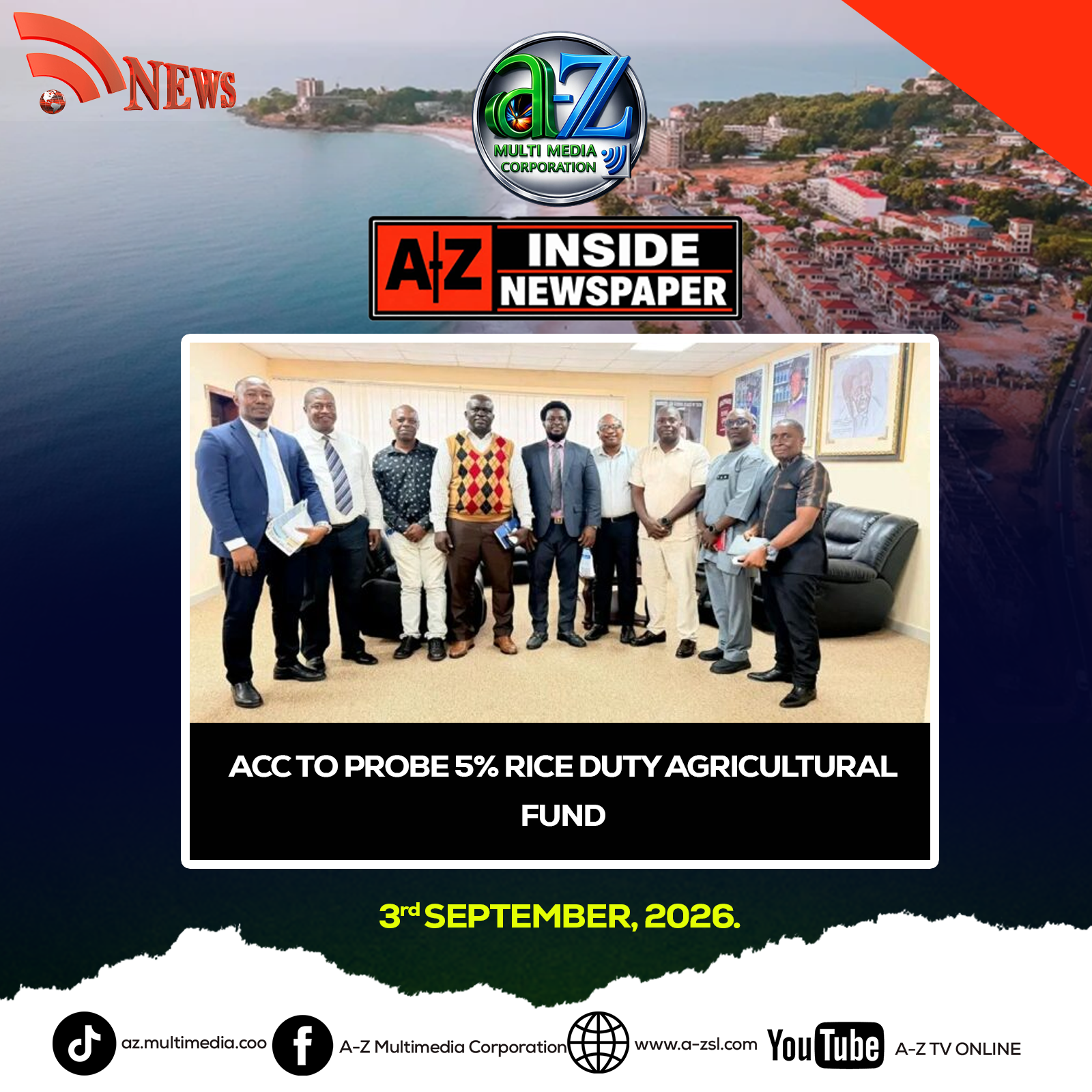
The engagement, held on 31st August 2026 at Integrity House, Tower Hill, followed concerns raised by BAN in a report on the management and use of the revenue.
Speaking during the engagement, ACC Commissioner Francis Ben Kaifala Esq. said the Commission was concerned about the issues highlighted in the report and would work with BAN to establish the facts and make appropriate recommendations.
Commissioner Kaifala proposed a two-way approach, with BAN providing its recommendations from a civil society perspective while the ACC conducts independent checks into the concerns raised.
He said the Commission would prepare a report based on its findings and submit it, together with recommendations, to the Minister of Finance.
The investigation will seek to establish how revenue generated from the rice import duty is being managed and whether it is being channelled towards its intended agricultural development objectives.
For BAN, the issue goes beyond revenue management, with the organization stressing the need to ensure that agricultural investments and resources generated through taxation deliver meaningful benefits to vulnerable groups, particularly women farmers.
BAN Coordinator Abu Bakarr Kamara commended the ACC Commissioner and the Commission for their willingness to engage civil society organizations on issues concerning the management of public resources.
Kamara said BAN’s advocacy is focused on ensuring that women benefit meaningfully from taxation and agricultural investments. He added that BAN is calling for at least 30% of relevant ADF resources to be allocated to women farmers.
The engagement forms part of broader efforts to strengthen transparency, accountability and traceability in the management of public resources and to ensure that revenue intended for agricultural development achieves its intended purpose.
The ACC and BAN are expected to continue their respective assessments, with the Commission’s findings and recommendations expected to guide further action by the relevant authorities.