

By: Mohamed J. Bangura
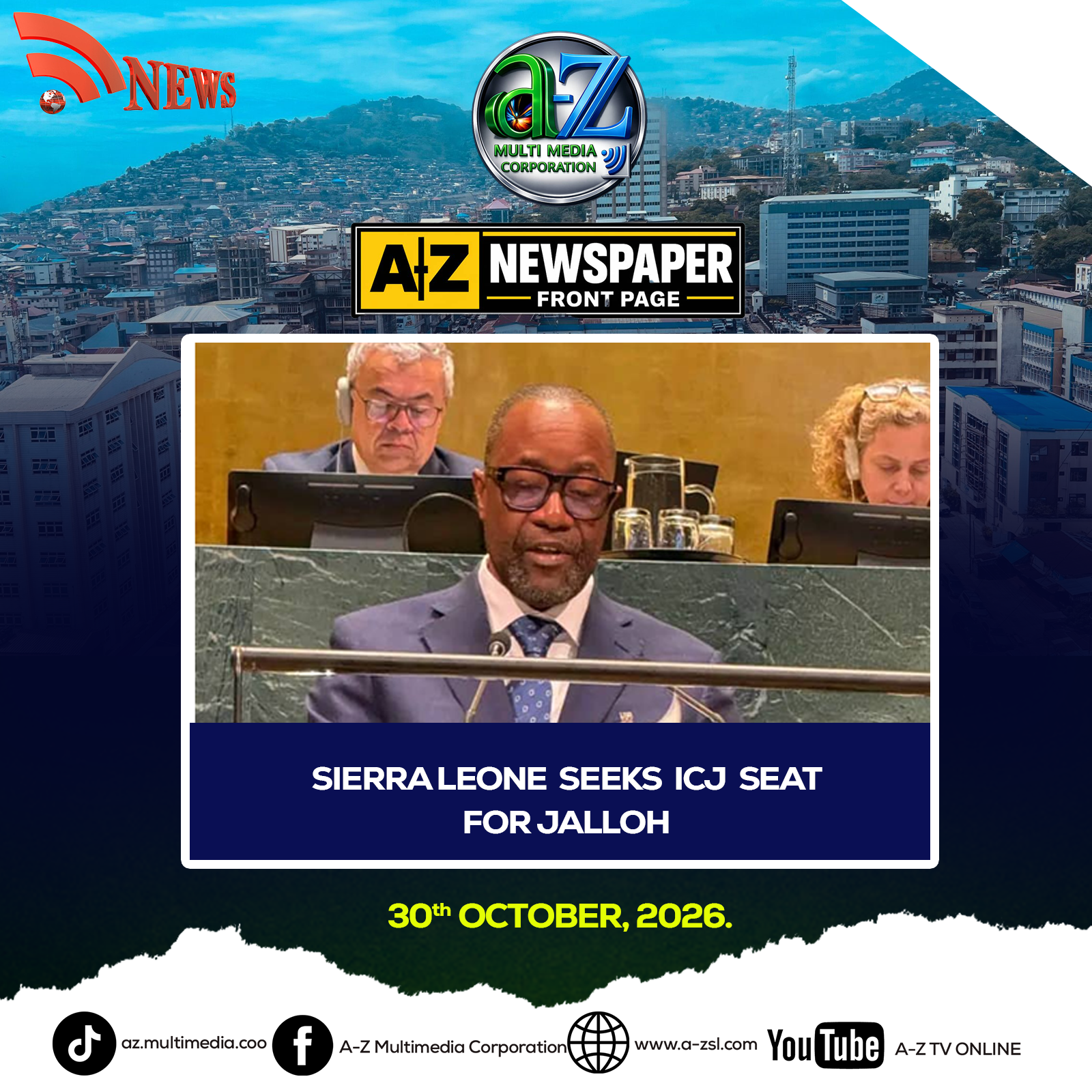
Sierra Leone has reaffirmed its commitment to international law and the peaceful settlement of disputes, while seeking international support for Professor Charles Chernor Jalloh’s candidacy for election to the International Court of Justice (ICJ) for the 2027–2036 term.
The Minister of Foreign Affairs and International Cooperation, Mohamed Rahman Swaray, made the appeal on Thursday, 29 October 2026, while addressing the United Nations General Assembly in New York on the report of the International Court of Justice.
Minister Swaray said Sierra Leone’s transition from conflict to peace had demonstrated that lasting peace depended on justice, respect for the rule of law and the peaceful resolution of disputes.
He stressed that international law remained essential to maintaining global peace, strengthening cooperation among nations and ensuring that disputes were resolved through established legal mechanisms rather than confrontation.
As the ICJ marks 80 years of service, Swaray urged member states to respect the Court’s decisions and provide the necessary resources to enable it to discharge its mandate effectively. He also emphasised the need for equal access to international justice for all states, regardless of their size or financial capacity.
Turning to Sierra Leone’s candidate, the minister highlighted Professor Jalloh’s extensive legal experience, service on the International Law Commission and expertise in both common law and civil law traditions, describing these as important qualifications for service on the United Nations’ principal judicial organ.
With the election scheduled for 3 November 2026, Swaray expressed appreciation to the Economic Community of West African States (ECOWAS), the African Union (AU) and the Organization of Islamic Cooperation (OIC) for endorsing Jalloh’s candidacy.
He called on other countries to support Sierra Leone’s bid, stressing the importance of representation and expertise in the administration of international justice.
The International Court of Justice, based in The Hague, Netherlands, is the principal judicial organ of the United Nations. It settles legal disputes submitted by states and provides advisory opinions on legal questions referred to it by authorized UN organs and specialized agencies.
Swaray concluded by reaffirming Sierra Leone’s commitment to a rules-based international order in which disputes are resolved through law and every nation, regardless of its size or influence, has access to international justice.