

By: Audrey Raymonda John
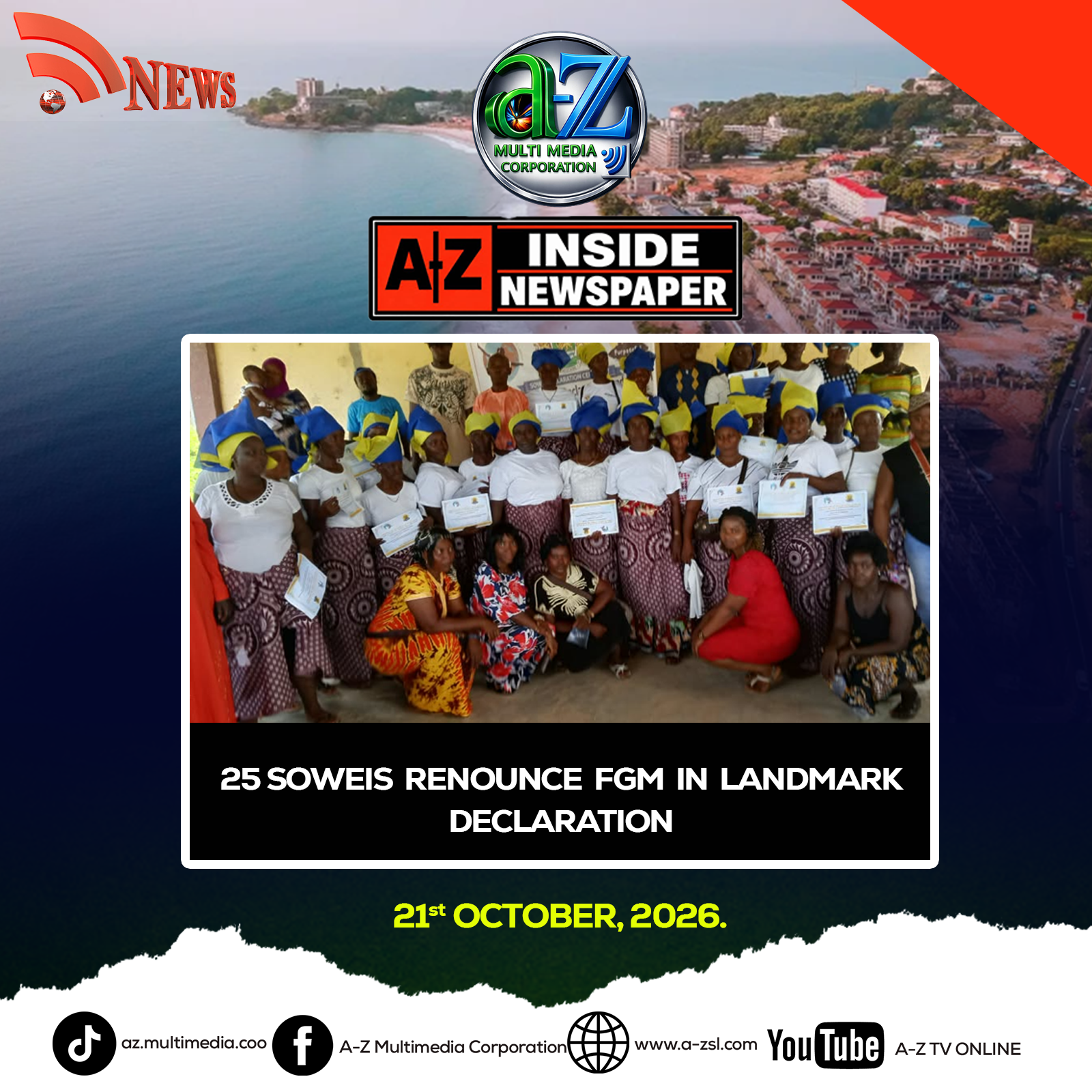
Twenty-five traditional Bondo practitioners, commonly known as Soweis, from five communities in northern Sierra Leone have publicly pledged to abandon female genital mutilation (FGM) and support alternative initiation practices that preserve cultural traditions without harming women and girls.
The declaration was organised by Girl Child Network Sierra Leone (GCN-SL), in partnership with Purposeful, on Thursday, October 15, 2026, at the Mabanta Community Centre in Makeni.
The event marked GCN-SL’s second public declaration involving Soweis and brought together traditional leaders, government representatives, child protection professionals, religious leaders, community stakeholders and girls participating in the organization’s programmes.
The 25 practitioners came from Mabanta, Masemara, Magbenteh, Mabap and Mathinka communities.
Representatives from the Ministry of Gender and Children’s Affairs, the Ministry of Social Welfare, the district council, the Family Support Unit (FSU), religious organizations and local traditional authorities attended the ceremony in support of efforts to protect women and girls from harmful practices.
A major highlight of the event was the formal declaration by the 25 Soweis to stop performing FGM. They signed Memorandums of Understanding (MOUs) documenting their commitments and symbolically surrendered knives, razors and other instruments traditionally used for genital cutting.
The declaration represents a significant step towards community-led efforts to end FGM, particularly because the commitments came from practitioners who have historically played influential roles in the practice.
Female genital mutilation, also known as female genital mutilation/cutting (FGM/C), involves the partial or total removal of external female genitalia or other injury to female genital organs for non-medical reasons.
According to the World Health Organization (WHO), FGM has no health benefits and can cause serious physical and psychological complications, including severe pain, excessive bleeding, infections, urinary difficulties, menstrual problems, childbirth complications and psychological trauma.
The practice is internationally recognized as a violation of the human rights of women and girls.
In Sierra Leone, FGM has historically been associated with initiation into the Bondo society, a traditional institution through which women transmit cultural knowledge, social values and community responsibilities.
However, advocates increasingly distinguish between the cultural and educational aspects of Bondo and the physical act of genital cutting, promoting alternatives that preserve beneficial traditions without exposing girls and women to harm.
According to the 2019 Sierra Leone Demographic and Health Survey, approximately 83 per cent of women and girls aged 15 to 49 had undergone FGM, highlighting the scale of the challenge facing organizations working to end the practice.
Soweis hold influential positions within the Bondo society and have traditionally conducted initiation ceremonies, including genital cutting. Their roles often carry cultural authority, community recognition and economic significance, making the decision to abandon FGM an important transition in both their traditional responsibilities and livelihoods.
The Makeni declaration is therefore significant because it involves the practitioners themselves taking an active role in changing a practice with which they have long been associated.
A key focus of the programme was the promotion of Bloodless Bondo, an approach that seeks to preserve the non-harmful aspects of Bondo initiation while eliminating genital cutting.
Under this approach, traditional education, mentorship, songs, ceremonies, female solidarity and the transmission of cultural knowledge can continue without subjecting girls and women to FGM.
The initiative recognizes the cultural importance of Bondo to many communities while addressing the health and human rights concerns associated with genital cutting.
A former Sowei who had already abandoned FGM shared her experience of participating in an initiation ceremony conducted without genital cutting. Her testimony demonstrated how traditional initiation activities could continue without the harmful practice.
Other participants highlighted the risks associated with FGM and called for greater investment in girls’ education, health and development.
Speaking at the event, Hellen Neneh Turay, Safeguarding and Child Protection Officer at Girl Child Network Sierra Leone, highlighted the challenges women continue to face in exercising their rights and participating equally in society.
She drew attention to the influence of patriarchal attitudes and stressed the need for sustained efforts to empower women and girls.
Her contribution placed the campaign against FGM within the broader context of women’s rights, child safeguarding and protection from harmful practices.
The programme also featured traditional songs, testimonies and contributions from community representatives, who discussed the importance of protecting girls while recognizing the cultural responsibilities of traditional leaders.
Mary Pratt, a Finance and Administration representative of Girl Child Network Sierra Leone, outlined the organization’s ongoing efforts to address FGM and promote the rights, dignity and welfare of women and girls.
She emphasised the importance of community engagement and sustained advocacy in encouraging traditional practitioners to abandon genital cutting.
Representatives from the Ministry of Social Welfare, the Ministry of Gender and Children’s Affairs, religious groups and local traditional authorities also expressed support for initiatives aimed at protecting women and girls from FGM.
Speakers stressed that ending genital cutting should not be interpreted as rejecting Bondo culture. Instead, they advocated preserving cultural practices that do not cause harm while ensuring that the fundamental rights of women and girls are respected.
Participants also acknowledged the contribution of Anita Koroma and Girl Child Network Sierra Leone to organizing the declaration and engaging traditional practitioners in the campaign.
The signing of the MOUs and the symbolic surrender of cutting instruments and Bondo regalia marked the culmination of the ceremony, providing a public expression of the practitioners’ stated commitment to abandon FGM.
Although the declaration represents an important milestone, its long-term impact will depend on whether the commitments are sustained in practice. Continued community engagement, monitoring, education and support for former practitioners will be essential to ensuring that the pledges translate into lasting change.
Providing alternative livelihood opportunities for practitioners who previously depended on FGM-related activities may also be important in supporting their transition away from the practice.
The Makeni declaration highlights the potential role of traditional women leaders in efforts to prevent FGM when they become active participants in promoting change within their communities.
For the 25 Soweis, the public pledge marks a declared shift away from genital cutting and towards initiation practices that preserve cultural knowledge and traditions without harming women and girls.
For Girl Child Network Sierra Leone, the challenge ahead is to build on the commitments, strengthen community support and continue promoting safer cultural practices that protect the rights, health and dignity of girls and women.