

By: Mamajah Jalloh
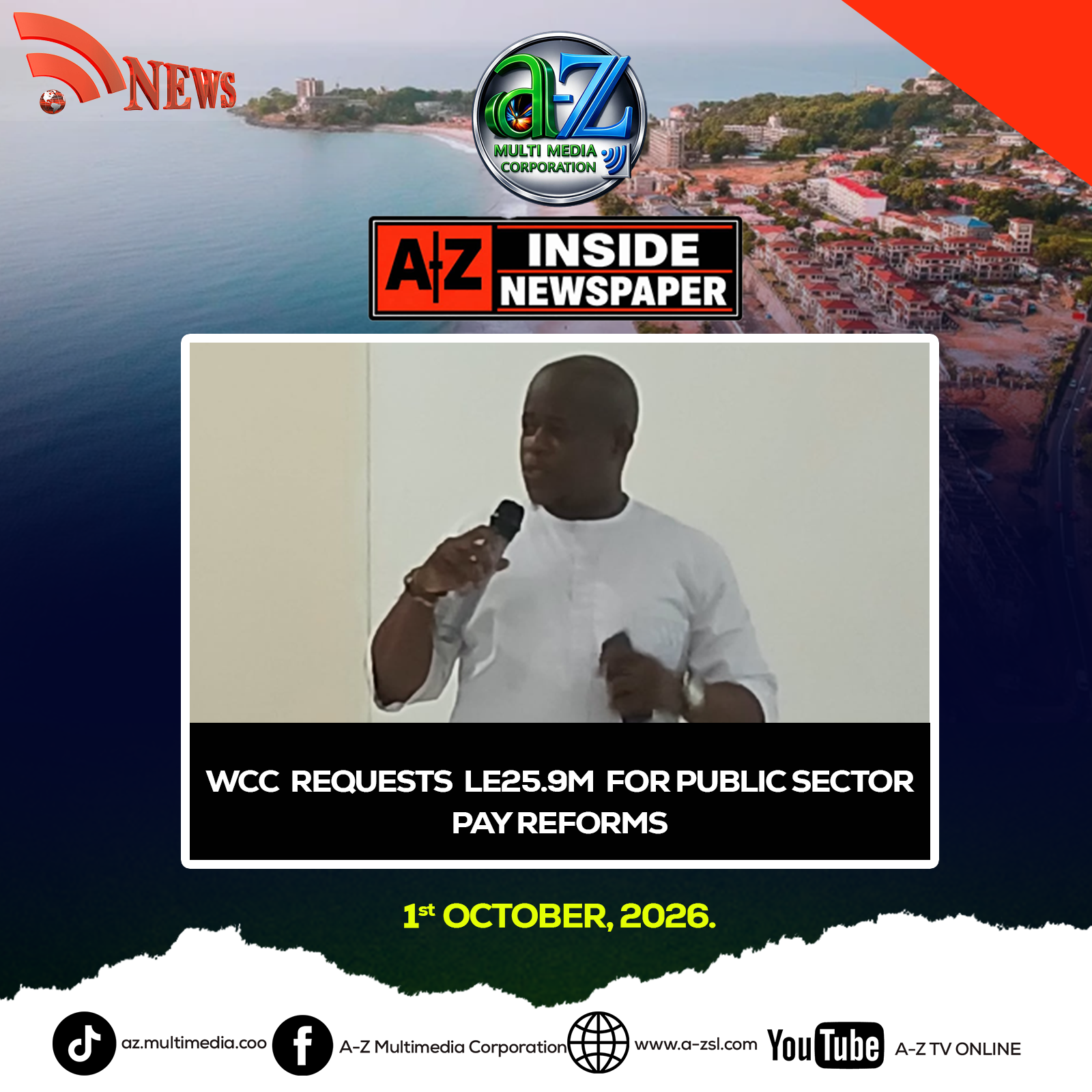
The Wages and Compensation Commission (WCC) has requested Le25, 999,950 for its 2027 budget to support public sector pay reforms, while warning that a funding shortfall of Le24, 031,450 could delay the implementation of its key programmes.
The commission made the request during its 2027 budget presentation to the Ministry of Finance, where its Director of Communication and Public Affairs, Haroun Sheriff, outlined the institution’s achievements, challenges and priorities for the coming fiscal year.
Sheriff said although the WCC was established in 2023, its Chief Executive Officer and senior officials assumed office in 2024, while the recruitment of technical staff continued into 2025.
He said the commission has since developed key policies, regulations and an activity plan aligned with its strategic plan.
According to Sheriff, 116 technical staff have been recruited, while the commission has completed stakeholder mapping involving more than 80 public sector institutions. It has also developed a data collection template to improve the gathering and management of information.
He said the commission had released its first newsletter, launched the WCC Portal and conducted bilateral engagements with other institutions to increase awareness of its mandate.
Sheriff also reported that the commission completed a study tour of Ghana’s Fair Wages and Salaries Commission as part of efforts to strengthen its capacity.
However, he highlighted several operational challenges, including the lack of official vehicles, which he said has forced staff to use their personal vehicles for official engagements.
He also noted that the last public sector job evaluation was conducted in 2017 using specialized software that the commission can no longer afford.
“Salary harmonization requires a fresh job evaluation programme, as the commission currently relies on manual processes and staff expertise,” Sheriff said.
He further complained about delays in the release of budgetary allocations, saying funds for the first and second quarters are sometimes received in the third quarter.
For 2027, Sheriff identified several priorities, including public sector job analysis, validation, classification and grading; wage policy and regulations; finance and administration; communication and change management; and compensation, reward and benefits management.
He said Le25.6 million would be required over three years for job evaluations, software acquisition and stakeholder engagement.
A further Le7.3 million would support wage policy and regulations, including comparative studies on labour market trends and fiscal sustainability, compliance audits and policy development.
The commission also plans to invest in secure digital systems under finance and administration, while Le10.7 million has been proposed for communication and change management, including stakeholder engagement, media programmes and public outreach.
Sheriff said the commission also intends to develop a fair, transparent and competitive compensation framework with standardized salary structures.
For FY2027, the commission estimates recurrent expenditure at Le9,033,200, capital expenditure at Le5,334,450, programmes at Le4,529,200, compensation at Le1,385,000, research, planning and legal affairs at Le2,329,600, and communications and public affairs at Le3,388,500.
However, Sheriff said the commission received a budget ceiling of only Le1, 968,500, leaving a deficit of Le24, 031,450 against its proposed budget.
He warned that inadequate funding could delay the implementation of the commission’s mandate and impede public sector pay reforms.
“Without pay harmonization, the government will continue to spend on an unfair, unmotivated and unsustainable workforce. The funding shortfall will impede implementation and raise expectations within the sector,” he said.
Sheriff emphasized that the commission’s work is intended to support the management of the national wage bill, public sector pay reforms, workforce productivity and accountability.
“This is an investment in revamping the public sector architecture. We want to build a modern, efficient and responsive public service,” he concluded.