

By: Saidu Jalloh
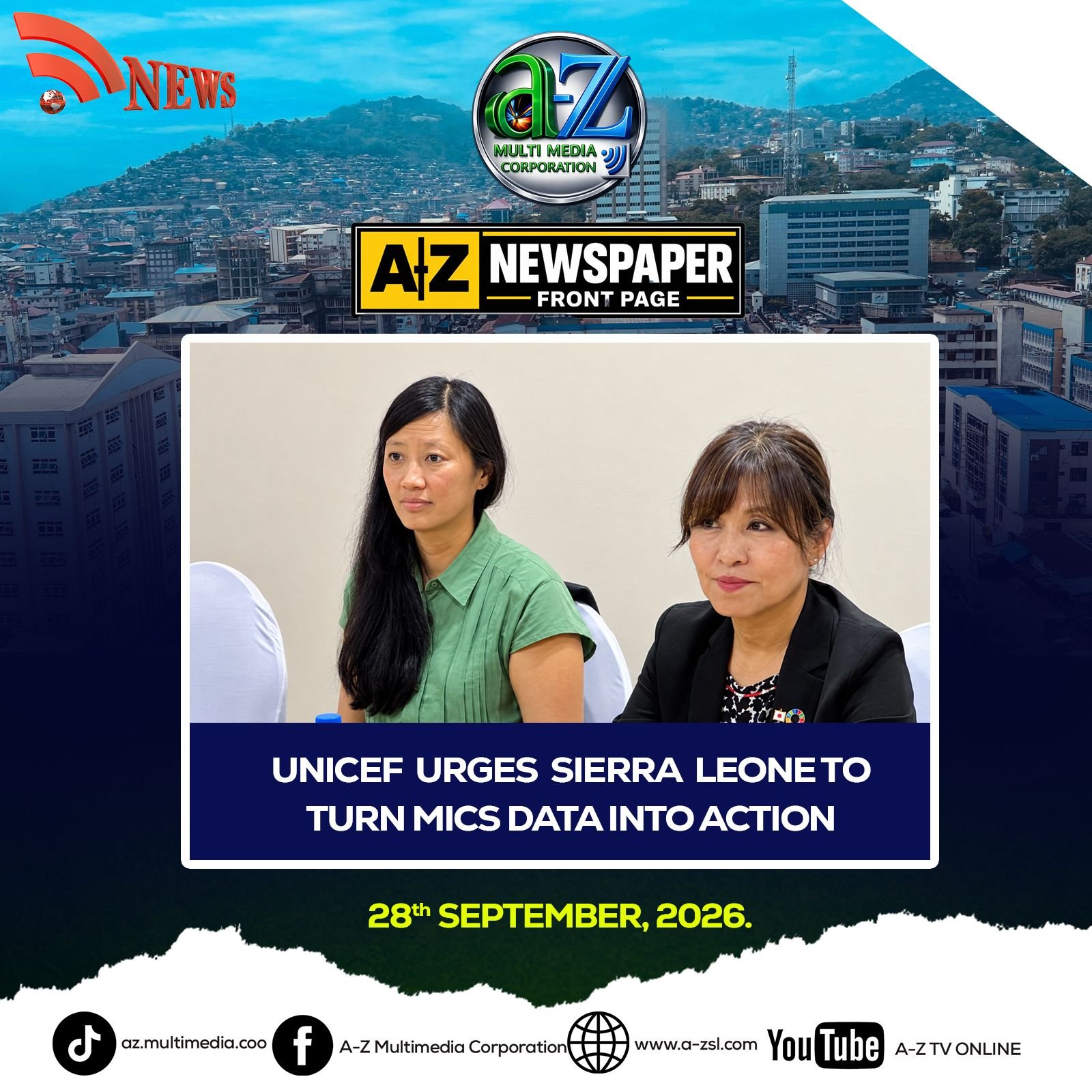
The UNICEF Representative in Sierra Leone, Mariko Kagoshima, has called for the findings of the Multiple Indicator Cluster Survey (MICS) 2025-26 to be translated into concrete action to improve policies, investments and services for children, women and families across the country.
Kagoshima made the call on Friday, September 25, 2026, while delivering her closing remarks at the MICS 2025-26 Data Interpretation and Report Compilation Workshop in Sierra Leone.
She said the four-day workshop brought together government institutions, Statistics Sierra Leone, development partners, academia, the United Nations and technical agencies to review, interpret and validate the survey findings.
According to Kagoshima, the collective process has strengthened both the quality of the evidence and national ownership of what the data reveals about the lives of children, women and families across Sierra Leone.
She commended Statistics Sierra Leone and the Government of Sierra Leone for their leadership throughout the process, while thanking participants for their expertise, time and commitment.
Kagoshima also acknowledged the support of the Government of Iceland and UN Women, noting that their financial and technical contributions had helped make the national exercise possible.
She further recognized the work of data collectors, supervisors, field coordinators and technical teams who travelled long distances and worked in difficult conditions to reach households in remote, riverine and mountainous communities.
She said their efforts had ensured that the voices and experiences of children, women and families across the country were reflected in the survey.
“This week has reminded us why validation matters. It is not just a technical step. It is what helps turn data into evidence that people can trust and use,” Kagoshima said.
She said the findings would provide a foundation for policy dialogue, planning, budgeting and programme decisions, adding that MICS was more than a collection of statistics.
According to her, the survey provides a comprehensive picture of the lives of children, women and families in Sierra Leone, showing areas where progress is being made, gaps that remain and groups that may still be left behind.
The findings cover areas including health, nutrition, education, early childhood development, child protection, gender, disability, water and sanitation, and household living conditions.
Kagoshima stressed that the value of the survey would ultimately be measured by how its evidence is used to improve policies, guide investments, strengthen services and reach children and communities most in need.
She said the findings came at an important time as Sierra Leone continues to advance its national development priorities and the Sustainable Development Goals.
“Used well, this evidence can help focus attention and resources where they can have the greatest impact,” she said.
The UNICEF Representative assured that UNICEF would continue supporting the Government of Sierra Leone and Statistics Sierra Leone through the remaining stages of the process, including finalizing, disseminating and using the findings.
She urged stakeholders to ensure that the evidence informs action, saying it should help shape priorities, strengthen accountability and support decisions capable of making a difference in people’s lives.
“If we use this evidence well, it can help Sierra Leone make better decisions, invest more wisely and deliver stronger services for every child in Sierra Leone, especially those who are still furthest behind,” Kagoshima said.
She said she looked forward to joining stakeholders again at the national launch of the Sierra Leone MICS 2025-26 findings.