

By: Audrey Raymonda John
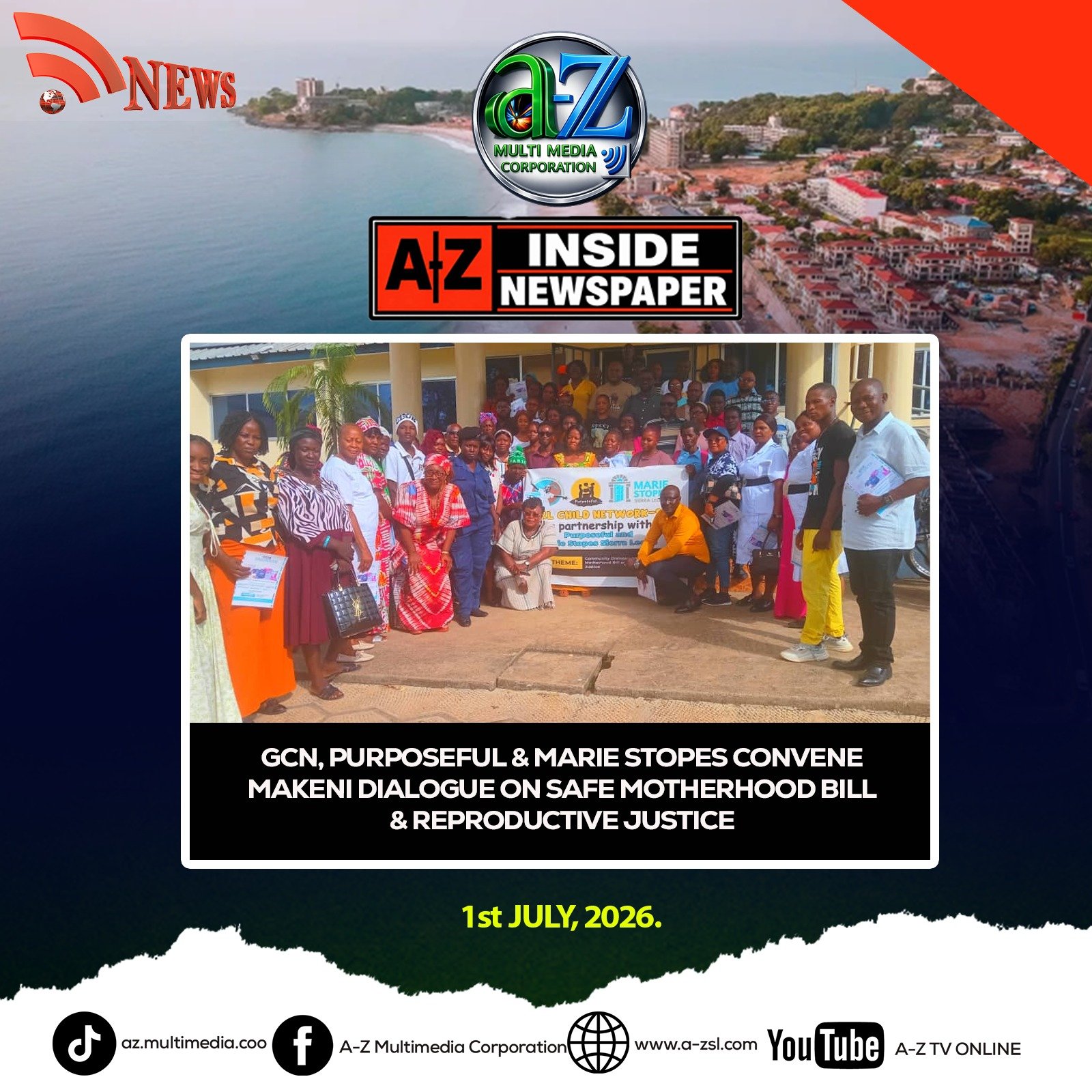
The Girl Child Network (GCN) Sierra Leone, in partnership with Marie Stopes Sierra Leone and Purposeful, has convened a major community dialogue in Makeni to increase public understanding of the proposed Safe Motherhood Bill and promote informed discussions on reproductive justice and women’s health rights.
Held at the Bombali District Council Hall, the engagement brought together Members of Parliament representing Bombali District, civil society organisations, healthcare professionals, nurses, students, religious leaders, community stakeholders, and members of the public.
The dialogue aimed to address widespread misconceptions surrounding the Safe Motherhood Bill while highlighting the urgent need to strengthen maternal healthcare and reproductive health services across Sierra Leone.
The proposed Safe Motherhood Bill seeks to improve and protect women’s access to quality maternal and reproductive healthcare throughout pregnancy, childbirth, and the postnatal period. Among its key objectives are expanding access to antenatal, delivery, and postnatal care; reducing maternal and infant mortality; increasing access to family planning and modern contraceptive services; promoting adolescent-friendly reproductive healthcare; ensuring confidentiality and dignity in healthcare settings; protecting women’s right to make informed decisions about their reproductive health; and addressing unsafe abortion, which remains a significant contributor to maternal deaths in Sierra Leone.
Supporters of the bill argue that the legislation is critical in a country that continues to record one of the highest maternal mortality rates in the world.
During the dialogue, speakers emphasized that safe motherhood cannot be discussed in isolation from harmful traditional practices such as Female Genital Mutilation (FGM). Health professionals noted that FGM can contribute to serious obstetric complications, including prolonged labour, obstructed childbirth, excessive bleeding, severe perineal tears, infections, and increased health risks for both mothers and newborns.
They explained that women who have undergone FGM often face greater complications during pregnancy and childbirth, making access to quality maternal healthcare even more essential. Advocates further stressed that reproductive justice means ensuring women and girls have the freedom to make informed decisions about their bodies, access quality healthcare services, and live free from harmful practices that endanger their health and well-being.
Welcoming participants, the Executive Director of Girl Child Network Sierra Leone, Madam Anita Koroma, shared an emotional account of losing her younger sister following complications from an unsafe abortion.
She explained that her sister had sought the procedure in secrecy and later died from complications. According to Madam Koroma, the tragedy illustrates the devastating consequences of unsafe abortions carried out in unhygienic conditions by untrained individuals.
She noted that many adolescent girls and young women, particularly school-going girls, resort to unsafe abortion methods because of stigma, poverty, inadequate information, and limited access to reproductive healthcare services. She warned that such procedures often result in severe infections, organ damage, infertility, and death.
The dialogue also highlighted the numerous challenges confronting adolescent girls in Sierra Leone, including teenage pregnancy, sexual violence, early marriage, school dropout, and limited access to comprehensive reproductive health information and services.
Participants stressed that young people require accurate information, confidential healthcare services, and supportive health systems that respect their rights and dignity. They argued that the Safe Motherhood Bill would significantly improve access to maternal and reproductive healthcare services, particularly at the primary healthcare level.
Speaking during the dialogue, the District Health Sister for Bombali, Isatu Bosco Kamara, said the district continues to experience high maternal mortality rates, largely driven by preventable complications during pregnancy and childbirth.
She explained that the proposed legislation seeks to guarantee free essential healthcare services for pregnant women, lactating mothers, and children under the age of five. According to her, many maternal deaths could be prevented through timely medical interventions, skilled birth attendance, and improved access to quality healthcare services.
Bombali District Member of Parliament, Hon. Ibrahim Barrie, clarified that most government bills are initiated by the Executive rather than Parliament. He explained that the responsibility of Parliament is to debate, scrutinize, and make decisions on proposed legislation after broad public consultation.
He assured participants that Parliament would not deliberately pass any law that violates constitutional rights or fails to reflect the concerns and aspirations of the people.
“The Safe Motherhood Bill has generated extensive public debate over the past two years, leading to consultations with religious leaders, civil society organisations, healthcare professionals, and community stakeholders. We are here not to support or oppose the bill but to listen to the people and contribute meaningfully to the dialogue,” Hon. Barrie said.
Also speaking, Bombali District Member of Parliament, Hon. Catherine Tarawallie, highlighted Parliament’s commitment to ensuring that the proposed legislation undergoes thorough review and scrutiny before any decision is made on its passage into law.
Participants concluded that reproductive justice extends beyond healthcare alone. It encompasses the right of women and girls to make informed decisions about their bodies, access quality healthcare services, and live free from coercion, discrimination, violence, and harmful traditional practices.
They noted that in Sierra Leone where maternal mortality, adolescent pregnancy, unsafe abortion, and Female Genital Mutilation continue to affect the lives of thousands of women and girls meaningful legislative reform remains essential.
The dialogue in Makeni demonstrated the importance of sustained engagement among communities, policymakers, healthcare professionals, and civil society organizations in improving maternal health outcomes and protecting the rights, dignity, and lives of women and girls.
As Sierra Leone continues national discussions on the proposed Safe Motherhood Bill, many participants agreed on one guiding principle: no woman should die while giving life, and no girl should be denied the right to make informed decisions about her health and future.