

By: Aminata Sesay
The Parliamentary Committee on Water Resources and Sanitation has expressed dissatisfaction with the level of information provided by the Ministry of Water Resources and Sanitation regarding its activities, calling for a detailed, evidence-based report on water and sanitation programmes across Sierra Leone.
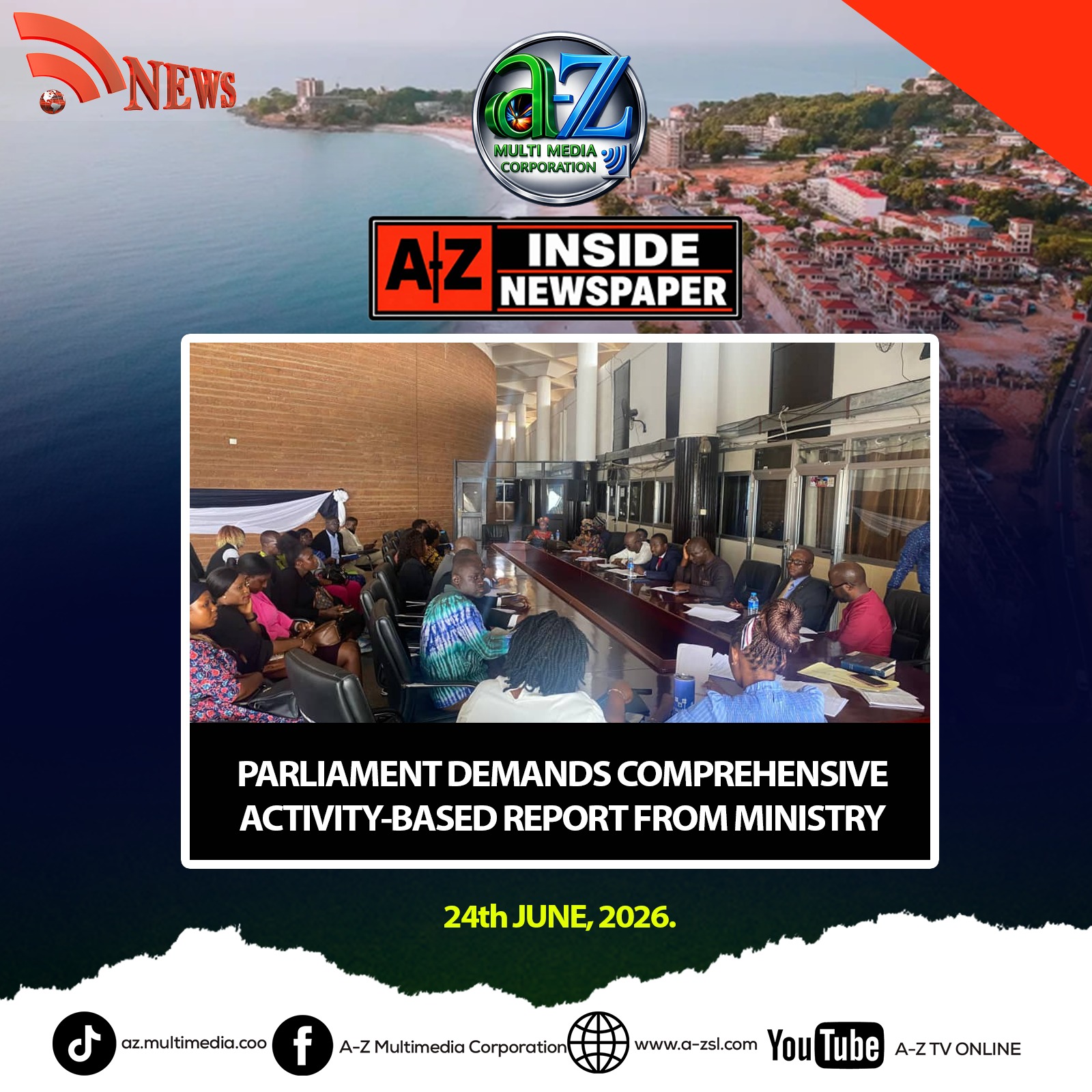
The Committee made this demand during an oversight engagement with officials of the Ministry on Tuesday, 23rd June 2026, at the State Hall, Parliament Building, Tower Hill, Freetown.
The engagement, chaired by Hon. Abdul Karim Kamara, focused on the Ministry’s activities, sector coordination, sanitation programmes, and collaboration with key agencies responsible for water and sanitation delivery in the country.
In his opening remarks, Hon. Kamara expressed concern over what he described as limited engagement between the Ministry and the Committee. He emphasized that Parliament’s ability to effectively advocate for the Ministry’s needs including manpower, logistics, and budgetary support depends on access to timely and accurate information.
He stressed the need for regular updates on the Ministry’s programmes and achievements to enable effective oversight and informed support.
Responding to the Committee, the Acting Permanent Secretary explained that the Ministry of Water Resources and Sanitation was established in 2013, while the Sanitation Directorate was transferred from the Ministry of Health to the Ministry through a Presidential Proclamation in 2023.
He outlined the Ministry’s responsibilities, including policy formulation, water resource management, sanitation services, sector coordination, and oversight of institutions such as the National Water Resources Management Agency (NWRMA), Guma Valley Water Company, Sierra Leone Water Company (SALWACO), and the Electricity and Water Regulatory Commission (EWRC).
However, Committee Members urged the Ministry to move beyond institutional structures and policy descriptions and instead provide detailed information on actual programmes being implemented in communities.
The Committee called for activity-based reporting, particularly on sanitation interventions in markets, schools, hospitals, and local communities.
During discussions on sanitation, the Director of Sanitation highlighted the development of a National Sanitation Policy Implementation Guideline and an Open Defecation Free (ODF) Verification and Certification Protocol.
However, Members questioned the extent of the Directorate’s engagement with District Medical Officers, health facilities, and local councils, especially following the transfer of sanitation responsibilities from the Ministry of Health.
The Committee expressed concern that key stakeholders had not been adequately engaged through formal communication channels and structured consultations to address institutional challenges arising from the transition.
Members also raised concerns about sanitation conditions in hospitals and health facilities, referencing previous engagements with the Ministry of Health. They questioned the level of coordination between the two ministries in ensuring proper healthcare sanitation standards.
Hon. Kamara urged the Ministry to establish immediate communication mechanisms with District Medical Officers and health authorities to improve coordination and address sanitation challenges in healthcare facilities.
On sanitation in markets and communities, Ministry officials stated that they are working with local councils on waste management, environmental cleaning, and public awareness campaigns.
However, the Committee expressed dissatisfaction with the response, requesting detailed reports and evidence of activities carried out in different districts.
The engagement also focused on the World Bank–funded Water Access Improvement Project, particularly its sanitation component valued at approximately US$7.5 million.
Officials informed Members that the project includes the construction of faecal sludge treatment facilities in the Western Area and the provision of public toilet facilities in markets, schools, hospitals, beaches, and landing sites.
The Committee sought clarification on implementation progress, procurement processes, and the list of beneficiary communities.
Ministry representatives disclosed that site selection exercises were ongoing, with proposed locations including beaches, marketplaces, schools, hospitals, and fishing communities within the Western Area.
The Chairman expressed concern over delays in project implementation, warning that inflation and exchange rate fluctuations could affect value for money if procurement processes are unnecessarily prolonged.
He directed the Ministry to submit a comprehensive list of beneficiary institutions and communities under the project.
Members further examined sanitation facilities in schools, stressing the need for regular inspections and enforcement of minimum water, sanitation, and hygiene (WASH) standards.
They urged the Ministry to strengthen collaboration with educational authorities and local councils to improve sanitation conditions in schools nationwide.
The Committee also raised concerns about the Ministry’s staffing levels, district presence, office locations, transport facilities, and overall operational capacity.
Members expressed concern over the Ministry’s inability to provide detailed information on its district structures and available resources, describing such information as critical for effective service delivery.
Discussions also covered the Ministry’s relationship with key sector agencies, including Guma Valley Water Company, SALWACO, NWRMA, and EWRC.
Officials confirmed that coordination meetings are held regularly and that the Ministry continues to exercise oversight responsibility over these institutions.
In his closing remarks, Hon. Kamara said the Ministry’s willingness to engage was appreciated, but noted that the presentation did not meet the Committee’s expectations.
He stated that much of the information provided focused on policies and frameworks rather than measurable activities and programme outcomes.
The Committee therefore directed the Ministry to return within two weeks with a comprehensive activity-based report covering all directorates, district-by-district updates on water and sanitation programmes, detailed staffing and office records, sanitation activities in schools, hospitals, markets, and communities, as well as a database of NGOs and development partners operating in the sector.
The Ministry was also instructed to provide detailed updates on all donor-funded projects, including the World Bank-supported sanitation programme.
The Chairman further urged the Ministry to improve coordination with Parliament and ensure the Minister personally attends future oversight engagements.
He reaffirmed Parliament’s commitment to supporting improvements in water supply and sanitation services but stressed that such support must be based on accurate, timely, and comprehensive information.
The meeting ended with a commitment from both Parliament and the Ministry to strengthen collaboration toward improving water and sanitation services across Sierra Leone.