

By: Marian Magdalene Bangura
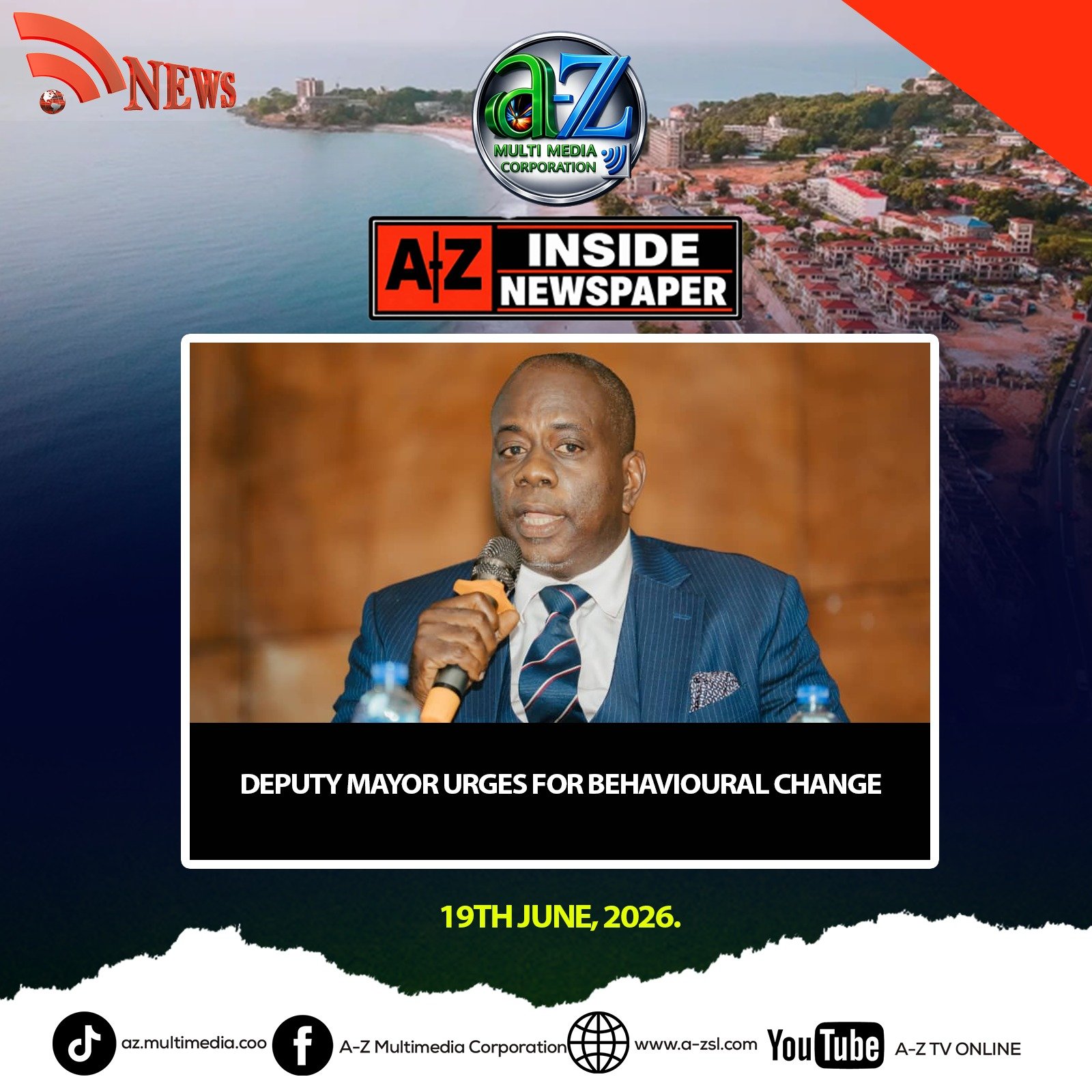
The Deputy Mayor of the Freetown City Council, Kweku Melvin Lisk Esq., has called on residents of the capital to adopt responsible sanitation practices, stressing that a change in public attitude is essential to achieving a cleaner and healthier city.
Speaking at the Government Weekly Press Briefing on Tuesday, 16 June 2026, at the Miatta Civic Centre in Freetown, Mr. Lisk said poor sanitation remains one of the city’s greatest challenges and is largely driven by irresponsible waste disposal practices rather than a lack of government intervention.
He noted that while the government and development partners continue to invest significantly in waste management infrastructure and sanitation services, lasting improvements can only be achieved if citizens take ownership of their environment.
“It is largely an issue of attitude because, for many years, we have been somewhat complacent and have not paid sufficient attention to how we dispose of our waste, particularly liquid waste,” Mr. Lisk stated.
According to the Deputy Mayor, many residents have developed the mindset that once waste leaves their homes or businesses, it becomes someone else’s responsibility. He warned that such attitudes continue to undermine efforts to improve sanitation across the city.
“Most people believe that sanitation is someone else’s responsibility. However, the examples we see around us prove otherwise. There are individuals who have access to proper sanitation facilities, yet they choose not to use them and instead dispose of waste improperly,” he added.
Mr. Lisk highlighted the direct link between sanitation and public health, noting that poor waste management contributes to environmental degradation, flooding, disease outbreaks, and declining living conditions.
To address these challenges, the Freetown City Council, in collaboration with the Ministry of Local Government and Community Affairs, has developed the Freetown City Council Solid and Liquid Waste Collection By-Laws 2024. These regulations provide a stronger legal framework for managing both solid and liquid waste across the municipality.
A major focus of the new by-laws is the management of liquid waste, which the Deputy Mayor described as a growing but often overlooked issue. He explained that many hillside communities lack proper sewage and septic disposal systems, leading to wastewater being discharged into drainage channels and waterways.
He warned that this practice significantly contributes to flooding, environmental pollution, and public health risks, particularly during the rainy season.
Under the new regulations, every household is required to register with an approved waste service provider responsible for collecting and safely disposing of waste. Failure to comply now constitutes an offence punishable by law.
The Council has also divided Freetown into operational zones to improve waste collection services and strengthen monitoring and enforcement.
Mr. Lisk further emphasized the importance of proper waste segregation, especially for hazardous and medical waste. He warned that individuals who search through dumpsites for recyclable materials are exposed to serious health risks due to contact with contaminated waste.
“Nobody can brush your teeth for you, and in the same way, nobody can keep your environment clean on your behalf,” he remarked. “The waste we see around us is generated by our own actions.”
He stressed that sanitation must no longer be treated casually and confirmed that indiscriminate dumping of waste is now a punishable offence under the new regulations.
To ensure effective implementation, the Freetown City Council has partnered with the Ministry of Internal Affairs, the Sierra Leone Police, and the Ministry of Local Government and Community Affairs to enforce compliance.
He also called for greater orderliness in markets and public spaces, arguing that all activities within the city should be properly organized and conducted in designated areas.
“Every activity should be organized and properly structured. There must be designated places for everything, including trading and waste disposal,” he said.
While acknowledging that some communities still face challenges in accessing sanitation facilities, Mr. Lisk maintained that personal responsibility remains essential.
He urged residents to embrace behavioural change and civic responsibility, stressing that no amount of financial investment alone can solve sanitation challenges without public cooperation.
“Until attitudes change, no matter how much money we invest in sanitation and environmental management, our efforts will not achieve the desired results,” he said.
The Deputy Mayor’s remarks come as the Freetown City Council begins full enforcement of the Solid and Liquid Waste Collection By-Laws 2024, aimed at improving public health, environmental protection, and the overall cleanliness of Sierra Leone’s capital.