

By: Aminata Sesay
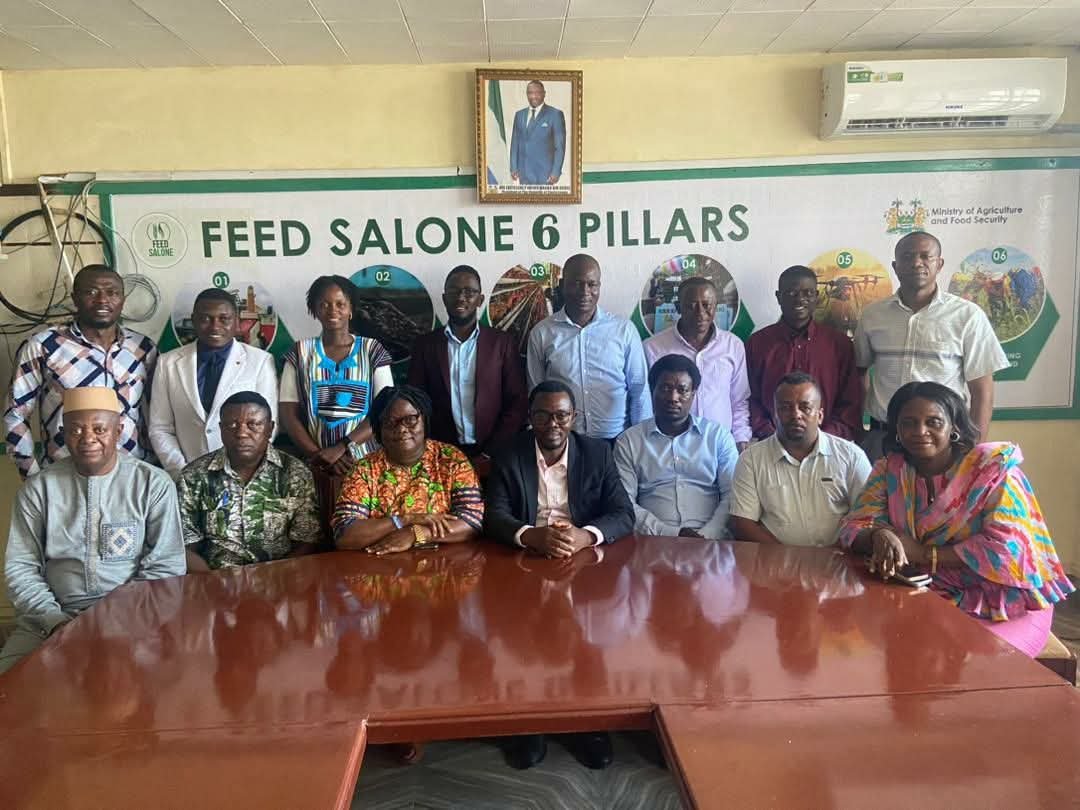
The Livestock and Veterinary Services Division of the Ministry of Agriculture and Food Security (MAFS), in collaboration with key national and international partners, has convened its 7th In-Service Applied Veterinary Epidemiology Training (ISAVET) Steering Committee meeting. The meeting focused on the upcoming graduation of Cohort II participants and preparations for the rollout of Cohort III.
Held at the MAFS Conference Hall at Youyi Building in Freetown, the meeting brought together representatives from leading institutions, including the Food and Agriculture Organization, Centers for Disease Control and Prevention, National Public Health Agency, World Health Organization, University of Makeni, Njala University, and Milton Margai Technical University, among others.
Providing an overview of the proceedings, the Director of the Livestock and Veterinary Services Division at MAFS, Saidu Bamayange, highlighted the impact of ISAVET in strengthening Sierra Leone’s animal health systems. He noted that the programme, delivered through academic partnerships, has significantly improved capacity within the veterinary sector.
Mr. Bamayange disclosed that Sierra Leone has made notable progress, including increasing the number of veterinary doctors to eight and expanding para-veterinary services nationwide. He described these achievements as surpassing those of neighbouring countries such as Liberia and Guinea.
He called for constructive feedback from Steering Committee members, particularly on the implementation of the World Bank-supported Pandemic Fund as it relates to ISAVET. He further revealed that previous support from the United States Agency for International Development enabled the successful training of approximately 21 cohorts, establishing a strong foundation for future expansion.
According to him, the Pandemic Fund is expected to support the completion and graduation of the current cohort while facilitating the rollout of Cohort III. He urged stakeholders to critically review the roadmap and identify actionable steps to ensure smooth and effective implementation of the next phase.
Mr. Bamayange also commended the University of Makeni for its active role in advancing animal health training, noting that MAFS staff have directly benefited from the institution’s contributions to the ISAVET programme.
The ISAVET programme forms part of broader national and global efforts to strengthen disease surveillance, improve veterinary services, and enhance preparedness against zoonotic diseases key priorities for safeguarding both animal and public health.
The meeting concluded with renewed commitment from partners to sustain collaboration and support the continued development of Sierra Leone’s veterinary epidemiology workforce.