

By: Saidu Jalloh
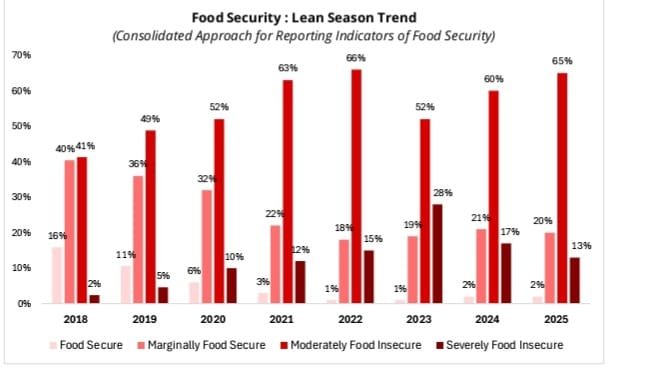
Sierra Leone has recorded a significant decline in severe food insecurity, with affected households dropping from 28 percent in 2023 to 13 percent in July 2025, according to the latest survey by the Food Security Monitoring System.
The report highlights a 15-percentage-point improvement in severe food insecurity, although a substantial proportion of households 65 percent remain moderately food insecure.
FSMS officials presenting the findings noted that the decline reflects gradual improvements in household resilience, but economic pressures persist across the country. They revealed that 71 percent of surveyed households still spend more than 75 percent of their total income on food, indicating continued financial strain.
The survey also showed a decrease in the use of emergency coping strategies, falling from 20 percent in September 2024 to 14 percent in July 2025. Analysts said this trend suggests modest stability gains among vulnerable households.
Despite the overall progress, rural communities remain disproportionately affected. Households dependent on agriculture as their main source of income continue to face high levels of food insecurity. Districts such as Falaba, Karene, Moyamba, and Koinadugu were identified as the most vulnerable.
In its recommendations, the FSMS urged the government and development partners to scale up targeted social protection programs, particularly in severely affected districts, and to finalize emergency preparedness plans for timely assistance during crises.
The report also emphasized the need to promote climate-smart agriculture, strengthen agricultural extension services, and improve post-harvest management to enhance productivity and household resilience.
Additionally, stakeholders were encouraged to invest in rural infrastructure, especially feeder roads, to improve market access for farmers and reduce transportation costs. Expanding access to agricultural credit and supporting household-level economic interventions were highlighted as essential steps toward long-term food security.