

By: Precious Miracle Kargbo (Snr)
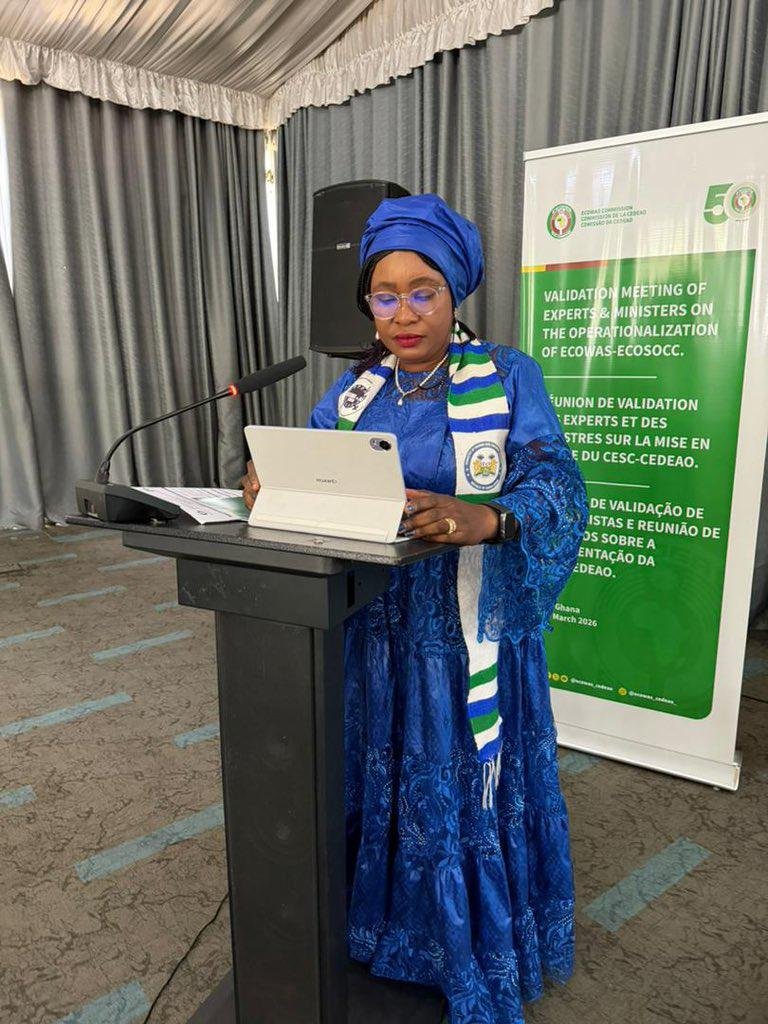
The Ministry of Social Welfare, represented by Minister Melrose Karminty, chaired a ministerial meeting of the Economic Community of West African States (ECOWAS) in Accra, Ghana to validate the framework for a reconstituted ECOWAS Civil Society Organisations (ECOSOCC).
The session marked a significant step toward formally integrating civil society voices into regional policymaking.
Minister Karminty led deliberations on governance arrangements, participation criteria, and accountability measures aimed at making ECOSOCC more representative and operationally effective. Officials stated that the validated framework outlines transparent selection procedures, geographic and sectoral balance requirements, safeguards for organisational independence, and funding mechanisms designed to preserve autonomy while ensuring sustainability.
The initiative responds to long-standing demands from grassroots organisations across West Africa for a stronger institutional channel to influence regional policies on social protection, human rights, migration, youth employment, and public health. Under the new framework, ECOSOCC is expected to function as a structured consultative body, bringing local perspectives into ECOWAS decision-making and improving the relevance and implementation of regional programmes.
During the meeting, Minister Karminty emphasised the Ministry of Social Welfare’s priority of ensuring that vulnerable and marginalised communities gain meaningful representation. She stressed the importance of including small-scale community organisations, women’s groups, and youth networks stakeholders that are often underrepresented in regional dialogues. Karminty also called for capacity-building support to enable selected organisations to engage effectively with technical ECOWAS bodies.
Delegates acknowledged potential implementation challenges, including ensuring equitable representation for less visible groups, securing predictable financing without politicising the forum, and building administrative capacity for sustained engagement. To address these concerns, ministers agreed on a phased rollout that will include a transparent nomination process, pilot engagements, and donor-supported capacity-building initiatives.
Observers noted that while the validation of the framework represents an important procedural milestone, its operational success will depend on national endorsements and adequate resource commitments.
In her concluding remarks, Minister Karminty urged swift ratification and mobilisation of both technical and financial support. She argued that a robust ECOSOCC would strengthen regional integration and ensure that ECOWAS policies reflect the lived realities of West Africa’s people particularly its most vulnerable communities.