

By: Audrey Raymonda John
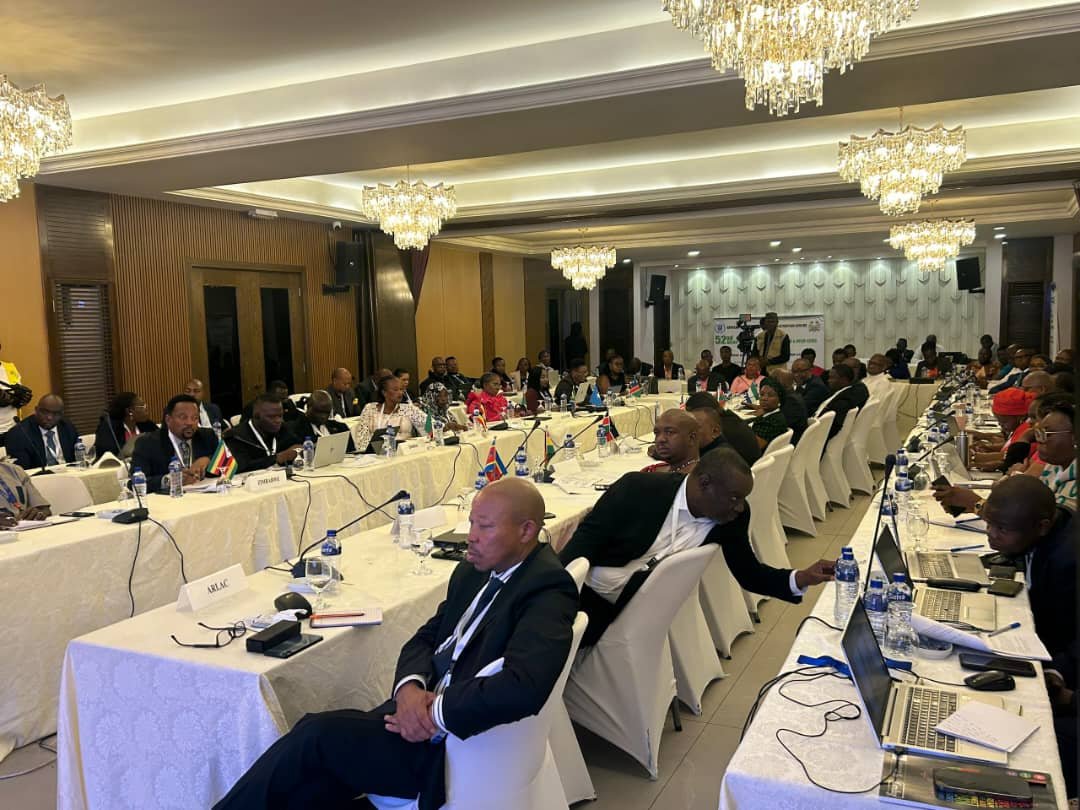
Ministers and policymakers from across Africa have called for stronger policies to ensure that the rapidly expanding platform economy creates decent and sustainable jobs for millions of young people across the continent. The call was made during a high-level symposium on “Advancing Decent Work in the Platform Economy,” organised by the African Regional Labour Administration Centre in Freetown.
Speaking at the symposium, Sierra Leone’s Minister of Employment, Labour and Social Security, Mohamed Rahaman Swaray, said the platform economy is transforming the world of work and requires urgent policy attention to balance innovation with worker protection.
Welcoming delegates to Sierra Leone, the Minister noted that digital labour platforms are reshaping labour relations globally and introducing new forms of employment that challenge traditional regulatory frameworks.
“The platform economy, characterised by digital labour platforms that mediate work through apps and online interfaces, is rapidly transforming the world of work,” he said.
He explained that across Africa, the sector is expanding in key areas such as transport services, e-commerce, domestic services, financial technology, and digital freelancing, creating new income opportunities for young people.
However, the Minister warned that while the platform economy presents opportunities, it also exposes workers to vulnerabilities such as a lack of formal employment status, absence of social protection, and limited labour rights.
Many platform workers, he noted, are classified as independent contractors and are therefore excluded from benefits such as minimum wage protection, sick leave, social security, and collective bargaining rights.
He also raised concerns about algorithmic management and digital surveillance, explaining that workers are often subjected to opaque rating systems and automated decision-making processes that affect job access and income stability.
According to him, the symposium aims to strengthen the capacity of ARLAC member states to better understand and respond to the changing nature of platform work. He said the meeting would also facilitate dialogue among African countries on policy and regulatory responses that protect workers while enabling technological innovation.
“Our deliberations will help identify strategic priorities for Africa’s contribution to discussions on the platform economy and decent work at the International Labour Conference scheduled for June 2026,” he stated.
The Minister encouraged participants to use the platform to share experiences, exchange knowledge, and develop practical strategies that promote inclusive and fair labour practices across the continent.
Also speaking at the event, Ghana’s Minister of Labour and Employment, Abdul-Rashid Pelpuo, emphasised the need for African countries to link economic growth with job creation.
He noted that many African economies experience economic growth without corresponding employment opportunities.
“Why do we grow and not have employment opportunities spread throughout our countries? This is a typical example of how Africa is wasting its resources,” Pelpuo said.
The Ghanaian Minister explained that his government is investing heavily in technical and vocational education to equip young people with practical skills that can lead to job creation.
He disclosed that Ghana is implementing a programme aimed at training *one million young people in digital and technical skills, preparing them for emerging opportunities in the digital economy.
Minister Pelpuo also revealed that the government plans to invest about nine billion dollars in infrastructure over the next two years, a move expected to create approximately 450,000 jobs.
In addition, Ghana is prioritising agribusiness and value addition to agricultural products, noting that exporting raw materials without processing significantly limits employment opportunities.
“We must take control of what we produce and add value before exporting. That is how we create employment and reduce unemployment,” he said.
Meanwhile, the Minister of Labour and Social Security of Eswatini, Phila Wiseman Buthelezi, raised concerns about the quality of jobs being created across many African economies.
He noted that governments often celebrate job creation figures without evaluating whether those jobs meet the standards of decent work.
“We announce that we have created thousands of jobs, but we rarely ask how many of those are decent jobs that provide fair pay, social protection and safe working conditions,” Buthelezi said.
He explained that labour ministries often face difficulties influencing economic policies related to foreign direct investment and industrial development, even though those policies directly affect workers’ welfare.
According to him, stronger coordination among government sectors is necessary to ensure that economic growth translates into quality employment opportunities.
“If we are serious about decent work, we must involve all sectors of government in that agenda and not leave it to labour ministries alone,” he added.
President of the Sierra Leone Employers’ Federation, Kobi Walker, also highlighted the potential of the platform economy to create employment for Africa’s growing youth population.
He said the digital platform economy could absorb millions of young people into productive activities if governments establish appropriate regulatory frameworks.
Walker noted that Africa already has more than 36 million gig workers, with the number expected to increase rapidly as mobile technology and digital payment systems continue to expand.
Countries such as Nigeria, South Africa, and Kenya, he said, are already witnessing significant growth in platform-based employment.
In Sierra Leone, Walker observed that the platform economy could play a critical role in addressing unemployment, particularly because over 70 percent of the country’s population is under the age of 25.
The symposium brought together labour ministers, policymakers, employers’ organisations, trade unions, and international partners to discuss strategies for ensuring that technological innovation contributes to inclusive economic growth and decent work across Africa.