

By: Fayia Jr. Moseray
In a surprising revelation by the Sierra Leone Police (SLP), a total of 41 Sierra Leoneans have been deported from the United States, primarily due to incomplete documentation. Authorities have also confirmed that another 2,000 Sierra Leoneans could face deportation by the end of 2025, following similar issues with their legal paperwork.
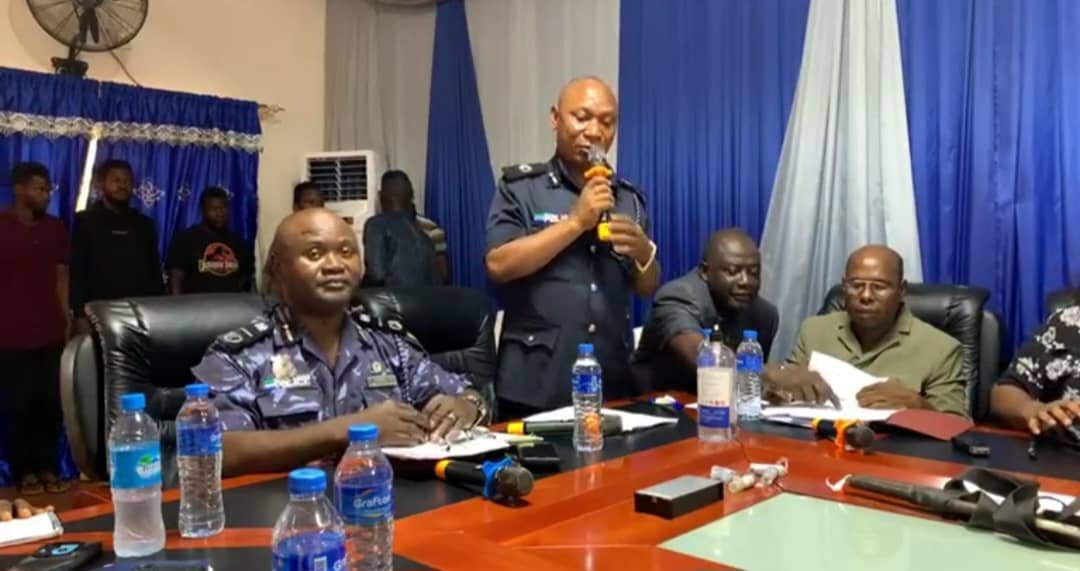
The announcement was made during a press briefing held on Wednesday, September 10, 2025, at the Senior Police Officers’ Mess in Kingtom, Freetown. Chief Superintendent of Police (CSP) Mohamed Kugba Allieu, Head of the Transnational Organized Crime Unit (TOCU), noted that the deportations were part of a broader challenge faced by Sierra Leoneans in navigating foreign immigration systems.
CSP Allieu explained that, in addition to the 41 individuals who have already been deported, it is expected that another 2,000 Sierra Leoneans will be deported by December 2025 due to issues related to incomplete or irregular documentation. According to data from the police, over 95 percent of deportations from both the US and Europe are linked to documentation problems, underscoring the difficulties many Sierra Leoneans face when interacting with foreign immigration authorities.
Recognizing the severity of the situation, CSP Allieu emphasized that the SLP does not view deportations solely as a law enforcement issue, but rather as a national challenge that requires collaboration across various government agencies. The police force is working closely with the Ministry of Foreign Affairs and International Cooperation (MFAIC), the Immigration Department, and social welfare agencies to manage the return of deportees.
The government, in partnership with international organizations, has established temporary reception centers to assist deportees upon their arrival in Sierra Leone. These efforts include improved identity verification systems and better cooperation with foreign embassies to minimize documentation issues that could lead to deportations.
Civil society organizations have also stepped in to ensure that deportees are supported throughout their reintegration into Sierra Leonean society. The Sierra Leone Migrants Network is advocating for long-term programs to help deportees, including vocational training, psychosocial support, and community sensitization to reduce the stigma that deportees often face.
CSP Allieu also revealed that the process for handling deportees has become more structured compared to previous years. In the past, returnees often arrived with little official support, but now deportees are given initial processing and health screenings at Lungi International Airport before being connected to family members and social workers. He noted, “We are learning from past experiences,” emphasizing that the government is strengthening coordination to prevent deportees from slipping into marginalization or attempting dangerous migration routes in the future.
Local community-based organizations have started offering peer support networks for deportees, helping them find employment and reintegrate into society. However, despite these efforts, the scale of the expected deportations presents a significant challenge, as many reintegration programs remain underfunded. Advocates have warned that without adequate economic and social support, deportees may struggle with unemployment or poverty.
Looking ahead, authorities have indicated that the deportation of 41 nationals is just the beginning of what could be a difficult period for Sierra Leone. While the coordinated efforts between the police, government, and civil society demonstrate a shift toward treating deportees as citizens who require support, the real challenge lies in mobilizing the necessary resources to ensure successful reintegration.
Whether Sierra Leone can turn the mass deportations into an opportunity for skill development and economic growth will depend on how well resources are mobilized and whether the resilience of returnees can be supported in rebuilding their lives.