

By: Mohamed J. Bangura
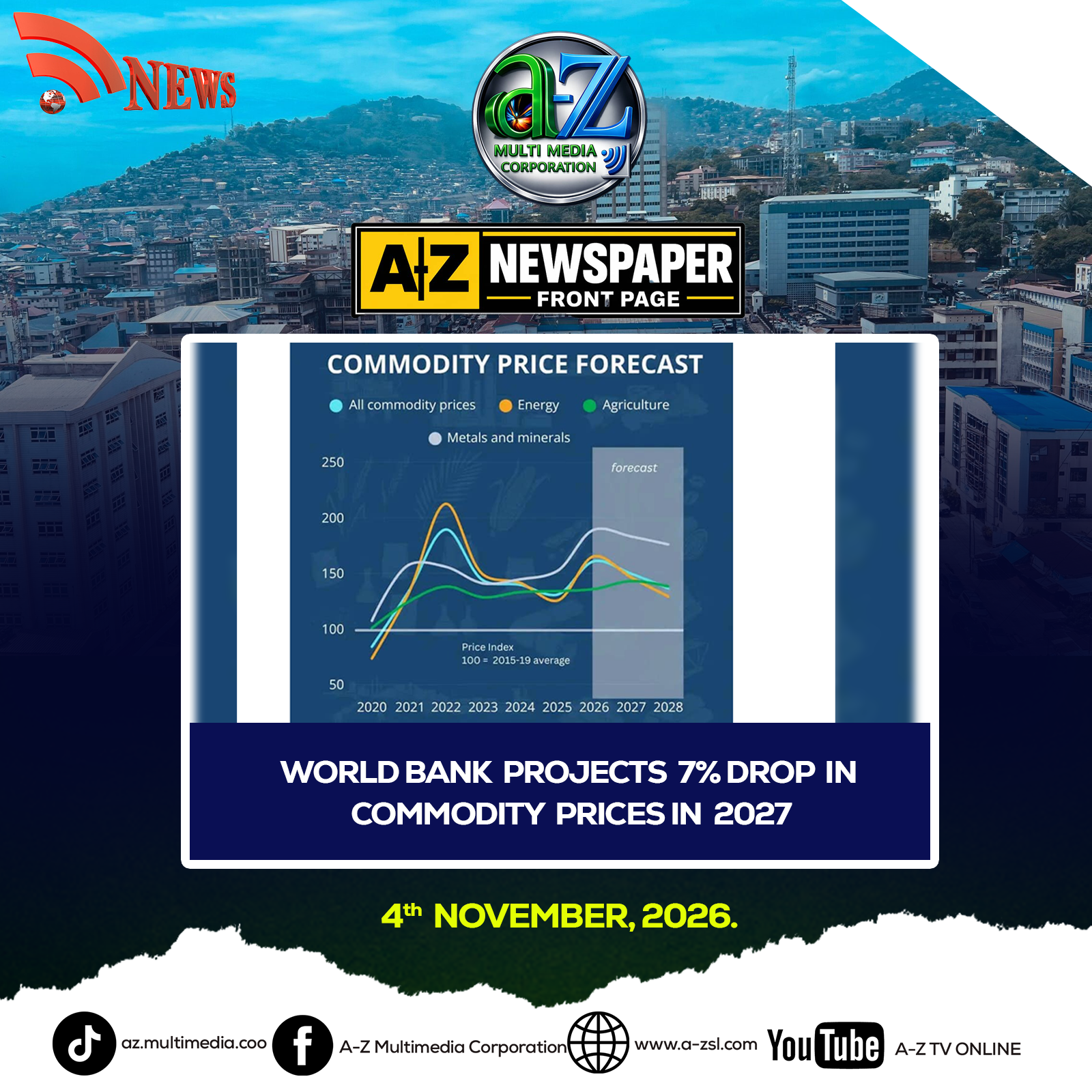
The World Bank Group has projected a seven per cent decline in global commodity prices in 2027, following an anticipated sharp increase in prices in 2026, as international markets gradually adjust to changing supply and demand conditions.
According to the Bank’s latest Commodity Markets Outlook, global commodity prices are expected to rise by 23 per cent in 2026 before declining by seven per cent in 2027.
The report attributes much of the anticipated increase in commodity prices to the ongoing conflict in the Middle East, which has disrupted international markets, particularly the energy sector. The conflict has contributed to a reduction in global oil inventories, leaving energy supplies more vulnerable to further disruptions.
Energy prices are projected to increase by 32 per cent in 2026, reversing three consecutive years of decline. Brent crude oil is expected to average US$91 per barrel, compared with US$69 in 2025, before falling to US$79 per barrel in 2027.
Food commodity prices are also forecast to increase by approximately 10 per cent in 2026, followed by a further seven per cent rise in 2027. This represents a cumulative increase of about 18 per cent over the two-year period.
The projected increase in food prices is linked to disruptions in grain shipments, the potential effects of El Niño on agricultural production, and rising fuel and fertilizer costs, which are expected to increase the cost of food production globally.
Meanwhile, metal prices are forecast to rise by 25 per cent in 2026, reaching new highs. Aluminium, copper and tin are expected to record significant increases, driven by growing demand from renewable energy technologies, electric vehicles and data centres, alongside supply disruptions.
Precious metal prices are also projected to increase by 40 per cent in 2026 as investors continue to seek safe-haven assets amid geopolitical tensions and uncertainty surrounding global economic policies.
The World Bank has cautioned that a combination of higher energy prices, attacks on Black Sea grain shipments and an exceptionally strong El Niño could trigger a food crisis similar to the one experienced in the early 2010s.
To help countries manage the potential economic consequences, the World Bank Group says it has made between US$50 billion and US$60 billion available through existing financial instruments, including US$25 billion in pre-arranged financing.
The institution is also strengthening its capacity to mobilize private-sector capital to support countries facing economic shocks and rising commodity prices.
The outlook highlights the need for countries to strengthen food security, improve energy resilience and protect vulnerable economies as governments prepare for continued uncertainty in global commodity markets.