

By: Abass Mahmoud Sillah Jr.
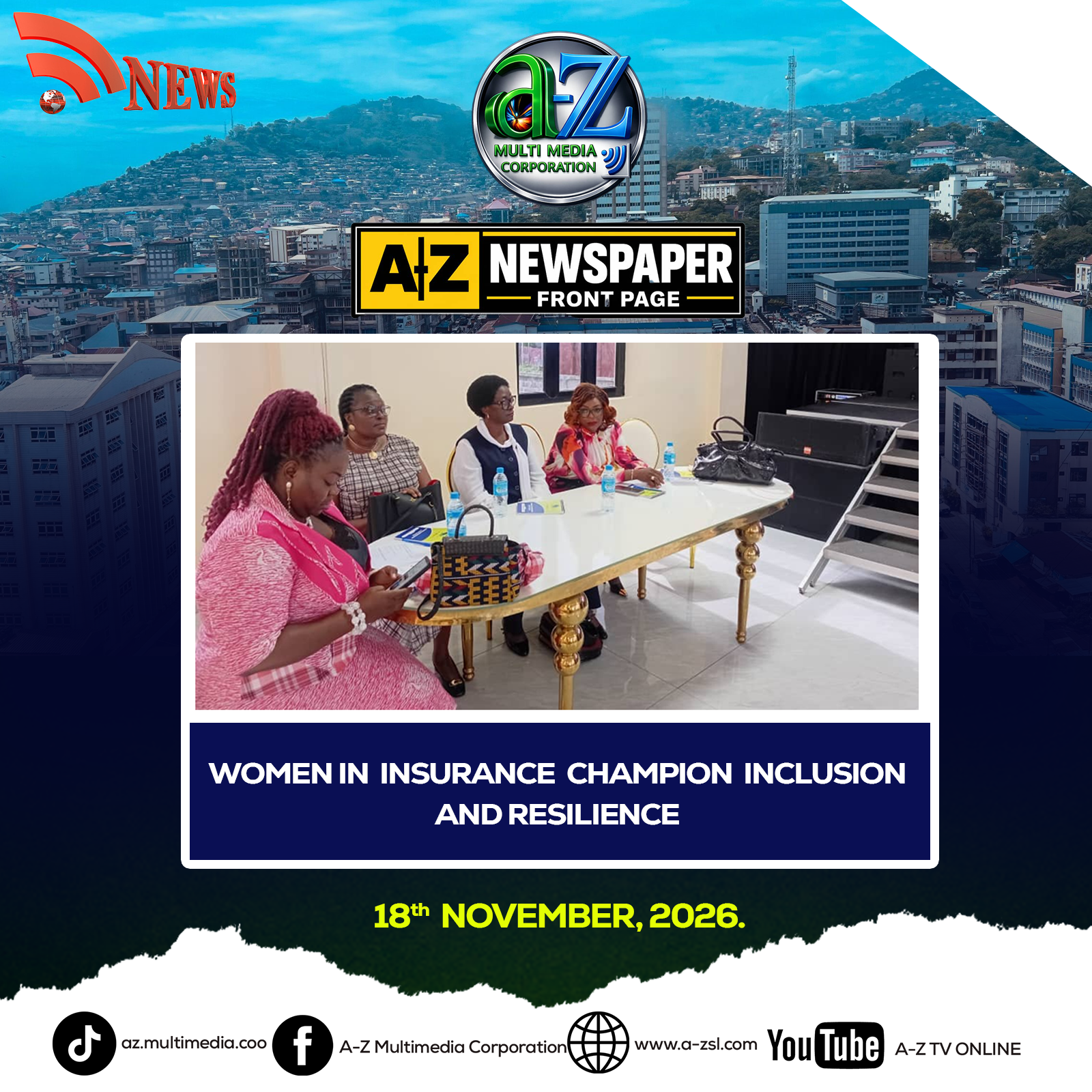
Women in Insurance on Tuesday, November 17, 2026, held a one-day empowerment symposium at Dove Nest, Aberdeen, Freetown, to promote women’s professional development, leadership and inclusion in Sierra Leone’s insurance industry.
The symposium, held under the theme “Capacitating Women for a More Resilient and Inclusive Insurance Industry,” brought together female professionals, industry executives, regulators and development partners to discuss strategies for strengthening women’s participation, career advancement and leadership in the sector.
In his statement, President of the Sierra Leone Insurance Association, Mr. Solomon Sesay, called for increased investment in women’s professional development and leadership, describing women’s empowerment as a strategic investment in the growth, innovation and long-term sustainability of the insurance industry.
Mr. Sesay stressed that building a stronger and more inclusive insurance sector requires deliberate efforts to recognize and harness women’s knowledge, expertise, creativity and leadership potential. He emphasised the importance of providing women with equal opportunities to contribute meaningfully to the industry’s growth and transformation.
“Empowering women in insurance is not simply a matter of fairness, but an investment in the growth, innovation and sustainability of our industry,” he said.
He noted that insurance plays a critical role in protecting individuals, families and businesses against financial losses resulting from unforeseen circumstances, making the sector an important pillar of economic stability and national development.
Acknowledging the contributions of women occupying executive and managerial positions, Mr. Sesay highlighted their roles in institutional decision-making, policy development and shaping the strategic direction of insurance companies.
He further noted that women have considerable potential to promote public awareness of insurance products, expand health insurance coverage, develop micro-insurance services and encourage small business owners to protect their assets against unforeseen risks.
According to him, these contributions are particularly important in Sierra Leone, where many households and businesses remain financially vulnerable to unexpected losses and economic shocks. He therefore called for deliberate initiatives to encourage more women to enter the insurance profession and take up leadership positions.
Delivering the keynote address, Regional Director of Africa Re, Mrs. Temitope Akinola, challenged participants to reflect on their professional journeys and the barriers women continue to face in the workplace.
She asked how many women present had ever been told, directly or indirectly, that a particular responsibility was too difficult for them, that they were not ready or that they should wait for their turn. Many participants raised their hands.
She then asked how many had gone ahead to pursue those opportunities and succeeded despite the discouragement. Again, several participants raised their hands.
“Ladies, that is the power of a woman who refuses to be limited by other people’s limitations. That is the power that will take us into the future,” Mrs. Akinola said.
She explained that her intention was not to deliver a complicated lecture on policies but to engage participants in a meaningful conversation about women’s professional experiences, challenges, opportunities and the future they could collectively build.
“Where women rise, families become stronger. Where women lead, organizations work better. And when women succeed, society succeeds,” she said.
Mrs. Akinola outlined the three central pillars of the symposium’s theme: capacitation, resilience and inclusion, explaining their importance in building a stronger and more sustainable insurance industry.
On capacitation, she said it involves equipping women with the necessary skills, knowledge, resources and opportunities to become self-reliant, make independent decisions and realize their full potential.
She added that, within the insurance industry, this requires strengthening women’s technical and leadership capacities while providing them with executive authority, institutional support and meaningful opportunities for career advancement.
“A capacitated industry is one where a young woman entering her first job can look at the leadership team and say, ‘One day, that will be me,'” she said.
Addressing resilience, Mrs. Akinola described it as the ability to recover, adapt and regain strength after experiencing difficulties, stress, failure or adversity.
She linked resilience to the insurance industry, noting that insurance is fundamentally designed to help individuals, families and businesses recover from unexpected events, rebuild after losses and maintain stability during challenging circumstances.
“How can we build a resilient industry if we are not also building resilient women?” she asked.
She emphasised that resilience does not mean pretending that everything is fine. Rather, it involves having the courage to take action despite fear, adapting to difficult circumstances, learning from setbacks, seeking support and continuing to move forward.
She also noted that resilience sometimes means acknowledging one’s limitations and having the courage to ask for help when necessary.
“A setback is an event, it is not your identity. A rejection is not a final verdict on your potential. A mistake is not proof that you do not belong. And a difficult season does not mean that your best days are behind you,” she said.
Mrs. Akinola further stressed that building resilience should not be considered an individual responsibility for women alone. She argued that organizations must create supportive working environments where women can thrive without being expected to shoulder unreasonable burdens.
She identified supportive leadership, equal opportunities, flexible workplace policies, meaningful mentorship and professional respect as essential elements of an organizational culture that enables women to succeed.
“A truly resilient organization does not simply ask its women to be strong. It builds systems that help women succeed,” she said.
On inclusion, Mrs. Akinola maintained that genuine inclusion goes beyond simply giving women seats at decision-making tables. She explained that being invited to participate does not necessarily mean that women are heard or given the opportunity to influence decisions.
She said meaningful inclusion should be measured by the number of women promoted into leadership positions, entrusted with responsibilities, involved in strategic decision-making and empowered to influence the future direction of their organizations.
“Inclusion is not about how many women we count. It is about how many women we promote, how many women we trust with risk and responsibility, how many women participate in strategic decisions, and how many women have a voice in shaping the future of our organizations,” she said.
The symposium ended with participants reaffirming the importance of mentoring young women, strengthening professional development and promoting inclusive leadership.
The discussions underscored the need for sustained efforts by insurance institutions and industry stakeholders to create an environment where women have equal opportunities to develop their careers, assume leadership responsibilities and contribute meaningfully to a resilient, inclusive and sustainable insurance industry in Sierra Leone.