

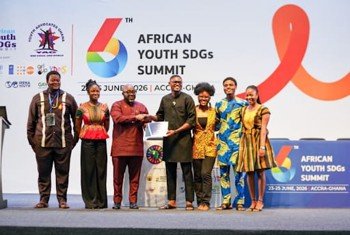
By: Precious Miracle Kargbo Snr
The United Nations Development Programme (UNDP) in Sierra Leone has highlighted the growing role of African youth in transforming end-of-life materials into economic opportunities through the Youth for Circularity 2030 Initiative.
Supported by Samsung and UNDP Ghana, the initiative brings together young innovators from across Africa to develop practical solutions that promote the repair, reuse, refurbishment, and recycling of waste materials.
According to UNDP Sierra Leone, the programme is designed to advance climate action, create green jobs, and promote a circular economy across the continent. It seeks to shift from the traditional linear model of “take, make, and dispose” to a sustainable system that keeps products and materials in use for as long as possible.
Through the Youth for Circularity 2030 platform, young entrepreneurs are developing innovative products and business models that extend the lifespan of electronic devices and other materials. Their solutions focus on repair, refurbishment, reuse, and structured recycling, helping to reduce waste while creating new economic opportunities.
Organizers say the initiative provides young people with direct pathways into green employment by equipping them with the technical skills, knowledge, and professional networks needed to scale sustainable businesses that reduce waste and lower greenhouse gas emissions.
In Sierra Leone, UNDP is promoting active youth participation in the regional programme, emphasizing that empowering young innovators is essential to addressing the country’s growing waste management challenges while creating employment opportunities and supporting climate resilience.
The partnership between UNDP, Samsung, and UNDP Ghana is intended to strengthen innovation and technical capacity across Africa. By combining technical expertise, entrepreneurship, and market-driven solutions, the initiative aims to convert discarded materials into valuable resources that contribute to sustainable economic growth.
UNDP further maintains that adopting circular economy principles can reduce pressure on natural resources, minimize environmental pollution, and create sustainable livelihoods in sectors such as waste collection, repair services, product design, refurbishment, and recycling.
The Youth for Circularity 2030 Initiative positions young Africans at the forefront of the continent’s transition to a circular economy, emphasizing practical, community-driven solutions rather than relying solely on policy interventions.
With continued support from its partners, the initiative will expand opportunities to showcase youth-led innovations and promote scalable models for repair, reuse, and recycling across Africa, helping to build a more resilient, inclusive, and sustainable future.