

By: Aminata Sesay
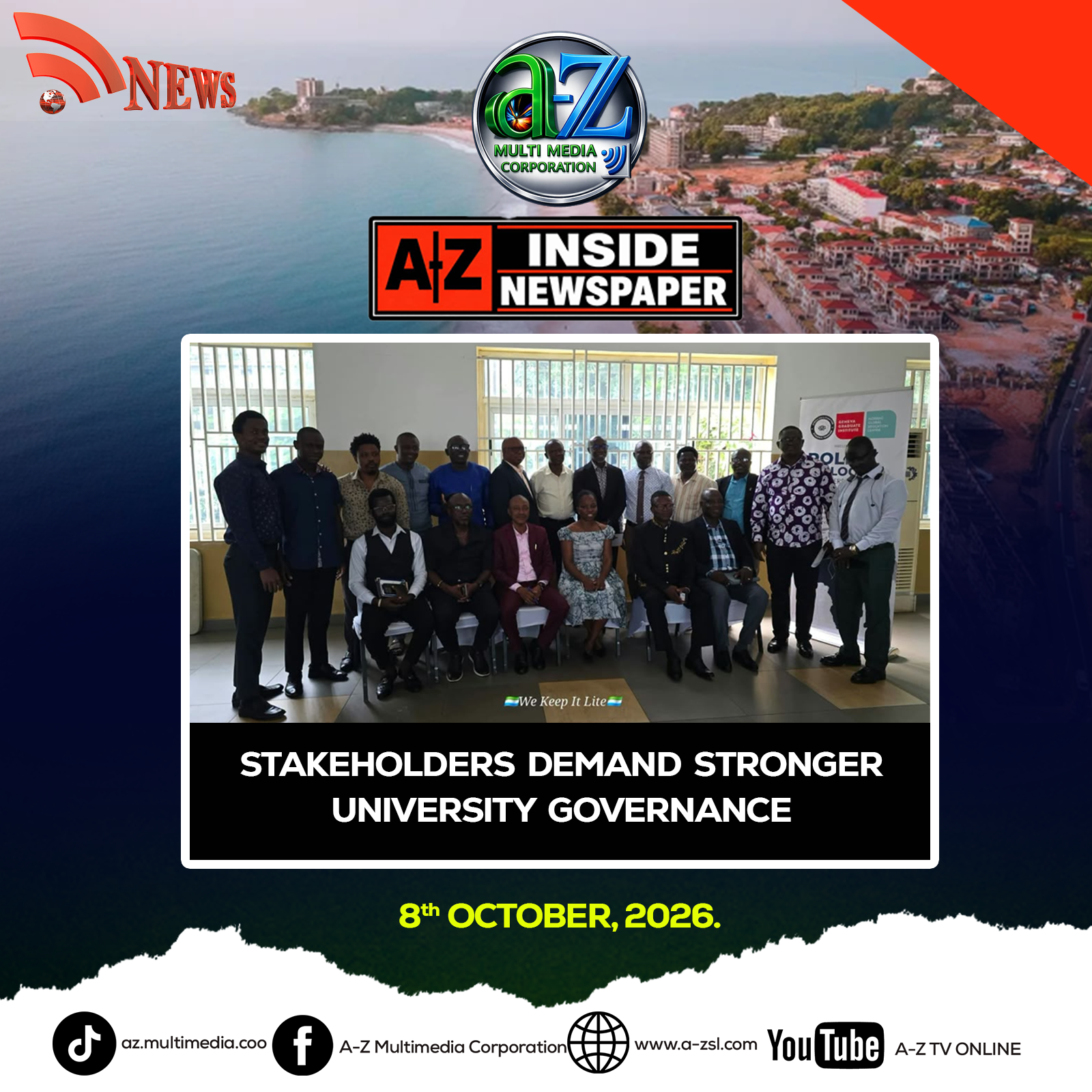
Stakeholders in Sierra Leone’s higher education sector have called for stronger university governance, greater institutional autonomy and improved funding to create an environment where academic freedom, research and teaching can thrive.
The call was made during a policy dialogue organised by the Africa Coalition for Academic Freedom (DECAF) on October 6 at Fourah Bay College, University of Sierra Leone, in Mount Aureol, Freetown.
The engagement brought together representatives of the Ministry of Technical and Higher Education, university administrators, academic staff, civil society organizations and other education stakeholders to discuss challenges affecting the development of higher education in Sierra Leone.
Regional Director of DECAF, Prof. Kwadwo Appiagyei El-Atua, said the coalition was working to promote and monitor academic freedom across Africa while developing approaches that reflect the continent’s history and institutional realities.
He identified university autonomy, effective governance and greater student participation in entrepreneurship as key areas for strengthening higher education institutions.
Deputy Vice Chancellor of Ernest Bai Koroma University of Science and Technology, Dr. Joseph Davies, said effective governance was essential to protecting academic freedom and ensuring institutional accountability.
He identified inadequate funding, limited institutional autonomy, gaps in governance capacity, outdated conditions of service and weaknesses in academic standards as some of the challenges facing universities.
Dr. Davies called for greater capacity building, collaboration and improved knowledge of higher education laws to strengthen institutional effectiveness.
Director of Higher Education, Emmanuel J. Momoh, Esq., said academic freedom is protected under the Universities Act, 2021, which provides the legal framework for university governance.
He urged university authorities and academic staff to follow due process in disciplinary matters and strengthen their knowledge of relevant laws, statutes and regulations.
Mr. Momoh also encouraged universities to strengthen research, pursue grants and develop income-generating activities to improve their financial sustainability.
He further urged academic staff to become more involved in research, noting its importance to professional development and progression through the academic ranks.
President of Freetown Polytechnic, Moseray S. K. Banya, stressed the need to protect institutional independence and create conditions in which teaching, research and other academic activities can flourish.
Meanwhile, President of the Universities Academic Staff Association at Ernest Bai Koroma University, Abdul Karim Koroma, welcomed the engagement between government authorities and university stakeholders. He called for continued policy measures to strengthen academic freedom and improve the overall university system.
The dialogue highlighted the importance of stronger governance structures, sustainable financing, staff welfare, research and collaboration in addressing challenges within Sierra Leone’s higher education sector.
Stakeholders said continued engagement among government, university authorities, academics and other partners would be important in translating policy discussions into reforms that strengthen institutions and improve the quality of higher education.